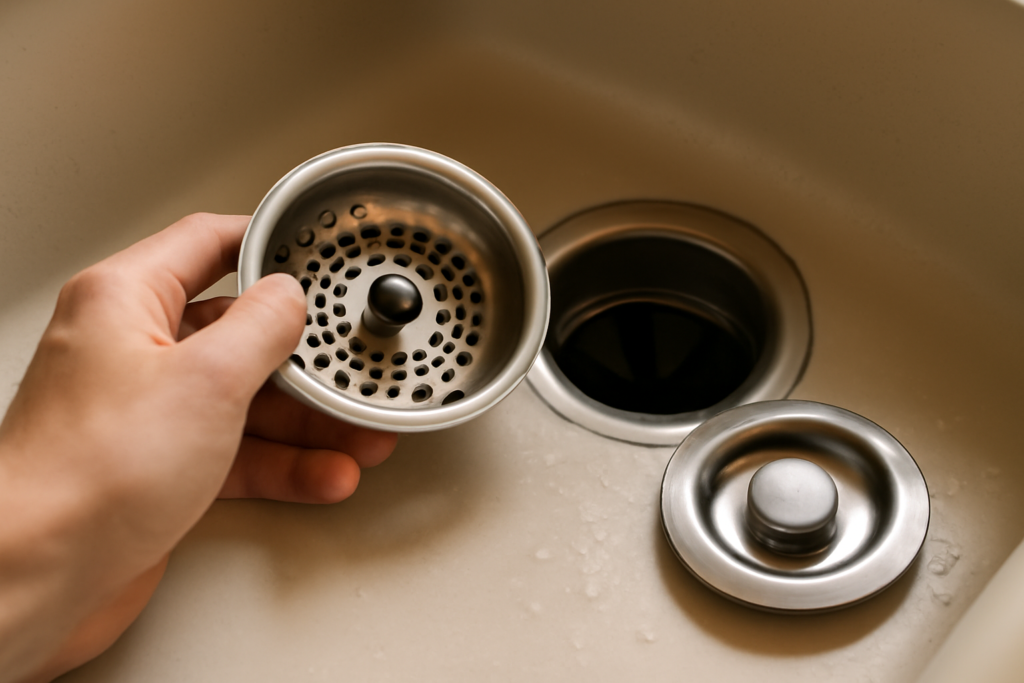
The cheapest insurance policy in your kitchen costs about five dollars and sits in the sink drain. A garbage disposal strainer catches the fibrous scraps, bones, and stray silverware that would otherwise jam or clog your disposal, sparing you the mess and expense of a repair call. Yet most homeowners never think about it until something rattles down the drain. This guide explains the strainer types, how to choose the right one, and how to keep your disposal running clean for years.
- What a Disposal Strainer Actually Does
- The Main Types of Strainers
- Choosing the Right Strainer for Your Sink
- Installing and Using a Strainer
- What to Keep Out of the Disposal
- Cleaning and Maintaining the Strainer
- Strainer Versus Splash Guard: Knowing the Difference
- Choosing a Strainer for Households With Kids or Pets
- When to Replace a Strainer
What a Disposal Strainer Actually Does
A disposal strainer is a simple insert that fits into the mouth of your sink drain, above the grinding chamber. Its job is to filter what goes down, letting water and fine particles pass while blocking larger items. That barrier prevents two very different problems at once: it stops hard objects like spoons, bottle caps, and fruit pits from reaching the impellers, and it holds back fibrous and starchy waste that would clog the drain line.
Think of it as a gatekeeper. Anything that can safely grind and flush passes through; anything that would jam the mechanism or cement itself in the P-trap gets caught for you to scrape into the trash or compost. For a device that costs less than a fast-food meal, the protection it offers your disposal and plumbing is remarkable.
The Main Types of Strainers
Strainers come in several styles, and picking the right one depends on how you use your sink and whether you run a disposal or a plain drain. The most common types each solve a slightly different problem.
- Basket strainer: a removable cup with a perforated bottom for non-disposal drains
- Disposal splash guard/baffle: the rubber gasket in the drain that blocks splashback and catches debris
- Mesh screen strainer: a fine wire or silicone mesh that sits over the drain opening
- Post-style stopper strainer: a central-post basket that lifts out easily with trapped food
For a disposal sink, a mesh screen or a post-style strainer that sits above the rubber baffle works best, since you can remove it to run the disposal and drop it back in to catch scraps during rinsing. For a second sink without a disposal, a full basket strainer with a stopper doubles as a drain plug.
Choosing the Right Strainer for Your Sink
Size is the first thing to check. Standard kitchen drains are 3-1/2 inches, and most strainers are built to fit that opening, but always measure your drain diameter before buying. A strainer that is too small slips down the drain, and one that is too large will not seat properly and lets debris slip past the edges.
Material affects durability and looks. Stainless steel resists rust and staining and matches most sinks, while silicone strainers are flexible, quiet, and easy to clean but wear out sooner. For households with kids who tend to knock things into the sink, a snug-fitting stainless mesh strainer offers the best combination of protection and longevity.
Disposal-Safe Versus Blocking Designs
Be careful not to confuse a full drain stopper, which seals the drain completely, with a strainer that allows water through. During normal disposal use you want water to flow while solids are caught, so a perforated or mesh strainer is correct. A solid stopper is only for filling the sink and must be removed before running the disposal, or the sink will back up.
Installing and Using a Strainer
Most drop-in mesh and basket strainers require zero installation; you simply set them into the drain opening. Replacing the disposal’s rubber splash guard is a bit more involved but still a straightforward DIY job. You pop out the old baffle by pulling it up and out of the flange, then press the new gasket firmly into place until it seats evenly all the way around.
Using a strainer well is mostly about habit. Keep it in place whenever you rinse dishes so it catches food scraps, then lift it, scrape the contents into the trash or compost, and rinse it clean. When you need to run the disposal on scraps that are safe to grind, remove the strainer, run cold water, feed the waste, and replace the strainer afterward.
What to Keep Out of the Disposal
A strainer works best paired with good habits, because even a disposal has limits on what it can grind. Certain foods clog drains regardless of how powerful the motor is, and the strainer is your first line of defense against them.
Keep fibrous vegetables like celery and corn husks, starchy foods such as pasta and potato peels, coffee grounds, egg shells, bones, fruit pits, and any grease or oil out of the disposal. These items either wrap around the flywheel, swell into a paste, or harden in the pipe. A mesh strainer catches most of them automatically, which is exactly why it prevents so many clogs.
Cleaning and Maintaining the Strainer
A strainer left uncleaned becomes a source of odor and slime, so a quick rinse after each use goes a long way. Once a week, pull the strainer and scrub it with a brush and dish soap to remove the film that builds up in the perforations. For stubborn buildup, soak it in a mix of warm water and vinegar for a few minutes.
While the strainer is out, it is a good time to freshen the disposal itself. Grind a handful of ice cubes to knock residue off the impellers, follow with citrus peels for scent, or pour in baking soda and vinegar, let it fizz, and flush with cold water. This monthly routine keeps both the strainer and the disposal clean and odor-free.
Strainer Versus Splash Guard: Knowing the Difference
Homeowners often confuse two different parts that both sit in the disposal opening, so it is worth clarifying. The splash guard, also called the baffle, is the rubber ring with flexible flaps built into the drain mouth. Its job is to block food and water from splashing back up while the disposal runs, and it catches some debris on its underside. It stays in place permanently and is part of the disposal itself.
A strainer, by contrast, is a separate insert you add on top of or in place of a stopper to filter what goes down when the disposal is off. The two work together: the splash guard prevents splashback during grinding, and the strainer catches scraps during everyday rinsing. Understanding that they are distinct parts helps you shop correctly, since replacing a worn splash guard and adding a mesh strainer are two different, complementary upgrades.
If your disposal splashes water back at you during operation, the culprit is a worn or missing splash guard, not the strainer. Replacing the rubber baffle solves that. If food scraps keep slipping into the disposal when you rinse dishes, you need a strainer sitting in the opening. Matching the right part to the right symptom saves you from buying the wrong fix.
Choosing a Strainer for Households With Kids or Pets
Homes with children or busy kitchens benefit most from a well-fitted strainer, because that is where stray objects most often disappear down the drain. Spoons, bottle caps, twist ties, and small toys all seem to find the sink, and a single hard object dropped into a running disposal can jam the flywheel or chip the grind ring. A snug stainless mesh strainer acts as a physical barrier that keeps these items out.
For these households, prioritize a strainer with fine perforations and a secure fit that will not tip or slide out of the drain easily. Some parents prefer a strainer with a slightly raised profile that is harder for small hands to remove. The few extra dollars for a sturdier, better-fitting strainer pay off the first time it catches a spoon that would otherwise have meant an expensive disposal repair or a fishing expedition into the drain.
When to Replace a Strainer
Strainers are inexpensive and wear out gradually. Replace a stainless mesh strainer when the wires bend or corrode, and swap a silicone one when it tears or loses its shape. The rubber splash guard in the disposal itself should be replaced when the flaps stiffen, crack, or no longer block splashback, usually every few years.
For a few dollars and almost no effort, a good garbage disposal strainer protects a machine that costs a hundred times as much and a drain line that costs far more to unclog. Keep one in place, clean it regularly, and pair it with smart habits about what goes down the drain, and your disposal will reward you with quiet, trouble-free service for many years.