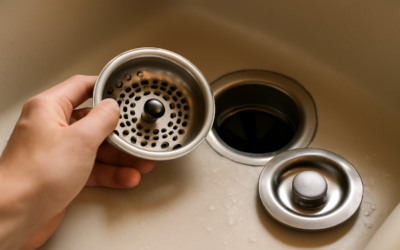
The single cheapest way to prevent a jammed disposal and a $200 plumber visit is a small mesh cup that costs a few dollars. A garbage disposal strainer basket sits in the sink drain opening and catches the food scraps, bones, silverware, and stray bottle caps that would otherwise fall in and wreck the grinding chamber. It also doubles as a stopper for filling the sink. Simple as it is, choosing the right one means matching your disposal’s drain opening and understanding the styles available. Here is the complete guide.
What a Strainer Basket Does
A disposal strainer basket serves two jobs. As a strainer, its perforated or mesh cup lets water drain while trapping solid debris on top, so you can scrape the caught scraps into the trash or compost instead of grinding everything and risking a clog. As a stopper, most baskets have a mechanism to seal the drain so you can fill the basin with water for washing or soaking. It protects the disposal from hard items that dull or jam the blades, protects your pipes from clog-causing waste, and protects you from losing rings, spoons, and small items down the drain.
Types of Strainer Baskets
There are several designs, and the right one depends on how you use your sink.
Basket Strainer with Stopper
The most common type: a deep basket cup that catches debris, paired with a twist or lift stopper mechanism to seal the drain. You lift it out to empty caught scraps. Ideal for everyday straining plus occasional sink filling.
Post-Style (Lift-and-Turn) Strainer
Uses a central post you turn to open or seal the drain. Durable and simple, common on standard sink drains.
Fixed Mesh Screen
A shallow, always-open mesh screen that sits over the opening purely to catch food, with no stopper function. Cheapest and great if you only want debris protection.
Disposal-Specific Baskets
Many disposals (InSinkErator, Waste King, Moen) use a branded splash guard and stopper/strainer sized to their specific drain flange. A matching basket seats correctly and, for models like InSinkErator, may double as the stopper that activates a batch-feed unit.
Sizing: The Critical Step
The most common buying mistake is grabbing a basket that does not fit the drain opening. Standard kitchen sink drains and disposal flanges are typically 3.5 inches in diameter, and most universal baskets are designed for that. But disposal openings can vary slightly by brand, so:
- Measure the inside diameter of your disposal’s drain opening before buying.
- For a branded disposal, buy the manufacturer’s matching strainer or a universal one rated for 3.5-inch openings.
- Note whether your unit is continuous feed (runs while you flip a wall switch, uses an open splash guard) or batch feed (only runs when a special stopper is inserted and turned). Batch-feed models require their specific stopper to operate, so you cannot use just any basket.
A basket that is too small falls through; one too large will not seat. When in doubt, measure and match the brand.
Materials and Quality
Baskets come in stainless steel, chrome-plated brass, and plastic. Stainless steel resists rust and holds up best over years of daily use, and it matches most sinks. Chrome-plated brass is durable and traditional. Plastic is cheapest but can crack or warp with hot water over time. For the stopper’s seal, look for a quality rubber or silicone gasket, since that is the part that wears and eventually leaks. A solid stainless basket with a replaceable seal is the best long-term value.
How to Install or Replace One
Most strainer baskets simply drop into the existing drain flange, no tools required. Set the basket into the opening, and it is ready to catch debris. If you are replacing a worn stopper or the whole strainer assembly, the process is still straightforward:
- Remove the old basket or stopper by lifting it out.
- Clean the drain flange seat of any food residue or grime.
- Drop in the new basket, making sure it seats flush.
- Test the stopper function by filling a little water and confirming it holds, then releasing.
Replacing the entire sink drain flange (the metal ring mounted in the sink) is a bigger job involving plumber’s putty and the disposal mounting, but swapping just the basket or stopper insert is a 60-second task.
Cleaning and Maintenance
A strainer basket only works if you keep it clear. Empty caught scraps into the trash or compost after each use rather than pushing them into the disposal, which defeats the purpose. Every week or so, lift the basket out and scrub it with a brush and dish soap to remove trapped grease and food film that cause odors. Soak it in a vinegar solution periodically to dissolve mineral buildup and disinfect. If the stopper stops sealing, replace its rubber gasket, an inexpensive part, rather than the whole assembly.
What It Costs
- Basic plastic or mesh screen: $3 to $8.
- Stainless steel basket with stopper: $8 to $20.
- Branded disposal strainer/stopper (InSinkErator, Waste King): $10 to $30.
These are inexpensive parts, and buying a quality stainless model for a few extra dollars pays off in years of rust-free service. Keeping a spare on hand means a lost or damaged basket never leaves your disposal unprotected.
What You Should Never Put Down a Disposal
A strainer basket is your first line of defense, but knowing what to keep out of the disposal entirely doubles its value. Even with a good basket, avoid feeding these items into the grinding chamber:
- Fibrous foods like celery, corn husks, artichokes, and onion skins, which wrap around the blades.
- Starchy or expandable foods such as pasta, rice, and potato peels, which swell and form a paste that clogs the trap.
- Grease, fat, and oil, which solidify and coat the pipes over time.
- Hard items like bones, fruit pits, and shells, which dull or jam the impellers.
- Coffee grounds and eggshells, which accumulate into a sludge in the drain line.
- Non-food items like glass, metal, and plastic, which the basket is specifically designed to catch.
The strainer basket makes it easy to scrape these into the trash or compost instead, which is exactly why it prevents so many service calls.
Troubleshooting a Basket That Won’t Seal or Fit
If your stopper no longer holds water, the culprit is almost always a worn rubber gasket on the underside of the basket. Replacing that inexpensive seal usually restores a watertight fit without buying a whole new assembly. If a new basket sits too high, rocks, or falls through, it is the wrong size for your flange; measure the opening (most are 3.5 inches) and match a basket rated for it, or buy the manufacturer’s specific part. For branded disposals, a universal basket sometimes seats loosely, so the branded stopper is the safer bet. And if debris keeps slipping past, check that the basket’s perforations or mesh are not cracked or bent, which lets scraps through. Keeping a spare gasket and a spare basket on hand means these minor issues never leave your drain unprotected.
The Bottom Line
A garbage disposal strainer basket is one of the highest-value few-dollar upgrades in the kitchen. It prevents clogs, protects the disposal from jams and dropped silverware, and keeps small valuables from vanishing down the drain, all while doubling as a sink stopper. Measure your drain opening (usually 3.5 inches), match a branded or universal basket, favor stainless steel, and clean it weekly. Do that and you will spare yourself the far bigger headache of a jammed disposal or a clogged drain line.
Think of the basket as part of a simple system: catch scraps in the strainer, scrape them into the trash or compost, and only run the disposal on the small bits that slip through. Combined with running cold water during and after grinding and avoiding the problem foods listed above, a good strainer basket dramatically extends the life of your disposal and keeps your kitchen drain flowing freely. For the price of a fast-food meal, it is one of the smartest small investments you can make in your kitchen plumbing, and replacing a worn gasket or basket every few years keeps that protection in place indefinitely.