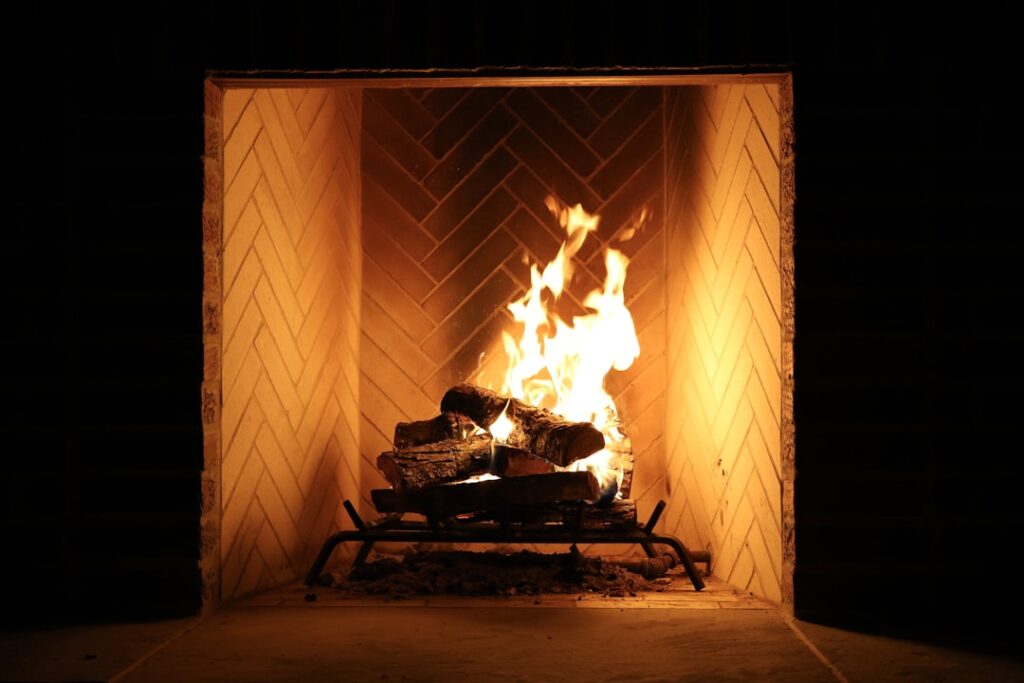
A gas fireplace pilot light is the small standing flame that sits ready to ignite the main burner the moment you flip the switch. When it goes out, the fireplace won’t light at all — and relighting it is usually a five-minute job you can do yourself if you follow the steps in order.
- Safety First: If You Smell Gas, Stop
- How the Pilot System Works
- How to Relight a Standing Pilot Safely
- Why Your Pilot Keeps Going Out
- Diagnosing a Bad Thermocouple
- When the Burner Won’t Light: Thermopile
- Standing Pilot vs. Electronic Ignition
- Reading the Pilot Flame
- Seasonal Startup and Shutoff
- When to Call a Pro
Before you touch anything, one rule governs everything: if you smell gas — a rotten-egg or sulfur odor — do not attempt to relight the gas fireplace pilot light. Stop, get everyone out, and read the safety section below first. Otherwise, let’s get that flame back and figure out why it dropped.
Safety First: If You Smell Gas, Stop
Natural gas and propane are odorized so you’ll notice a leak. If you catch that sulfur smell:
- Do not flip any switch, light any flame, or press any igniter — a spark can ignite accumulated gas.
- Open windows and doors to ventilate.
- Leave the house immediately with everyone inside.
- From outside or a neighbor’s, call your gas utility’s emergency line or 911.
- Do not go back in until the utility says it’s safe.
No relight is worth a gas explosion. Only proceed to the steps below when you smell nothing unusual.
How the Pilot System Works
Understanding the parts makes diagnosis obvious. A standing-pilot gas fireplace has a small gas tube feeding a pilot flame. That flame heats a thermocouple — a metal probe that generates a tiny millivolt current when hot. As long as the thermocouple is hot, it holds a safety valve open so gas can flow. If the pilot goes out, the thermocouple cools, current drops, the valve closes, and gas shuts off. That’s the safety feature working exactly as designed.
Many fireplaces also have a thermopile, a larger version that generates enough voltage (250 to 750 millivolts) to power the wall switch and open the main burner valve. When the fireplace lights on the pilot but won’t fire the main burner from the switch, suspect the thermopile.
How to Relight a Standing Pilot Safely
Find the gas control knob behind the lower louver or access panel — it reads OFF / PILOT / ON. Then:
- Turn the knob to OFF. Wait a full 5 minutes for any residual gas to clear. This step is non-negotiable.
- Confirm you still smell nothing.
- Turn the knob to PILOT.
- Press and hold the knob down (this manually feeds gas to the pilot).
- While holding, press the red igniter button repeatedly — you’ll hear a click and see a spark at the pilot. If there’s no igniter, hold a long lighter to the pilot orifice.
- Once the pilot flame lights, keep holding the knob down for 30 to 60 seconds so the thermocouple heats up.
- Release the knob. The pilot should stay lit. If it does, turn the knob to ON.
Now try the wall switch or remote to fire the main burner. If the pilot stays but the burner won’t light, jump to the thermopile section.
Why Your Pilot Keeps Going Out
If the pilot lights but dies the moment you release the knob, the flame isn’t heating the thermocouple properly. Common causes, easiest first:
- Dirty pilot orifice — dust or spider webbing weakens the flame. A weak yellow or lifting flame won’t hold the valve.
- Misaligned flame — the pilot flame must wrap around the thermocouple tip. If it’s drifted off, the tip never gets hot enough.
- Weak or failing thermocouple — the most frequent culprit after years of service.
- Draft — a strong downdraft or a nearby fan blowing across the pilot can snuff it.
- Loose thermocouple connection at the gas valve.
Diagnosing a Bad Thermocouple
The pattern is telling: the pilot lights and burns fine while you hold the knob, but goes out within seconds of releasing it. That’s a classic thermocouple failure. Check these in order:
- Flame position: the pilot flame should be blue and engulf the top half-inch of the thermocouple tip. If it’s off to the side, gently clean and reseat the pilot hood.
- Clean the orifice: shut off gas, and blow out the pilot tube with compressed air or brush it lightly. Spider webs are a leading cause.
- Tighten the connection: the thermocouple’s copper lead threads into the gas valve. Snug it hand-tight plus a quarter turn with a wrench — over-tightening cracks it.
- Test or replace: a technician reads thermocouple output with a multimeter; it should generate 25 to 30 millivolts when hot. Below that, replace it. A universal thermocouple costs $8 to $20 and takes 20 to 30 minutes to swap.
When the Burner Won’t Light: Thermopile
Different symptom, different part. If the pilot stays lit reliably but flipping the wall switch does nothing, the thermopile is probably weak. A healthy thermopile reads about 300 to 750 millivolts (open circuit); under load it needs to stay above roughly 150 millivolts to hold the main valve open. A tech measures this in a minute. Replacement thermopiles run $20 to $45. Also check the simple stuff first — a dead battery in the remote receiver, a tripped wall switch, or a loose switch wire fools plenty of homeowners into buying parts they don’t need.
Standing Pilot vs. Electronic Ignition
Not every gas fireplace has an always-on pilot. Know which system you have, because the fix differs:
- Standing pilot (millivolt): the pilot burns continuously, powered by the thermopile — no household electricity needed, so it works in an outage. This is what the relight steps above address.
- Intermittent pilot ignition (IPI): an electronic module sparks the pilot only when you call for heat, then lights the burner. It runs on a battery backup or a plug and saves the small amount of gas a standing pilot burns year-round.
If your unit has IPI and won’t light, check the battery pack first (often four AA batteries in the control compartment), then the wall switch and the igniter module. There’s no knob to hold — the module handles sequencing. A standing pilot burns roughly 600 to 1,200 BTU per hour continuously, which is why some homeowners shut the pilot off entirely in the off-season to save a few dollars a month, then relight it in fall using the steps above.
Reading the Pilot Flame
The flame itself is a diagnostic tool. A healthy pilot is mostly blue, steady, and strong enough to wrap around the top of the thermocouple and thermopile. Trouble signs:
- Yellow or orange, lazy flame: often dust or a partially clogged orifice; can also indicate a draft or combustion-air issue. Clean the orifice and check venting.
- Flame lifting off the tip: too much gas pressure or a dirty orifice — the flame floats and doesn’t consistently heat the sensor.
- Small, weak flame: low gas pressure or a clogged pilot tube; the thermocouple won’t stay hot enough to hold the valve.
- Flame not touching the thermocouple: misalignment — the single most common reason a freshly lit pilot keeps dying.
Aim for a crisp blue flame enveloping about a half-inch of the sensor tips. Get that right and most nuisance shutdowns stop.
Seasonal Startup and Shutoff
Many pilot problems trace back to a fireplace sitting idle all summer. Before the first cold night, pull the lower louver and vacuum out dust, dead insects, and spider webs around the pilot assembly — spiders are notorious for spinning webs in gas orifices, which chokes the flame. Wipe the glass with a fireplace-glass cleaner (never an ammonia glass cleaner, which etches the ceramic coating). If you shut the pilot off for summer, do it deliberately: turn the control knob to OFF, and relight in fall following the safe relight sequence. A five-minute fall cleanup prevents most of the “pilot won’t stay lit” calls technicians get every October.
When to Call a Pro
Handle these yourself: relighting the pilot, cleaning the orifice, tightening connections, swapping a battery. Call a licensed gas technician when:
- You smell gas at any point (utility first, then a tech).
- The pilot won’t light at all after correct relight steps — could be a clogged orifice, a bad gas valve, or no gas supply.
- You’d be replacing the thermocouple, thermopile, or gas valve and aren’t comfortable working around a fuel line.
- The flame burns yellow or sooty, or the glass fogs with heavy residue — signs of incomplete combustion.
- The unit hasn’t been serviced in over a year.
An annual service (roughly $150 to $250) cleans the pilot assembly, tests the thermocouple and thermopile, checks venting, and verifies your CO detector. Keep the pilot area clean, keep a working carbon monoxide detector within 10 feet, and most gas fireplace pilot light problems become a five-minute relight instead of a cold weekend.