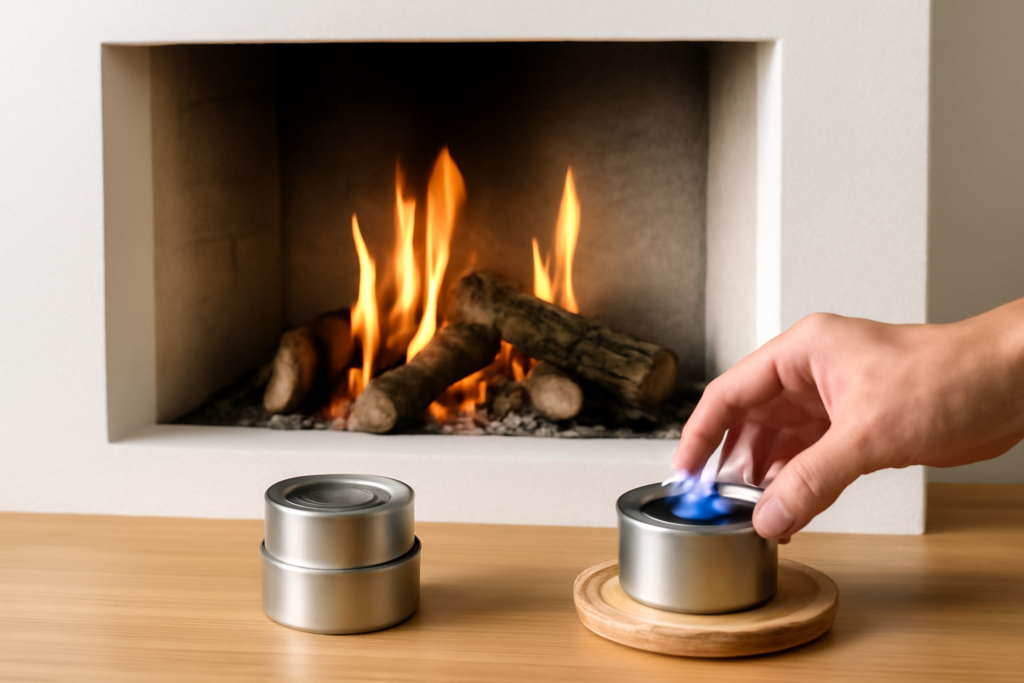
Plenty of renters and condo owners want a real flame without a chimney, a gas line or an outlet. A gel fuel fireplace delivers exactly that: a freestanding or wall-mounted firebox that burns small cans of thickened alcohol gel. You open a can, set it in the burner tray, light it, and get a live flame for two to three hours. No venting, no installation, no wiring.
The tradeoffs are just as simple. Gel produces modest heat, the cans cost more per hour than most other fuels, and every flame indoors needs sensible fire and carbon monoxide precautions. For a small room where the goal is atmosphere rather than serious heating, gel is a practical and affordable way to add a fireplace look.
- What Is a Gel Fuel Fireplace and How Does It Work?
- Crackle Gel vs Quiet Gel
- Burn Time and Cost per Hour
- Choosing a Gel Fuel Fireplace
- How to Use Gel Fuel Safely: Step by Step
- Fire and Carbon Monoxide Precautions
- Troubleshooting Common Issues
- Gel Fuel Fireplace Costs
- When to Call a Pro
- Frequently Asked Questions
Still, there are real differences between gel cans, units and fuels. Understanding them helps you pick the right model and use it safely.
What Is a Gel Fuel Fireplace and How Does It Work?
A gel fuel fireplace is a decorative firebox designed to hold one to three cans of gel fuel behind a screen or glass panel, often surrounded by a mantel or a faux stone face. The fuel itself is usually isopropyl alcohol or ethanol thickened into a jelly with a gelling agent and water. When lit, the alcohol vapor burns at the surface of the gel, producing a flame and small amounts of water vapor and carbon dioxide.
Because the fuel is contained in a sealed metal can, there is no liquid to pour. You peel off the lid, place the can in the holder, and light it with a long lighter. When you are done, a snuffer tool or the can lid starves the flame of oxygen. Unused gel stays in the can for the next burn.
Most gel fuel fireplaces are sold as ventless units. They do not need a chimney or flue because clean-burning alcohol gel produces far fewer combustion byproducts than wood or unvented gas. That does not mean zero byproducts, which is why ventilation and CO alarms still matter.
Crackle Gel vs Quiet Gel
Gel cans come in two main styles:
- Quiet gel: a plain gel surface that burns silently with a gentle orange flame. It is the simplest and usually the least expensive per can.
- Crackle gel: a can fitted with a wick or wooden stick that pops and crackles as it burns, mimicking a wood fire. Many people find this sound the most convincing part of the experience.
Flame height depends on the can size and gel formula. Some cans are designed for taller, livelier flames, while others burn lower and longer. If your unit has multiple can holders, you can mix one crackle can with quiet ones to get sound without paying for crackle cans across the board.
Burn Time and Cost per Hour
A standard 13 oz gel can burns about 2.5 to 3 hours. Larger cans burn longer, and higher flame formulas burn faster. Cost per can varies by brand, size and whether you buy in bulk cases. As a rough guide:
- Quiet gel cans typically cost less than crackle cans.
- Case packs of 12 or 24 lower the price per can noticeably.
- A three-can firebox burns through three cans at once, so running cost per evening triples.
Gel vs bioethanol
Bioethanol is the other common ventless fuel. It is a liquid poured into a burner reservoir instead of a sealed can. Compared side by side:
| Factor | Gel cans | Liquid bioethanol |
|---|---|---|
| Handling | Sealed can, no pouring | Pour into burner, spill risk |
| Heat | Low, supplemental | Moderate, higher than gel |
| Flame look | Smaller, can crackle | Taller, cleaner ribbon of flame |
| Cost per hour | Usually higher | Usually lower |
If you want the easiest, least messy option, gel wins. If you want more heat and a larger flame for less money per hour, bioethanol is usually the better fit. Some fireboxes accept both, but only use the fuel your unit is listed for.
Choosing a Gel Fuel Fireplace
Gel fuel fireplaces come in three main formats:
- Mantel units: freestanding fireboxes built into a wood or MDF mantel, placed against a wall like traditional furniture.
- Wall-mounted units: slim boxes that hang like a picture frame, often with a glass front.
- Tabletop and portable units: small burners in a glass or metal enclosure, sized for a side table or shelf.
When comparing models, check the number of can holders, whether the firebox is steel lined, the included screen or glass, and the clearances the manufacturer requires to walls, shelves and ceilings. A heavier, stable base matters if you have children or pets. Look for a unit that is tested and listed for gel fuel use, and read the manual before you buy so you know how many cans it allows and what ceiling height and room size it needs.
Existing masonry fireplaces can also burn gel cans set on a grate, which is a popular option in homes where the chimney is closed off or unsafe for wood. Close the damper partway only as the manual directs, and never burn gel in a firebox that is cracked or has loose firebrick.
How to Use Gel Fuel Safely: Step by Step
- Place the unit correctly. Set it on a stable, level surface with the manufacturer’s clearances to curtains, bookshelves and ceilings. Keep it away from doorways and high-traffic paths.
- Check the room. Use it in a reasonably sized, ventilated room, not a closet, small bathroom or bedroom while sleeping.
- Open the can. Peel off the seal while the can is cool and place it in the holder. Never open or handle a can that is still warm from a previous burn.
- Light with a long lighter. Keep your face and sleeves back. The flame may take a moment to spread across the surface.
- Close the screen. Keep glass or mesh in place while the fire burns.
- Never leave it unattended. Stay in the room and extinguish the flame before you leave or go to bed.
- Extinguish properly. Use the snuffer tool or place the lid over the can. Do not blow it out or use water.
- Let it cool. Wait at least 30 minutes, or as long as the manual says, before touching, removing or relighting a can.
Fire and Carbon Monoxide Precautions
Any open flame in a home carries risk, and gel is no exception. The flame can be hard to see in a bright room, so people sometimes assume a can is out when it is still burning. Never attempt to relight, move or top up a can that might still be lit or hot. Serious burn injuries happen when a burning can is disturbed and flaming gel spills.
Even though gel burns cleanly, it still consumes oxygen and can produce carbon monoxide if combustion is poor or ventilation is limited. Install CO alarms on every level of your home and near sleeping areas, and test them monthly. Crack a window if the room feels stuffy, and avoid using several cans in a very small space. If anyone experiences headache, dizziness or nausea, put out the flame, get fresh air and seek medical help.
Store gel cans upright in a cool, dry place away from heat sources, and keep them out of reach of children. Keep a fire extinguisher rated for flammable liquids nearby, and never mix gel with other fuels or pour liquid fuel into a gel burner.
Troubleshooting Common Issues
- Flame too small: the gel may be old and dried at the surface, or the can is nearly spent. Use fresh cans and confirm you are using the size the unit is designed for.
- Soot on glass or walls: this usually points to poor-quality gel or a draft pulling the flame sideways. Try a higher quality fuel and move the unit away from vents and fans.
- Odor: a slight alcohol smell at lighting is normal. A persistent strong smell suggests incomplete combustion, so improve ventilation or switch fuel.
- Crackle stops: the wick may have burned down or be damp. Let the can cool completely and try a fresh one.
- Can will not light: the surface may have a dried skin. Let it sit at room temperature and try again, or use a new can.
Gel Fuel Fireplace Costs
Purchase prices for gel fuel fireplaces range from inexpensive tabletop burners to larger mantel units priced like mid-range furniture. Installation is essentially free because nothing is wired, piped or vented. The ongoing expense is fuel. If you burn two or three cans every evening through the winter, a season of gel can cost more than the fireplace itself, so it helps to buy case packs and use quiet cans for everyday burns. Compared with electric fireplaces, gel costs more to run per hour but gives a real flame and needs no outlet.
When to Call a Pro
Gel units do not need a contractor, but a few situations do call for help. If you plan to use gel cans in an old masonry fireplace, have a chimney professional inspect the firebox first. If you are considering a vented gas fireplace instead for more heat, that requires a licensed gas installer, permits and proper venting. And if CO alarms ever sound, leave the home and call emergency services.
Frequently Asked Questions
Do gel fuel fireplaces give off real heat?
They give some heat, but it is modest and localized. A single can warms the air close to the unit, while three cans may take a slight chill off a small room. They are not a substitute for a heating system.
Are gel fuel fireplaces safe indoors?
They are designed for indoor use when used as directed: stable placement, proper clearances, ventilation, supervision and working CO alarms. The biggest risks come from handling hot or burning cans and leaving the flame unattended.
How long does a can of fireplace gel last?
A typical 13 oz can burns about 2.5 to 3 hours. Larger cans last longer. Once extinguished and cooled, a partly used can can be relit later.
Can I burn gel cans in my wood fireplace?
Yes, many people set gel cans on a grate in an existing fireplace. Have the firebox and chimney inspected first if it has not been used recently, and follow the gel maker’s instructions on damper position.
Is gel fuel cheaper than bioethanol?
Usually not per hour of burn. Gel costs more for the heat and flame you get, but it is cleaner to handle because there is no liquid to pour.