Getting rid of carpet beetles takes patience, a thorough vacuum, and a little detective work. These small insects feed on natural fibers like wool, silk, fur, and feathers, and by the time you notice them, the larvae have often been quietly chewing through a rug or closet for weeks.
The good news is that most home infestations respond well to consistent cleaning and a few targeted steps. You rarely need to gut a room or throw out furniture. What you do need is a plan that hits every stage of the beetle’s life cycle, because the adults you see and the larvae doing the damage often live in different parts of your home.
Know What You Are Dealing With
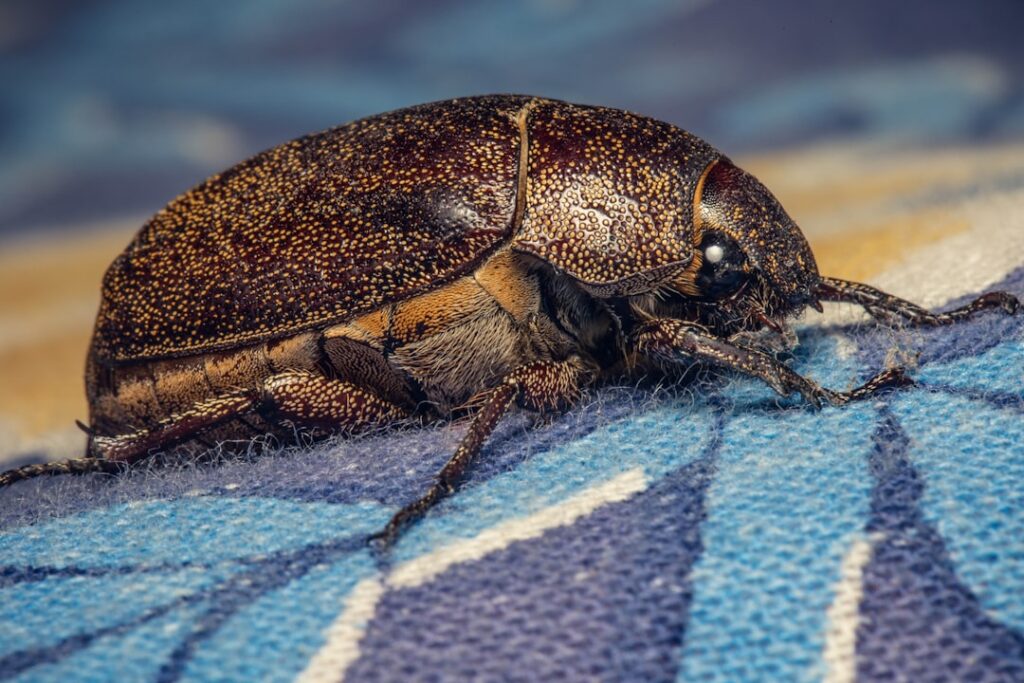
Adult carpet beetles are tiny, roughly 1/16 to 1/8 inch long, oval, and often mottled with brown, black, white, or orange scales. They are attracted to light and are frequently spotted on windowsills as they try to get outdoors to feed on pollen. The adults themselves do almost no damage indoors.
The real culprits are the larvae. They look like small, bristly, carrot-shaped or fuzzy worms, usually tan to brown, around 1/4 inch long. They avoid light and hide in dark, undisturbed spots: under baseboards, beneath heavy furniture, inside closets, and along the edges of wall-to-wall carpet. Telltale signs include irregular holes in wool sweaters, thinning patches in rugs, shed bristly skins, and tiny pellet-like debris.
Find the Source Before You Treat
You cannot solve the problem until you locate where the larvae are feeding. Pull furniture away from walls and inspect carpet edges, the underside of area rugs, and the corners of closets. Check stored wool blankets, fur items, felt, taxidermy, and even dried flower arrangements, which can all serve as food.
Do not overlook hidden reservoirs. Old bird or rodent nests in attics, accumulated pet hair behind appliances, and lint trapped in vents can sustain a population that keeps reinfesting your living space. A dead insect collection in a wall void or a forgotten box of wool in storage is a classic source that homeowners miss for months.
Vacuum Thoroughly and Often
Vacuuming is the single most effective step in getting rid of carpet beetles. It physically removes larvae, eggs, shed skins, and the lint and hair they feed on. Use a vacuum with strong suction and a crevice tool, and slow down.
- Vacuum all carpet and rugs, then go over the edges and corners again, since larvae concentrate where the carpet meets the baseboard.
- Run the crevice tool along baseboards, under and behind furniture, inside closets, and across upholstered seams.
- Lift area rugs and vacuum both sides, plus the floor underneath.
- Empty the canister or seal and discard the bag outdoors immediately so anything you collected cannot crawl back out.
Repeat this every few days during an active infestation, then weekly once things calm down. Consistency over two to three weeks does more than any single deep clean.
Launder, Freeze, and Clean Affected Items
Heat and a good wash kill carpet beetles at every life stage. Launder washable infested or at-risk fabrics in hot water, ideally 120 degrees Fahrenheit or higher, and dry them on high heat. For delicate or dry-clean-only pieces such as wool suits and silk, professional dry cleaning is effective.
For items that cannot be washed, sealing them in a bag and placing them in a freezer at 0 degrees Fahrenheit for about two weeks will kill larvae and eggs. Steam cleaning carpets and upholstery adds another layer, combining heat and moisture to reach larvae that vacuuming leaves behind. After treating clothing, store it clean in sealed containers or garment bags, since beetles are drawn to fibers that carry sweat, body oils, and food residue.
Use Insecticides Carefully and Only If Needed
Many infestations clear up with cleaning alone. If they persist, you can use an insecticide labeled for carpet beetles, but follow the product label exactly, because the label is the law and it tells you where the product may be applied and at what rate.
Apply residual sprays or dusts to the places larvae hide, such as carpet edges, baseboards, and closet floors, rather than broadcasting them across open floor where people and pets spend time. An insect growth regulator (IGR) can help by interrupting the beetles’ development, preventing larvae from maturing. Boric-acid-based products are sometimes used on carpets per their labels. Keep children and pets off treated areas until surfaces are dry, ventilate the space, and never combine products in ways the label does not permit. Store all chemicals in their original containers, out of reach.
Keep Carpet Beetles From Coming Back
Prevention is mostly about removing food and entry points. Adults fly in through open windows and doors, so well-fitted screens reduce new arrivals. Because they feed on pollen outdoors, cut flowers brought inside can carry them in, so inspect bouquets before they come through the door.
- Vacuum regularly, especially low-traffic spots where dust, hair, and lint build up.
- Store wool, fur, and other natural-fiber items clean and sealed.
- Clean up pet hair, crumbs, and lint behind and under appliances and furniture.
- Remove old nests from eaves, attics, and chimneys, and seal those entry points.
- Check secondhand furniture, rugs, and clothing before bringing them indoors.
When to Call a Licensed Pest Professional
If you have cleaned and treated for several weeks and still find larvae, or if the infestation is widespread across multiple rooms, it is time to bring in a licensed pest control professional. They can identify the species, find hidden sources you may have missed, and apply targeted treatments at the correct rates.
A professional is also worth the cost when valuable items are at stake, such as antique wool rugs, heirloom textiles, or a large wardrobe of natural fibers. Expect a typical residential treatment to run somewhere in the range of $150 to $400, varying by region, home size, and severity. Getting rid of carpet beetles for good is usually a matter of combining your ongoing cleaning habits with that expert assessment, so the population has no quiet corner left to rebuild.
Prefer to explore on your own?
See how new flooring looks in your actual room in seconds — free, no signup.
Try the free Floor Studio →