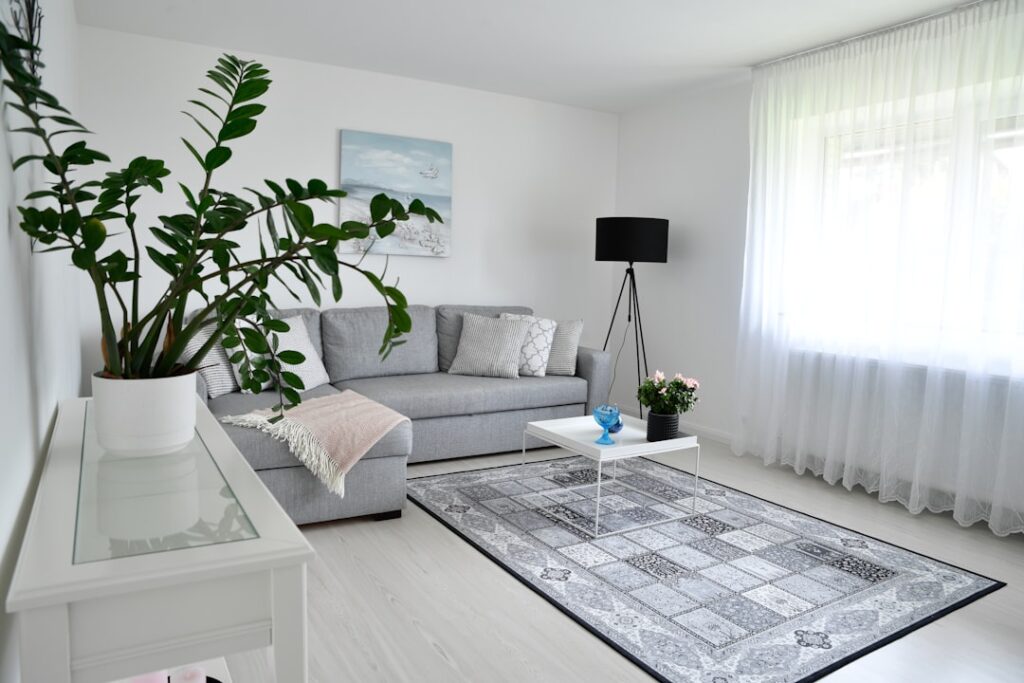
Walk into almost any newly staged home for sale and you will spot one thing on the floor: a neutral rug in soft grays and crisp whites. A gray and white rug has become the default choice for designers because it hides everyday grime better than pure white, brightens a room more than solid charcoal, and pairs with nearly every wall color and furniture style you already own. That flexibility is exactly why it sells so well. But not every gray-and-white rug is built the same, and the wrong pile height or fiber can leave you vacuuming lint for months.
I have laid down and hauled out hundreds of area rugs over the years, and the ones that hold up share a few traits. This guide walks through the sizes that fit real rooms, the materials worth paying for, and the cleaning routine that keeps the white sections from turning dingy.
Why Gray and White Works in Almost Any Room
Gray sits at the exact center of the color wheel, which means it does not fight with warm woods or cool blues. Add white and you introduce brightness without the glare of an all-white surface. The combination reads as modern in a farmhouse kitchen, calming in a bedroom, and clean in an entryway. Real estate photographers love it because gray tones photograph evenly under both daylight and warm bulbs.
There is a practical benefit too. Solid white shows every crumb and paw print within a day. A speckled or patterned gray-and-white blend camouflages traffic between cleanings, buying you an extra week or two before the rug looks tired.
Common Patterns and What They Signal
The pattern you pick sets the tone more than the exact shade of gray. A few of the most common styles:
- Moroccan trellis (diamond lattice): The runaway favorite for living rooms. Off-white background with thin gray diamonds. Reads bohemian but stays subtle.
- Abstract watercolor: Blurred gray blotches on cream. Hides stains extremely well and works in high-traffic family rooms.
- Geometric grid: Sharp lines and blocks. Leans contemporary and pairs with flat-panel cabinets and steel legs.
- Distressed vintage: Faded medallion prints in soft gray. Adds age to a room full of new furniture.
Solid heathered gray with a white border is the safest pick if you already have busy wallpaper or bold art. Let one thing be the star, and let the rug play a supporting role.
Choosing the Right Size
Size is where most people go wrong. Undersized rugs make a room feel chopped up and cheap. The rule I give clients is simple: the front legs of your sofa and chairs should sit on the rug, not float off the edge.
- Living room: 8×10 feet for average rooms, 9×12 for large open-plan spaces. Leave about 10 to 18 inches of bare floor around the edges.
- Under a queen bed: 8×10 works well, letting the rug extend roughly 24 inches past each side.
- Dining table: Add 24 inches to each side of the table so chairs stay on the rug when pulled out. A 6-foot table usually needs a 9×12.
- Hallway runner: 2.5×8 feet, leaving 4 to 5 inches of floor on each side.
Materials: What to Pay For and What to Skip
The fiber determines how the rug feels underfoot and how long the white stays white. Here is how the common options stack up.
Wool
The gold standard. Wool naturally resists stains, springs back after furniture dents, and holds dye beautifully, so the grays stay rich for a decade or more. Expect to pay $8 to $20 per square foot. It sheds for the first month, then settles down.
Polypropylene (olefin)
The budget workhorse, usually $2 to $5 per square foot. It is fade-resistant, bleach-cleanable, and shrugs off spills, which makes it my top pick for homes with kids or dogs. The tradeoff is a slightly synthetic feel and lower resistance to crushing under heavy furniture.
Cotton and Chenille
Soft and washable in smaller sizes, but cotton absorbs stains fast and the white areas gray out quickly in high traffic. Best reserved for bedrooms or as a machine-washable accent.
Jute or Wool Blends
A jute base with a gray-and-white wool pile gives texture and durability, but pure jute is not ideal here because it tends to yellow and clashes with the clean look most people want.
The Pad Nobody Talks About
Buy a rug pad. A quality felt-and-rubber pad, around $40 to $80 for an 8×10, does three jobs: it keeps the rug from sliding, adds cushioning that protects the fibers from grinding against the floor, and lifts the rug slightly so air circulates and dirt sifts through instead of grinding in. On hardwood, make sure the pad is labeled safe for finished floors, since cheap PVC pads can leave a sticky residue that damages polyurethane at temperatures above 80°F.
Keeping the White Sections Clean
The single biggest complaint about a gray and white rug is the white going gray. Stay ahead of it with a simple routine.
- Vacuum twice a week in high-traffic zones, using a suction-only setting or a low beater bar to avoid fuzzing the fibers.
- Blot spills immediately with a white cloth. Never rub, which pushes the stain deeper and spreads it into the white.
- Spot-clean with a mix of one teaspoon of clear dish soap in a cup of warm water. Test in a corner first.
- Deep clean once or twice a year. Wool and cotton do best with professional cleaning; polypropylene can handle a home carpet extractor.
For synthetic rugs only, a diluted oxygen bleach solution lifts grayed traffic lanes. Skip chlorine bleach entirely, even on white sections, because it eats the fiber and can bleed the gray dye.
Styling It Without Making the Room Look Cold
Gray can drift toward cold and sterile if you are not careful. Warm it up by layering in natural textures: a rattan chair, a chunky knit throw, or a live plant. Brass or wood accents keep the palette from feeling like a hospital waiting room. In a north-facing room that already gets cool light, choose a rug that leans toward warm greige rather than true blue-gray.
One designer trick worth stealing: pull a single accent color from the room and repeat it in three spots around the rug. A few mustard pillows, a terracotta vase, and a rust-toned piece of art give the neutral rug something to anchor, and the whole space suddenly looks styled instead of beige.
Final Buying Checklist
Before you check out, run through this quick list. Confirm the size lets front furniture legs sit on the rug. Choose wool if budget allows and traffic is light, polypropylene if you have pets or kids. Add a proper rug pad. Check the pile height, keeping it under half an inch under dining chairs so they slide. And read the return policy, because colors on a screen almost never match the tone in your actual light. A well-chosen gray and white rug should serve you for years, quietly tying a room together while asking for very little in return.