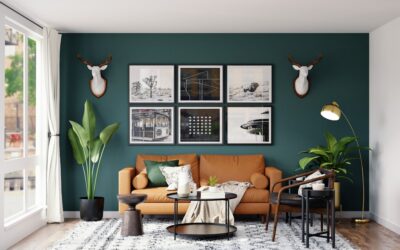
Green has quietly become the most requested accent color in American living rooms, and for good reason: it borrows the restfulness of nature without the coldness of gray or the risk of a bold red. A well-executed green accent wall living room instantly gains depth, warmth, and a focal point that photographs beautifully in any light. Whether you lean toward a moody forest, a soft sage, or a punchy emerald, the color reads as intentional rather than trendy. Best of all, a single gallon of quality paint and an afternoon of work can transform a flat, builder-beige room for under $70.
- Why Green Works So Well as an Accent
- Choosing the Right Shade of Green
- Picking Which Wall to Accent
- Finishes and Prep That Make the Difference
- Decorating Around a Green Accent Wall
- Green Accent Wall Ideas by Style
- Common Mistakes to Avoid
- Lighting Your Green Accent Wall
- Pairing Green With Other Colors
- Maintaining and Refreshing the Wall
- Cost and Time Expectations
Why Green Works So Well as an Accent
Color psychology aside, green sits in the middle of the visible spectrum, which is why our eyes register it as the most relaxing hue to look at for long stretches. In a living room, the space where families unwind and entertain, that calming quality pays off daily. Green also happens to be a natural complement to wood tones, so it flatters oak floors, walnut furniture, and rattan accents without any styling gymnastics.
An accent wall concentrates that color into one plane instead of wrapping the whole room, keeping the space feeling open while still delivering drama. You get the personality of a bold choice with an easy exit strategy: repainting one wall later takes an hour, not a weekend.
Choosing the Right Shade of Green
The perfect green depends on your light, your fixed finishes, and the mood you want. Rooms with big south-facing windows can handle deep, saturated tones because abundant daylight keeps them from feeling like a cave. North-facing rooms with cooler light do better with warmer, earthier greens that won’t turn gray and flat.
Popular Living Room Greens
- Sage and soft greens — Sherwin-Williams Evergreen Fog and Benjamin Moore October Mist read as soothing neutrals and suit almost any style.
- Olive and drab greens — earthy and grounding, they pair beautifully with camel leather and brass.
- Forest and hunter greens — dramatic and cozy, ideal behind a fireplace or media console.
- Emerald and jewel tones — vibrant and glamorous, best in rooms with plenty of natural light.
Always test before you commit. Buy sample pots, paint two-foot squares on poster board, and move them around the room across a full day. Greens shift dramatically between morning cool light and warm evening lamps, and a shade you loved in the store can look muddy at night.
Picking Which Wall to Accent
The strongest accent wall is one your eye lands on naturally when you enter the room. In most living rooms, that’s the wall behind the sofa or the one framing a fireplace or television. Choosing an architectural feature amplifies the effect, so a wall with a mantel, built-in shelves, or a large window frame gives the color something to interact with.
Avoid a wall broken up by doorways, HVAC returns, and light switches, which fragment the color and make it look busy rather than bold. If your room is small, painting the far wall a deep green can actually make the space feel longer by adding a sense of receding depth.
Finishes and Prep That Make the Difference
Sheen matters more than beginners expect. A matte or eggshell finish hides drywall imperfections and gives green its richest, most velvety appearance, which is why designers favor it for accent walls. Satin adds subtle light reflection and cleans more easily, a smart choice in homes with kids or pets.
Prep is where amateur jobs fall apart. Wipe the wall clean, patch nail holes, and sand them smooth. Tape your edges with quality painter’s tape and prime any patched spots so they don’t flash through the color. Deep greens and jewel tones almost always need two coats over a tinted gray primer to reach full, even saturation; skipping the primer often means a third coat and a wasted gallon.
Decorating Around a Green Accent Wall
Once the wall is dry, styling ties the whole room together. Warm metals are green’s best friend, so brass lamps, gold picture frames, and bronze hardware pop beautifully against a leafy backdrop. For a layered, collected look, hang art with slim wood or black frames and let a few pieces overlap the accent color.
Balance the intensity with texture in your soft goods. A cream bouclé sofa, a jute rug, and linen curtains keep a deep green from feeling heavy, while a few terracotta or blush accents in throw pillows create a sophisticated complementary contrast. Real or faux plants reinforce the organic theme and make the whole vignette feel effortless.
Green Accent Wall Ideas by Style
Your home’s overall style should steer the execution. For a modern farmhouse, a soft sage behind white shiplap feels fresh and current. Mid-century rooms come alive with a saturated avocado or olive paired with teak furniture and geometric art.
Traditional and classic interiors suit hunter green with crown molding painted crisp white, a combination that reads timeless rather than trendy. If your taste runs maximalist, layer a deep emerald wall with patterned wallpaper on the adjacent walls, gold accents, and velvet upholstery for a rich, enveloping feel.
Common Mistakes to Avoid
The most frequent misstep is choosing a green that clashes with your undertones. Cool blue-greens fight with warm honey oak floors, while very warm olives can look dingy next to cool gray tile. Match the undertone of your paint to your dominant fixed finishes and the room will feel cohesive.
Homeowners also tend to under-light their accent walls. A dark green swallows light, so add a table lamp or a picture light to keep the wall from turning into a shadowy void after sunset. Finally, resist the urge to accent more than one wall in a small living room; the whole point is contrast, and too much green erases it.
Lighting Your Green Accent Wall
Lighting can make or break a colored wall, and green is particularly sensitive to it. Because deeper greens absorb light rather than reflect it, a wall that looks rich and velvety by day can turn into a flat, shadowy void after sunset unless you plan for it. Layer your lighting so the wall stays alive at night: a pair of table lamps flanking the sofa, a floor lamp in the corner, or a picture light mounted above framed art all keep the color reading true.
Bulb temperature matters just as much as fixture placement. Warm-white bulbs in the 2700K range enhance earthy and sage greens, giving them a cozy glow, while cooler bulbs around 3500K keep emerald and jewel tones crisp and vibrant. Avoid harsh daylight-balanced bulbs over a warm green, which can drain the warmth and make the wall look gray. If you have recessed cans washing the wall, put them on a dimmer so you can dial the intensity up for daytime and down for evening.
Pairing Green With Other Colors
Green is remarkably versatile, but a few pairings consistently look designer-grade. White and cream trim keep a deep green feeling fresh and architectural rather than heavy, which is why crisp white baseboards and crown molding are such a reliable frame. For warmth, pair green with natural wood tones and camel or tan leather, a combination that feels collected and timeless.
For contrast, reach across the color wheel. Terracotta, rust, and blush create a sophisticated complementary tension with green, adding energy without clashing. Navy and green together read moody and layered, ideal for a den or library feel, while black accents in picture frames and hardware sharpen the whole scheme. If you want the room to feel serene, keep the surrounding palette soft and tonal, layering sage with oatmeal, ivory, and pale wood for a spa-like calm.
Maintaining and Refreshing the Wall
One underrated advantage of an accent wall is how little it costs to keep looking sharp. Because you only have one wall to worry about, touch-ups take minutes, so keep a small labeled jar of your accent color for covering the inevitable scuffs behind a sofa or near a light switch. Wipe the wall gently with a damp cloth every few months, especially if you chose a matte finish, which can hold dust and fingerprints more than satin.
When trends shift or you simply want a change, repainting a single accent wall is a one-hour, one-gallon project rather than a full-room repaint. That flexibility is exactly why the accent-wall approach has stayed popular: it lets you commit to a bold color today knowing you can pivot easily tomorrow, with none of the cost or labor of redoing an entire room.
Cost and Time Expectations
A single accent wall in an average living room requires about one gallon of paint, or two if you want a primer-plus-color approach with a deep shade. Budget $40 to $70 for a premium paint and $15 for supplies if you already own a roller and tray. Plan for roughly three to four hours, including prep, taping, and a second coat with drying time in between.
That modest investment delivers one of the highest returns in home decorating. A green accent wall gives your living room a designer-grade focal point, ties your furnishings together, and infuses the space with the calm, grounded feeling that keeps green at the top of every color trend list year after year.