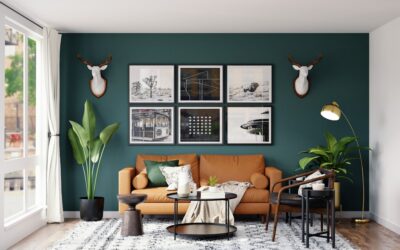
Green is the only color family that works in virtually every design style, from farmhouse sage to mid-century olive to contemporary emerald. A green living room feels calming without being cold, sophisticated without being stuffy, and pairs naturally with wood, leather, brass, and stone, materials already found in most homes. If you have been defaulting to gray or beige, green might be the palette shift your space needs.
Best Green Paint Colors for Living Rooms
Sage and Muted Greens
Sage green has been the most requested living room paint color for three consecutive years, and its popularity shows no sign of fading. These soft, gray-green tones feel neutral enough for an entire room while adding more character than true neutrals. Try Sherwin-Williams Evergreen Fog (SW 9130), Benjamin Moore Sage (HC-114), or Farrow and Ball Vert De Terre (No. 234). These work in any lighting condition and complement both warm and cool furnishings.
Olive and Earthy Greens
Olive greens bring warmth and grounding energy to living rooms with lots of natural light. They pair beautifully with leather furniture, terracotta accents, and warm wood floors. Benjamin Moore Rosemary Sprig (2144-30) and Sherwin-Williams Rural Green (SW 6418) are standouts. Olive tones can read muddy in north-facing rooms with limited light, so test a large swatch before committing.
Deep Emerald and Jewel Greens
For drama, go dark. Emerald and forest greens create a cocooning effect that makes living rooms feel intimate and luxurious, especially in larger spaces that can handle the visual weight. Benjamin Moore Hunter Green (2041-10) and Sherwin-Williams Cascades (SW 7623) deliver rich, saturated color. These shades work best on all four walls rather than a single accent wall, which can look incomplete.
Mint and Light Greens
Light greens open up small living rooms and create a fresh, airy feel. They are harder to get right because they can tip into a dated 1990s mint or a sterile hospital green. Stick with options that have enough gray or yellow undertone to feel sophisticated. Benjamin Moore Palladian Blue (HC-144, which actually reads as a soft green) and Sherwin-Williams Topiary Tint (SW 6449) are safe choices.
Green Accent Wall Strategies
A single green accent wall makes sense when you want color without committing to a full room. Paint the wall that serves as the natural focal point, usually the one behind the sofa or the fireplace wall. Avoid painting the wall with the most windows, since natural light washes out color and creates an uneven look between the lit and shaded portions.
Dark greens (emerald, forest, dark olive) work better as accent walls than light greens, which can look like you ran out of paint. Pair a dark green accent wall with crisp white or warm cream on the remaining three walls for contrast that feels intentional.
Furniture and Fabric Pairings
A green living room gains depth when you mix materials and textures thoughtfully. Here are combinations that professional designers return to repeatedly.
- Sage walls + tan leather sofa + warm oak coffee table: A modern-organic look that feels lived-in and inviting. Add linen throw pillows in cream and terracotta for warmth
- Emerald walls + navy velvet sofa + brass accents: Jewel-tone layering that reads upscale without being flashy. A Persian or Turkish rug ties the colors together
- Olive walls + cream boucle armchairs + walnut shelving: A warm, earthy palette that suits mid-century and Scandinavian interiors. Keep metals to warm tones (brass, copper, gold)
- Light green walls + white upholstery + natural rattan: A coastal-inspired combination that feels bright and relaxed. Add greenery (real or faux) for texture without additional color complexity
Green Living Room Decor Ideas
Once the walls and major furniture are in place, accessories and decor refine the look.
- Indoor plants: Nothing complements a green living room better than actual greenery. Fiddle leaf figs, monstera, snake plants, and pothos add organic texture and reinforce the nature-inspired palette
- Artwork: Botanical prints, landscape photography, and abstract art with green tones pull the room together. Avoid matching the exact wall color in artwork; instead, use complementary shades that add dimension
- Textiles: Layer different textures in related tones. A chunky knit throw in cream, velvet cushions in forest green, and a jute or wool area rug create visual richness without clutter
- Metals: Brass and gold-toned fixtures, picture frames, and hardware warm up green spaces. Matte black works for a more contemporary edge. Avoid chrome and silver with warm greens, as they create a temperature clash
- Curtains: White or cream linen curtains keep the room bright against darker green walls. Floor-length panels hung close to the ceiling make rooms feel taller
Green Living Room by Design Style
Modern Farmhouse
Sage or muted green shiplap accent wall, white trim, linen slipcovered sofa, reclaimed wood accents, and iron light fixtures. Keep green soft and understated. The room should feel relaxed and unpretentious.
Mid-Century Modern
Olive or avocado green walls (yes, avocado green is back, but in muted, sophisticated tones), a low-profile sofa in camel or rust, tapered-leg furniture in teak or walnut, and a starburst mirror or graphic area rug. Mustard yellow accent pillows complement olive green naturally.
Traditional and Classic
Deep hunter green or British racing green walls, a rolled-arm sofa in navy or burgundy, dark wood furniture, and plaid or tartan throw pillows. Crown molding painted in high-gloss white creates elegant contrast against matte green walls.
Common Mistakes When Designing a Green Living Room
Choosing paint based on a tiny swatch is the most frequent error. Green paint shifts dramatically depending on room lighting, adjacent colors, and time of day. Always paint a 2×2-foot test patch on at least two walls and observe it in morning, afternoon, and evening light before buying gallons.
Matching green too precisely across furnishings creates a flat, monotone look. Instead, vary the shades. If walls are sage, use a darker olive or forest green in throw pillows and a lighter celadon in ceramic accessories. This tonal range adds dimension and prevents the room from looking like a paint sample card.
Neglecting warm tones is another pitfall. Green rooms that lack warm accents (wood, leather, brass, terracotta, cream) can feel cold and sterile. Every green living room benefits from at least 20-30% warm-toned elements to balance the cool quality of the green palette.