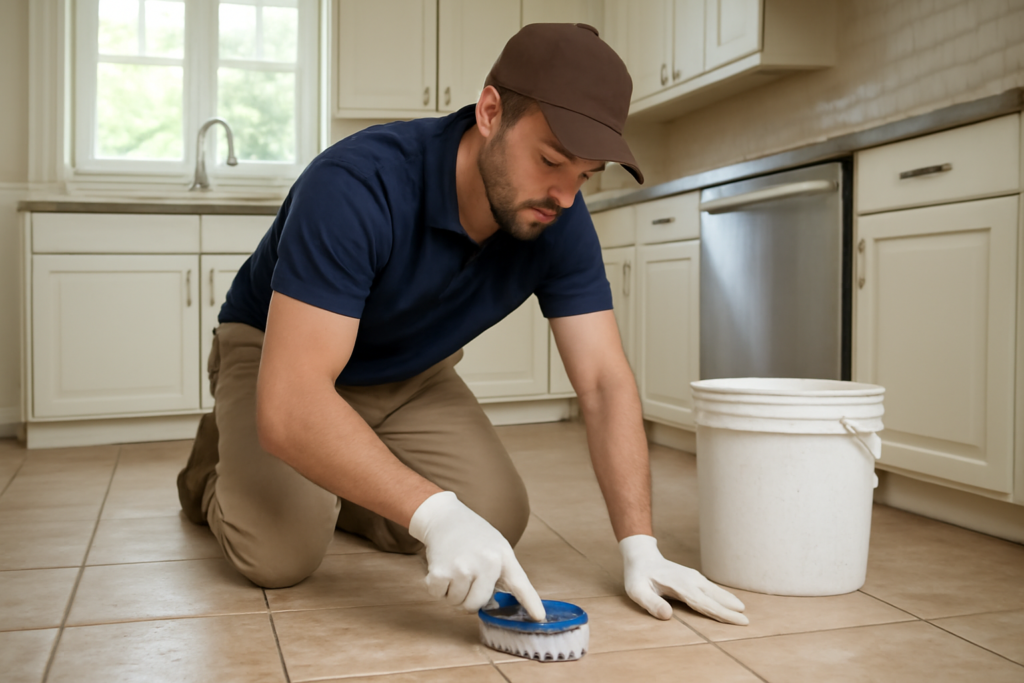
Tile can last for decades, but the grout between it rarely does. It cracks, crumbles, stains, and turns a dingy gray that makes an otherwise nice floor or shower look tired. That is the exact problem that Grout Medic built a business around, offering grout repair, recoloring, sealing, and caulk replacement as an alternative to ripping out and re-tiling. If you have stared at moldy shower grout or a stained kitchen floor and wondered whether you need a full remodel, this guide explains what grout restoration services do, what they cost, and when to hire versus do it yourself.
What Grout Medic Does
Grout Medic is a franchise specializing in tile and grout restoration. Rather than replacing your tile, they focus on bringing the grout and caulk back to life, which is far cheaper and less disruptive than a tear-out. The core services revolve around fixing the failure points between and around tile.
- Grout repair: Removing and replacing cracked, crumbling, or missing grout.
- Grout recoloring: Applying a colored sealant to refresh and unify stained, faded grout.
- Grout sealing: Adding a protective sealer to resist stains and moisture.
- Caulk replacement: Swapping out moldy or peeling caulk in corners and along edges.
- Tile repair: Replacing cracked or loose individual tiles.
Why Restore Instead of Replace
The math usually favors restoration. A full tile tear-out and replacement is expensive, dusty, and can put a bathroom or kitchen out of commission for days. Grout restoration addresses the part that actually failed, the grout, while leaving sound tile in place.
Beyond cost, there is the matchability problem. If your tile is older or discontinued, replacing a few tiles or re-tiling a whole area means hunting for a match you may never find. Restoring the existing grout sidesteps that entirely and can make a dated room look dramatically better for a fraction of the price.
The Recoloring Process
Grout recoloring (also called grout staining or colorsealing) is one of the most popular services because it delivers a dramatic visual change. The process is more involved than simply painting over the grout. A typical job follows these steps:
- Deep clean the grout lines to remove dirt, soap scum, and old sealer.
- Repair any cracked or missing grout so the surface is sound.
- Apply a pigmented colorsealant that bonds to the grout and forms a uniform, sealed finish.
- Wipe excess from the tile face and allow the product to cure.
The result is grout that looks brand new and is sealed against future staining. You can even change the color entirely, going from a stained off-white to a clean charcoal, for instance, which can modernize a whole room.
What It Costs
Pricing varies by region, the size of the area, and the condition of the grout, but these ranges give you a starting point:
- Grout recoloring: roughly $2 to $6 per square foot
- Grout repair: priced by linear foot or as part of a project, often $5 to $25 per linear foot
- Caulk replacement: $50 to $200 depending on the area
- A standard shower restoration: often $400 to $900
- A kitchen or bathroom floor: $300 to $800 depending on size
Compared to several thousand dollars for a re-tile, restoration is a clear value when the tile itself is in good shape. Always get a written estimate after an in-person assessment, since condition drives the price.
When to Hire a Pro vs. DIY
Plenty of grout work is genuinely DIY-friendly, and big-box stores sell grout colorant kits, grout saws, and caulk for the determined homeowner. If you have a small area, some patience, and a steady hand, recoloring grout yourself can save real money.
That said, professionals bring power tools that remove old grout cleanly without chipping tile, commercial-grade colorsealants that outlast retail kits, and the experience to get crisp, uniform lines. For large floors, showers prone to mold, or any job where a sloppy result would be obvious, hiring a service like Grout Medic is often worth it. Bathrooms in particular reward professional caulk and grout work, since proper waterproofing prevents far costlier water damage down the road.
What to Ask Before Hiring
Before signing off on any grout restoration job, ask a few key questions to protect yourself:
- Is the estimate based on an in-person inspection of the actual condition?
- Does the service include cleaning, repair, and sealing, or are those separate charges?
- What warranty is offered on the colorseal and repairs?
- How long must the area cure before normal use, especially in a shower?
A reputable provider will inspect the work, explain the scope clearly, and stand behind the result. Watch for vague phone quotes given without seeing the job; grout condition varies too much for accurate sight-unseen pricing.
The Bottom Line
Failing grout makes good tile look bad, but it rarely means you need a full remodel. Services like Grout Medic restore the grout and caulk that actually fail, refreshing showers, floors, and backsplashes for a fraction of the cost of re-tiling. Whether you tackle a small area yourself or hire a professional for a whole bathroom, restoring rather than replacing is usually the smarter, cheaper move when the tile underneath is still sound.
How Long Does Restored Grout Last?
A common question is whether recolored or repaired grout holds up over time, and the honest answer is that it depends on the product and the environment. A quality professional colorseal forms a durable, sealed coating that can last 7 to 15 years in normal conditions, since it both colors and protects the grout in one step. Plain repaired cement grout that is sealed afterward needs resealing every year or two to maintain its stain resistance.
Heavy-use areas wear faster. A shower floor that takes daily traffic and constant moisture will not last as long as a backsplash that rarely gets wet. Following the recommended cure time before using the area, and cleaning with gentle pH-neutral products afterward, both extend the life of the restoration significantly.
Caring for Grout After Restoration
Whatever route you take, a little routine care protects your investment and keeps the grout looking new far longer. The biggest enemies of grout are harsh chemicals and abrasive scrubbing, which break down sealers and colorseals over time.
- Clean with a pH-neutral cleaner and warm water rather than bleach or acidic products.
- Skip stiff wire brushes and abrasive powders that scratch the sealed surface.
- Squeegee shower walls after use to cut down on soap scum and mildew.
- Ventilate bathrooms with a fan or open window to reduce the moisture that feeds mold.
Small habits make a big difference. Wiping spills promptly, keeping wet areas ventilated, and avoiding harsh cleaners can stretch the life of restored grout for many years, delaying the day you ever have to think about it again.