Gutters do quiet, thankless work until the day they fail, and water starts spilling down your siding or pooling against the foundation. Before you assume the whole system needs to come down, consider that gutter restoration, cleaning, resealing, realigning, and repairing what you already have, can often add years of service for a fraction of the cost of replacement. Restoration makes the most sense when the gutters are structurally sound but suffering from clogs, leaky seams, sagging runs, or downspout problems. Knowing what restoration involves, and where it stops being worthwhile, helps you spend wisely.
Part of our Roofing guide — explore the full guide →
Start With a Thorough Cleaning and Inspection
Every restoration begins with getting the gutters clean and seeing what you are working with. Remove leaves, granules, and debris by hand or with a scoop, then flush the channels with a hose. As water runs through, watch for the telltale signs of trouble: leaks at the seams, water spilling over the front edge, slow drainage, and spots where water pools instead of flowing to the downspout. Inspect the hangers and brackets for looseness, and check the fascia behind the gutter for rot, which signals long-term overflow. This diagnostic pass tells you exactly which repairs the system needs.
Resealing Leaky Seams and Joints
Seams are the weak point of sectional gutters, and they are also the most common source of drips. Over time the old sealant dries, cracks, and lets water seep through corners and joints. Resealing is straightforward and high-value:
- Clean and dry the joint thoroughly, scraping away old, failed sealant.
- Apply a quality gutter sealant or seam tape rated for outdoor use to the inside of the seam.
- Smooth it for full coverage and let it cure per the label before the next rain.
Fresh sealant on every corner and end cap can stop the majority of leaks in an otherwise sound gutter system.
Realigning Slope for Proper Drainage
Gutters must slope slightly toward the downspouts, roughly a quarter inch of fall for every 10 feet, so water actually flows out instead of standing. Sagging or improperly pitched runs cause overflow and pooling that breeds rust and mosquitoes. To realign, adjust or replace the hangers so the channel drops gradually toward each downspout. You can check the slope by pouring water at the high end and confirming it drains fully without leaving puddles. Adding hangers where they are spaced too far apart also stops sagging between supports.
Repairing and Improving Downspouts
Downspouts carry the water away, and they fail in their own ways. Clear any clogs by running a hose or plumber’s snake from the top. Reattach loose sections and secure brackets to the wall. Just as important is where the water goes once it exits, the discharge point should carry runoff several feet away from the foundation. Add or repair downspout extensions or splash blocks so water does not dump right beside the house, which is a leading cause of basement and foundation moisture problems.
Fixing Rust, Holes, and Minor Damage
Small holes and rust spots do not necessarily mean replacement.
- Small holes: Patch with gutter repair tape or a metal patch bedded in sealant.
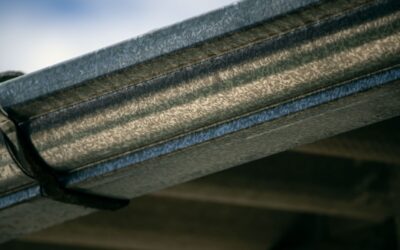
- Surface rust on steel gutters: Sand it back, prime, and repaint with a rust-inhibiting finish.
- Dented sections: Often left alone if they still drain, or gently reshaped.
- Loose fasteners: Replace worn spikes with stronger hidden hangers and screws.
These targeted fixes can rejuvenate a system that looks worse than it actually is.
Restoration Versus Replacement
Be honest about when restoration is no longer the smart play. Replacement usually wins when:
- The gutters are riddled with rust holes or the metal is corroded through in many places.
- Multiple sections are sagging badly and the fascia behind them is rotted.
- The system is old, undersized for the roof, or has failing seams everywhere at once.
- You are repairing the same leaks repeatedly with no lasting result.
If repairs would cost a significant fraction of new gutters and the underlying material is failing, investing in replacement, ideally a seamless system, is the better long-term value.
Safety and Tools for the Job
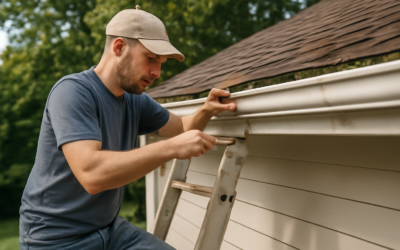
Gutter work happens at height, so treat safety as part of the job rather than an afterthought. Use a sturdy, properly rated ladder set on firm, level ground, and never lean it against the gutter itself, which can bend or pull the channel loose. A ladder stabilizer that stands off the wall protects the gutter and gives you a steadier platform. Work with a helper when possible, especially on tall or steep homes, and avoid gutter work in wet, windy, or icy conditions. As for tools, a basic restoration kit includes work gloves, a gutter scoop or trowel, a garden hose, a caulking gun and gutter sealant, a screwdriver or drill for hangers, and a small bucket for debris. For downspout clogs, a plumber’s snake or a strong hose nozzle helps. Having the right gear within reach means fewer trips up and down the ladder, which is both faster and safer.
Maintenance to Protect Your Work
Restoration only lasts if you maintain it. Clean the gutters at least twice a year, more if you have overhanging trees, and after major storms. Consider gutter guards to reduce debris buildup, keeping in mind they still need occasional checking. Inspect seams and hangers each season, and reseal or re-secure at the first sign of a leak or sag. A short maintenance routine prevents the small problems that, ignored, force a full replacement. Mark a recurring reminder on your calendar for spring and fall, and pair gutter checks with other seasonal home tasks so they actually get done. The few hours you spend each year are trivial compared to the cost of water damage to fascia, siding, and the foundation.
The Bottom Line
For sound but neglected gutters, gutter restoration is a cost-effective way to stop leaks, fix drainage, and protect your home’s foundation and siding. Clean and inspect first, then reseal seams, correct the slope, clear and extend downspouts, and patch minor damage. Reserve replacement for systems that are rusted through, badly sagging, or beyond economical repair. With a clear-eyed assessment and a weekend of work, many homeowners restore years of life to gutters they assumed were done.