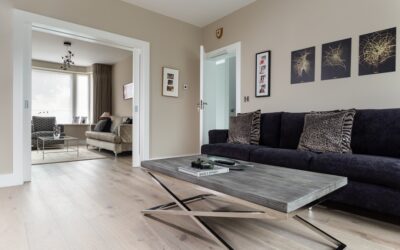
Hand scraped hardwood flooring brings a dimension of character and texture that flat-finished floors simply cannot achieve. The surface undulations, tool marks, and irregular textures create a sense of history and craftsmanship that resonates with homeowners who want a floor with genuine soul. Whether done by hand with traditional tools or replicated by machine, the hand-scraped aesthetic continues to hold strong appeal in 2026 for rustic, farmhouse, traditional, and transitional interiors.
This guide explains the difference between true hand-scraped and machine-scraped products, which wood species work best, why the textured surface actually helps with durability, and what you should expect to pay. For a full overview of hardwood flooring options, our hardwood flooring guide covers every major species and style.
- What Is Hand Scraped Hardwood Flooring?
- Real Hand Scraped vs Machine Scraped
- Best Wood Species for Hand Scraped Floors
- The Durability Advantage of Hand Scraped Surfaces
- Top Brands for Hand Scraped Hardwood Flooring
- Installation Considerations
- Pricing Overview
- Caring for Hand Scraped Floors
- Final Thoughts
What Is Hand Scraped Hardwood Flooring?
Hand scraped hardwood flooring features a surface that has been intentionally distressed with scraping tools to create an irregular, textured profile. The technique dates back centuries, when early American settlers used draw knives and hand planes to smooth rough-sawn lumber into usable floor boards. The resulting surface was never perfectly flat, and the tool marks became part of the wood’s character.
Modern hand scraped floors recreate this historic aesthetic either through actual hand craftsmanship or through machine processes that simulate the look. The result is a floor with gentle waves, shallow scoops, and visible scraping patterns that catch light differently across the surface, creating a warmth and depth that smooth floors lack.
Real Hand Scraped vs Machine Scraped
True Hand Scraped
Authentically hand scraped hardwood flooring is produced by skilled artisans who use handheld tools, typically draw knives, spokeshaves, and scrapers, to shape each board individually. Every plank is unique because human hands cannot produce identical results, which is precisely the point.
True hand scraping is labor-intensive. A skilled craftsman can produce roughly 50-100 square feet per day depending on the depth and complexity of the scraping pattern. This labor intensity is reflected in the price, which typically adds $3-$6 per square foot over the cost of the same wood in a smooth finish.
The telltale signs of genuine hand scraping include irregular scoop depths and widths, scrape patterns that change direction and character from board to board, tool marks that have organic, flowing lines rather than mechanical repetition, and edge treatments that vary in depth and angle.
True hand scraped products are available from specialty manufacturers like Virginia Mill Works, Homerwood, and select lines from Carlisle Wide Plank Floors. These are premium products aimed at homeowners who value authenticity and are willing to pay for genuine craftsmanship.
Machine Scraped
Machine scraped hardwood flooring uses industrial equipment with rotating wire brushes, embossing rollers, or CNC-controlled scraping heads to create a hand-scraped appearance at production scale. Modern machinery has become remarkably good at replicating the look, and from normal viewing distance, many machine-scraped products are difficult to distinguish from the real thing.
The advantages of machine scraping are lower cost (typically $1-$3 per square foot premium over smooth) and wider availability. Nearly every major hardwood flooring brand offers machine-scraped options across their product lines.
The limitations become apparent on close inspection. Machine-scraped patterns repeat at regular intervals since the machinery uses a finite number of scraping patterns. The scoop depths tend to be more uniform, and the transitions between scraped and unscraped areas are more abrupt than genuine hand work. These differences matter to purists but are invisible to most homeowners and guests.
Which Should You Choose?
Choose true hand scraped if you have the budget for a premium product, you value authenticity, or the floor will be a centerpiece of a high-end renovation. Choose machine scraped if you want the hand-scraped aesthetic at a more accessible price point, which is the right choice for the vast majority of installations.
Best Wood Species for Hand Scraped Floors
Hickory
Hickory is arguably the ideal species for hand scraped hardwood flooring. Its extreme hardness (Janka 1820) means the surface holds up beautifully over time, and the dramatic natural color variation from creamy white sapwood to dark brown heartwood creates visual interest that complements the textured surface. The wild, irregular grain of hickory enhances the rustic character that hand scraping is designed to showcase.
White Oak
White oak (Janka 1360) provides a more refined hand-scraped look with its straighter grain and moderate color variation. The warm, neutral tones of white oak work well in transitional and modern farmhouse interiors where you want texture without the wild variation of hickory. White oak’s tyloses structure also provides better moisture resistance than red oak.
Maple
Hard maple (Janka 1450) offers a clean, light-colored canvas for hand scraping. The subtle grain and consistent color of maple allow the scraping texture to be the primary visual feature rather than competing with bold grain patterns. Maple hand scraped floors work well in contemporary spaces where the texture adds warmth without rusticity.
Walnut
American walnut (Janka 1010) brings rich chocolate-brown tones to hand scraped floors. The softer hardness means walnut is more prone to denting, but the dark color hides minor wear and the hand-scraped texture masks small dings that would be visible on a smooth surface. Walnut hand scraped floors suit formal and transitional interiors.
Birch and Acacia
Birch and acacia are popular choices for imported hand scraped products. Both species offer bold color variation and expressive grain patterns at lower price points than domestic hardwoods. Acacia in particular has become widely available in hand-scraped prefinished planks, offering an exotic look at a mid-range price. However, quality varies significantly between manufacturers with these imported products.
The Durability Advantage of Hand Scraped Surfaces
Hand scraped hardwood flooring is not just about aesthetics. The textured surface provides a genuine practical advantage: it hides wear, dents, and scratches far better than smooth-finished floors.
On a perfectly smooth floor, every scratch, every dent, and every scuff mark is visible because the flat surface reflects light uniformly. Any disruption in that uniform surface catches the eye. On a hand-scraped floor, the surface is already irregular. Small dents and scratches blend into the existing texture and become virtually invisible.
This makes hand scraped floors an excellent choice for homes with dogs, children, and heavy foot traffic. The floor ages gracefully, developing additional character rather than simply looking damaged. Many hand-scraped floor owners report that their floors look better with age as the accumulated wear adds to the distressed character.
The textured surface also provides modestly better traction than a smooth, glossy finish. This can be beneficial in entryways and on stairs, though the improvement is subtle rather than dramatic.
Top Brands for Hand Scraped Hardwood Flooring
Shaw
Shaw offers an extensive selection of hand-scraped options in both their solid and engineered wood flooring lines. The Shaw Sequoia Hickory and Riveria Vintage collections are particularly popular, offering machine-scraped textures across multiple species and colors. Prices range from $4-$8 per square foot.
Bruce (Armstrong)
Bruce has long been associated with hand scraped hardwood, particularly their Frontier and Artesian collections. These prefinished products feature machine-scraped textures with Armstrong’s durable Urethane finishes. The brand is widely available through home centers and flooring retailers at $4-$7 per square foot.
Mannington
Mannington’s hand scraped offerings focus on their engineered hardwood line, which provides the textured aesthetic with the dimensional stability of a plywood core. The Maison and Hometown collections include several hand-scraped options in oak, hickory, and walnut. Prices range from $5-$9 per square foot.
Homerwood
Homerwood is a premium domestic manufacturer that offers genuine hand-scraped products crafted in their Pennsylvania facility. Their Character and Traditional collections use actual hand-scraping techniques on domestic hardwoods. At $8-$14 per square foot, these are premium products that deliver authentic craftsmanship.
Mohawk
Mohawk’s TecWood and Ultrawood engineered lines include numerous hand-scraped styles across a wide price range. The brand is available through Mohawk’s extensive dealer network and offers good variety for homeowners who want to see products in person before purchasing. Prices range from $4-$8 per square foot.
Installation Considerations
Solid vs Engineered
Hand scraped hardwood flooring is available in both solid (3/4 inch) and engineered (3/8 to 3/4 inch) formats. Solid boards are nailed or stapled to a wood subfloor and provide the maximum refinishing potential. Engineered boards can be installed over concrete, with radiant heat, and in below-grade spaces, providing more versatility.
For hand-scraped floors specifically, engineered products are often the better choice because the factory-applied texture is consistent and does not need to be recreated during refinishing. When a solid hand-scraped floor eventually needs sanding and refinishing, the scraping texture is removed, and the floor becomes smooth unless it is re-scraped after sanding, which adds significant cost.
Layout and Pattern
Hand scraped floors look best with a random-length plank layout that avoids repetitive patterns. Varying plank widths (mixing 3, 5, and 7-inch boards, for example) enhances the historic, artisan feel. Straight, uniform-width installations can look good too but do not maximize the hand-scraped aesthetic.
Finishing
Most hand scraped hardwood flooring is sold prefinished with the scraping and finish applied at the factory. This is the most practical approach because it ensures consistency and avoids the challenge of applying a uniform finish coat to an irregular surface.
Site-finished hand-scraped floors are possible but require an experienced finisher. The irregular surface prevents a drum sander from reaching all areas, so much of the finishing must be done with edge sanders and hand tools. Penetrating oil finishes and hardwax oils are easier to apply to hand-scraped surfaces than film-building polyurethanes.
Pricing Overview
Machine-scraped prefinished hardwood (engineered): $4-$8 per square foot. Machine-scraped prefinished hardwood (solid): $5-$10 per square foot. True hand-scraped premium products: $8-$15+ per square foot. Professional installation: $3-$6 per square foot.
For a 500 square foot living room, a machine-scraped engineered floor from a reputable brand runs approximately $3,500-$7,000 installed. The same room with true hand-scraped solid hardwood from a premium manufacturer costs $5,500-$10,500 installed.
Caring for Hand Scraped Floors
Maintenance for hand scraped hardwood flooring is identical to smooth-finished hardwood with one small adjustment: the textured surface can trap slightly more dust and debris in the valleys between scraping ridges. This is easily managed with regular sweeping or vacuuming using a hardwood-appropriate vacuum.
Avoid steam mops and excessive water, use felt pads under furniture, and clean with a manufacturer-recommended hardwood floor cleaner. The good news is that the textured surface is more forgiving of imperfect cleaning than a smooth, glossy floor where every streak and dust bunny is visible.
Final Thoughts
Hand scraped hardwood flooring offers a unique combination of beauty, character, and practical durability that flat-finished floors cannot match. Whether you opt for authentic hand craftsmanship or high-quality machine scraping, the textured surface adds warmth and personality to any room while gracefully hiding the inevitable wear marks of daily life. It is a style that looks better with age, which is perhaps the highest compliment any floor can earn.
Prefer to explore on your own?
See how new flooring looks in your actual room in seconds — free, no signup.
Try the free Floor Studio →