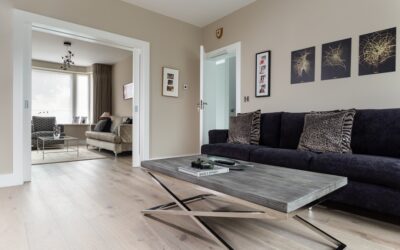
Wide plank hand scraped hardwood flooring combines two of the most sought-after looks in the flooring world: the generous scale of broad boards and the rustic, textured surface of hand-scraped wood. Together they create a floor that feels custom, old-world, and forgiving of everyday life. As a contractor, I recommend this style constantly for clients who want warmth and character rather than a slick, uniform showroom look.
That said, wide planks and hand-scraped textures both bring specific considerations you need to plan for, especially around movement and installation. This guide covers plank sizes, why the texture matters, what it costs, and how to get a stable, great-looking result.
- What Counts as Wide Plank?
- Why Hand-Scraped Texture Works
- Common Species and Hardness
- Solid vs. Engineered for Wide Planks
- Expansion and Gapping Considerations
- Cost of Wide Plank Hand Scraped Flooring
- Installation and Maintenance Tips
- Choosing a Width and Finish
- Color and Species Pairings
- Is Wide Plank Hand Scraped Right for You?
What Counts as Wide Plank?
In flooring, “wide plank” generally means boards 5 inches wide or greater. Traditional strip flooring is only 2-1/4 to 3 inches wide, so anything at 5, 6, 7, or 8-plus inches reads as distinctly wide. The trend has pushed even further, with many premium floors landing at 7-1/2 to 9 inches and some engineered products reaching 10 inches or more.
Wider boards mean fewer seams across a room, which makes a space feel larger, calmer, and more expansive. They also show off the natural grain and figure of the wood better than narrow strips, since you see more of each board’s story. For open-concept homes and larger rooms, wide planks look especially at home.
Why Hand-Scraped Texture Works
Hand-scraped flooring has a gently undulating, textured surface created by scraping the wood, either literally by hand on premium products or by machine to mimic the effect. The result is a floor with subtle dips, ridges, and character marks rather than a dead-flat, glossy plane.
The practical genius of this texture is how it hides wear. On a smooth, high-gloss floor, every scratch, dent, and scuff stands out under raking light. On a hand-scraped floor, new dings blend right into the existing texture and become nearly invisible. For homes with kids, dogs, and heavy traffic, that is a huge advantage, and it is why hand-scraped floors age so gracefully.
Related Textures
- Hand-scraped: Pronounced, irregular scraping for a rustic, artisan look.
- Wire-brushed: Softer texture that removes the soft grain to accentuate the hard grain.
- Distressed: Adds intentional dents, wormholes, and marks for an aged, reclaimed appearance.
Common Species and Hardness
Wide plank hand-scraped floors are made in many species, and hardness matters for how well the floor holds up. Popular choices include:
- Hickory (~1,820 Janka): Very hard, with bold grain and color variation that suits the rustic look.
- White oak (~1,360 Janka): Refined grain, excellent stability, and a favorite for wide planks.
- Maple (~1,450 Janka): Smooth grain that takes a hand-scraped texture well.
- Exotics like acacia (~1,700 to 2,300 Janka): Dramatic color and high hardness.
Solid vs. Engineered for Wide Planks
This is the most important technical decision. Wide solid boards expand and contract more across their width than narrow strips, which makes them more prone to gapping in dry winters and cupping in humid summers. For that reason, most quality wide-plank flooring is engineered.
Engineered wide planks use a real hardwood veneer over a cross-layered plywood or HDF core. That construction dramatically reduces seasonal movement, making it the safer choice at 6, 7, or 8 inches wide, and the only sensible choice over concrete slabs or radiant heat. If you want solid wood, keep widths more modest and control your indoor humidity rigorously. Look for an engineered wear layer of at least 3 mm if you ever want to refinish.
Expansion and Gapping Considerations
Because wide boards move more, acclimation and humidity control are non-negotiable. Acclimate the flooring in the installation room for at least 7 to 14 days, boxes opened, and confirm the subfloor and flooring moisture readings are within 2 to 4 percentage points of each other before starting.
Maintain indoor relative humidity between 35% and 55% year-round; a whole-house humidifier and dehumidifier make this easy. Leave a full 3/4-inch expansion gap around the entire perimeter and at all fixed obstacles. For wide solid planks, many installers use a glue-assist method (adhesive plus nails) to lock boards down and minimize movement. Skipping these steps is the number-one cause of gapping complaints with wide floors.
Cost of Wide Plank Hand Scraped Flooring
Because of the extra material, texturing labor, and premium format, these floors sit at the higher end. Material typically runs $5 to $12 per square foot, with premium engineered white oak and true hand-scraped products climbing to $12 to $18 or more. Professional installation adds roughly $4 to $7 per square foot, and glue-assist methods can push labor higher.
For a 300-square-foot room, a realistic installed budget lands between $2,700 and $6,000, with high-end wide oak reaching further. It is an investment, but the character and wear resistance justify the cost for many homeowners.
Installation and Maintenance Tips
Rack the boards from several cartons at once so color and texture variation distribute evenly. Dry-lay a few rows first to preview the layout. Sweep or vacuum regularly, and clean with a pH-neutral hardwood cleaner rather than water or steam, which can seep into seams. The textured surface hides scratches, but felt pads under furniture and rugs in high-traffic lanes still extend the finish’s life.
Choosing a Width and Finish
Width is largely a style and room-scale decision, but it has practical limits. In a small room, an 8-inch plank can overwhelm the space and leave you cutting many boards to fit; a 5 to 6-inch width often looks more proportional. In large, open areas, 7 to 9-inch planks shine and make the room feel expansive. As a rule, the wider you go, the more strongly I push clients toward engineered construction for stability.
Finish matters too. Most wide plank hand-scraped floors come prefinished with a UV-cured aluminum-oxide topcoat, which is extremely durable and ready to walk on immediately. Site-finished hand-scraped floors are possible but harder to sand and refinish later because the texture complicates the process. Matte and low-sheen finishes work best with hand-scraped textures, since high gloss fights the rustic look and highlights every surface irregularity.
Color and Species Pairings
Hand-scraped texture pairs especially well with woods that have natural color variation. Hickory’s light-to-dark range and hand-scraped ridges together create a bold, rustic statement. White oak scraped and wire-brushed gives a more restrained, modern-farmhouse feel. Acacia brings exotic contrast. Darker stains like weathered gray, walnut brown, or driftwood tones all read beautifully over a scraped surface because the texture catches light and adds depth that a flat stain never could.
Quick Buying Checklist
- Confirm engineered construction and at least a 3 mm wear layer for wide boards.
- Order enough material to add 10% for cuts, waste, and future repairs.
- Request a large sample and view it in your own lighting before ordering.
- Verify the warranty covers your subfloor type and radiant heat if applicable.
- Plan your humidity-control equipment before installation day.
One more tip from the field: on very wide boards, ask your installer about the subfloor’s flatness. Wide planks are far less forgiving of dips and humps than narrow strips, and a subfloor that is out of level can cause hollow spots, squeaks, and stress on the tongue-and-groove joints. Most manufacturers require the subfloor to be flat within 3/16 inch over a 10-foot span. Grinding down high spots and filling low spots with leveling compound before installation prevents a long list of callbacks later.
Is Wide Plank Hand Scraped Right for You?
Wide plank hand scraped hardwood flooring is ideal if you want a warm, characterful, wear-hiding floor with an upscale, custom feel. It suits open floor plans, rustic and transitional interiors, and busy households. The trade-offs are higher cost and the need to respect expansion and humidity rules, especially with wider boards. Choose an engineered format, control your indoor climate, and you will get a stunning floor that only looks better with age.
Prefer to explore on your own?
See how new flooring looks in your actual room in seconds — free, no signup.
Try the free Floor Studio →