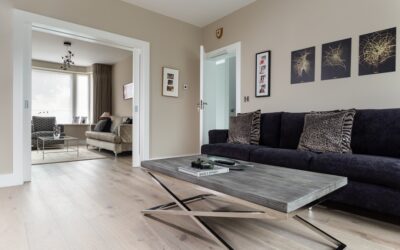
The combination of hickory’s exceptional hardness and the textured character of a hand-scraped surface has made hand scraped hickory flooring one of the most enduring hardwood choices in American homes. Hickory’s natural color variation — pale sapwood mixed with deep brown heartwood, sometimes within a single board — already gives the species a rustic, lived-in look. Adding hand-scraping pushes that aesthetic further while also hiding the dents, scratches, and general traffic damage that would show clearly on a smoothly sanded floor. The honest evaluation of whether to buy hand-scraped hickory depends on understanding how scraping is actually done, what hardness really means in daily use, and which brands deliver real character versus machined imitation.
What “Hand Scraped” Really Means
The term covers a range of finishing processes, and the differences matter. True hand-scraped flooring is finished by craftsmen using draw knives, scrapers, and wire brushes to create irregular surface contours that vary board to board. The process is slow, expensive, and produces a floor where no two planks look identical.
The more common product today is machine-scraped flooring — large CNC-driven scraping heads pass over factory-finished planks and create textured surfaces with repeating but randomized patterns. Done well, the result is visually close to hand-scraped at a fraction of the price. Done poorly, the same machine pattern repeats every 4 to 6 planks and the floor looks manufactured.
Wire-brushed is a third related finish that emphasizes the wood’s natural grain pattern without the deeper troughs of true scraping. Hickory wire-brushed reveals the species’ dramatic grain more aggressively than oak does.
Hickory’s Performance Profile
- Janka hardness: 1,820 — one of the hardest commercially available domestic species
- Dimensional stability: moderate; hickory moves with humidity but engineered constructions handle it well
- Color variation: dramatic; sapwood can be near-white and heartwood deep brown within the same plank
- Grain: tight, complex, with frequent character marks including knots, mineral streaks, and bird pecks
- Finish acceptance: takes stains evenly when sanded smooth; scraped surfaces hold finish exceptionally well in the troughs
Pricing You Should Expect
Hand-scraped hickory pricing varies by whether the product is engineered or solid, the wear-layer thickness, and the manufacturer. Realistic 2026 ranges:
- Engineered hand-scraped hickory, 5 to 7 inch widths, 3 mm wear layer: $7 to $11 per square foot material
- Engineered hand-scraped hickory, 7 to 9 inch wide-plank, 4 mm wear layer: $10 to $15 per square foot material
- Solid 3/4 inch hand-scraped hickory: $6.50 to $10 per square foot material
- Premium hand-finished (true hand-scraped) custom product: $14 to $22 per square foot material
- Installation labor: $4 to $7 per square foot depending on install method and substrate
Pros That Justify the Premium
- Exceptional dent resistance — handles dropped tools, pet claws, dragged furniture without showing damage easily
- Hand-scraped texture hides minor scratches and traffic wear, extending refinish cycles significantly
- Color variation creates a floor that camouflages dirt, dust, and pet hair between cleanings
- Distinctive rustic aesthetic that complements farmhouse, traditional, craftsman, and lodge designs
- Performs well in homes with children, large dogs, and active lifestyles
- Premium resale value in markets where rustic and traditional aesthetics command attention
Cons to Plan Around
- Dramatic color variation polarizes buyers — what one person sees as character another sees as busy
- Refinishing scraped texture is more complex and expensive than refinishing smooth floors
- The texture catches dust and pet hair in surface troughs, making thorough vacuuming essential
- Acclimation period needs to be extended given hickory’s higher movement potential
- Lower-quality machine-scraped product can show repetitive patterns that read as fake
- Strong character can compete with bold interior design — works best when room palette is restrained
Brand Picks That Deliver Real Quality
Several brands consistently produce hand-scraped or quality machine-scraped hickory worth specifying:
- Mannington Mountain View Hickory — engineered, multiple stains, $9 to $12 per square foot
- Bruce Frontier Shadow — solid and engineered options, traditional pricing, $6.50 to $9 per square foot
- Anderson Tuftex Vintage Mountain Hickory — premium engineered, beautiful texture, $11 to $14 per square foot
- Mirage Engineered Hickory with Distressed finish — top-tier quality, $13 to $17 per square foot
- Shaw Sequoia Hickory — value-priced engineered, $7 to $9 per square foot
- Lauzon Designer Hickory — Pure Genius air-purifying finish option, $14 to $18 per square foot
Solid vs. Engineered for Hickory
Hickory’s natural dimensional movement is higher than oak or maple, which makes engineered construction often the better choice. The plywood core in engineered hickory restrains movement and reduces gapping and cupping risk. Solid hickory still works well in homes with consistent HVAC and 35 to 55 percent year-round humidity, but for slab installs, basement-adjacent spaces, or homes in regions with wider humidity swings, engineered is the safer specification.
Finish Choices That Matter
Most hand-scraped hickory ships with factory-applied aluminum oxide finishes — typically 7 to 11 layers of UV-cured coating. Look for finishes carrying 25 to 50 year residential wear warranties. Matte and satin sheens emphasize the scraped texture beautifully and hide footprints and dust between cleanings. High-gloss finishes on scraped surfaces highlight every scrape mark dramatically — striking on initial install, exhausting to look at long-term.
Site-finished hand-scraped hickory is unusual today because the texture complicates field finishing. Most installations now use factory-finished planks for both consistency and durability.
Installation Notes
Acclimate hand-scraped hickory 7 to 14 days on stickers with HVAC running. For nail-down installs over wood subfloor, use 18 gauge cleats at 6 to 8 inches on center and stagger end joints by at least 6 inches. For engineered glue-down over slabs, use a moisture-mitigating urethane like Bostik Best or Sika MB if any slab moisture concern exists. Confirm subfloor flatness within 3/16 inch in 10 feet before any install.
Who Should Buy It
Hand-scraped hickory rewards families who want a floor that masks daily wear, complements traditional or rustic aesthetics, and delivers above-average durability. Skip it if your interior design leans modern minimalist, if you prefer floors that look freshly sanded forever, or if your household includes someone who finds dramatic color variation distracting. For everyone else, this is one of the most forgiving and characterful hardwood floors money can buy.
Prefer to explore on your own?
See how new flooring looks in your actual room in seconds — free, no signup.
Try the free Floor Studio →