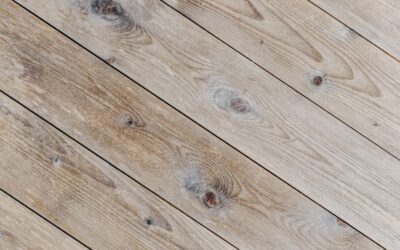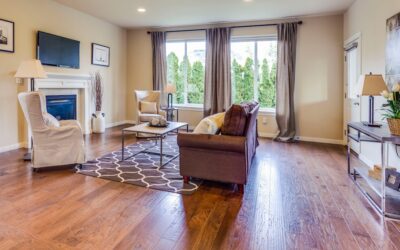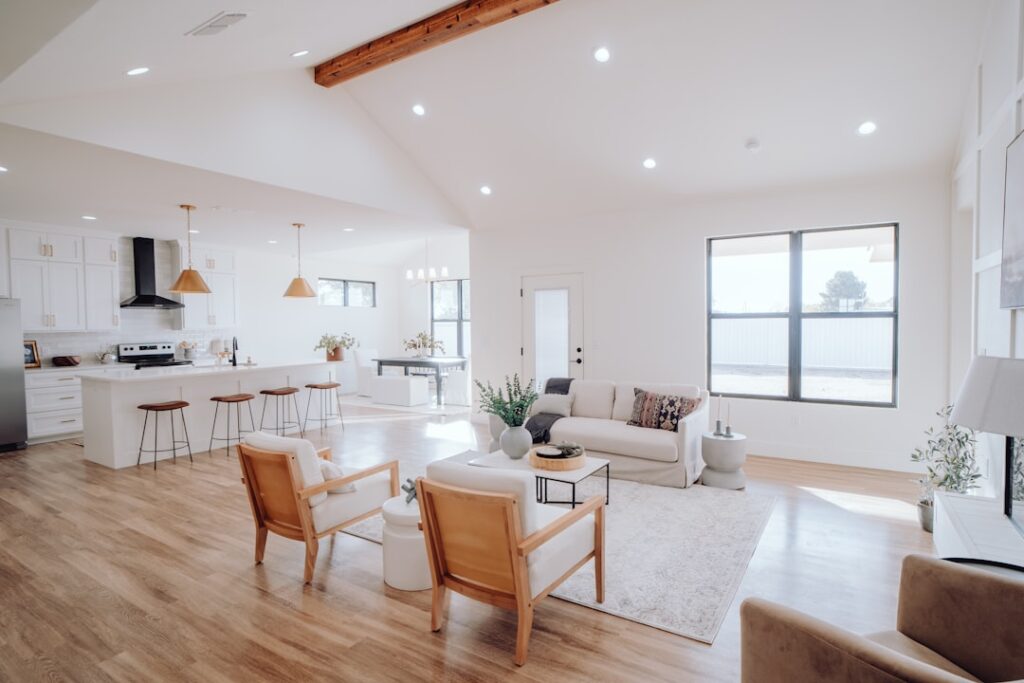
Most people who walk into a 200-year-old farmhouse and fall in love with the floors are looking at hard pine flooring, even if the agent calls it oak. Hard pine is a category that bundles longleaf heart pine, southern yellow pine, and shortleaf pine into one rough group, and it has been the workhorse floor of the American South since the 1700s. Janka hardness for old-growth heart pine runs 1225-1390, which makes it harder than walnut and on par with carbonized bamboo. New-growth yellow pine softens to around 870, closer to fir.
The Three Species You Will See on a Quote
Distributors lump them together but the boards are different. Longleaf heart pine, milled from the resinous heartwood of trees that grew 200-400 years before they were cut, is the gold standard. The grain runs tight, the color glows amber to dark cinnamon, and the boards are almost always reclaimed from old mills and warehouses. Southern yellow pine refers to commercially harvested loblolly, slash, or shortleaf pine grown on plantations today. Carolina pine is a regional retail label that usually means southern yellow.
If a salesperson quotes you “heart pine” at $4 per square foot, ask whether it is reclaimed antique or new-cut. Real reclaimed heart pine starts around $9 per square foot and climbs past $18 for premium grades.
Color, Patina, and the Resin Question
Fresh-milled yellow pine starts pale yellow with pink undertones and ambers to honey within a year of UV exposure. Heart pine arrives a deeper orange-red and darkens to a syrup brown over a decade. The dense resin pockets in old-growth pine are what give the floor its rich smell when you sand it, and they also make it harder than most people expect.
Resin can be a problem for finishers. Water-based polyurethanes sometimes fish-eye over high-resin spots. Most pros use an oil-modified poly or a hardwax oil like Rubio Monocoat or Bona Craft Oil on heart pine to handle the pitch.
Real-World Pricing
- New-cut southern yellow pine, #2 grade: $2.25-$3.50 per sq ft
- New-cut yellow pine, select grade: $4.50-$6.00 per sq ft
- Reclaimed heart pine, character grade: $9-$13 per sq ft
- Reclaimed heart pine, select vertical grain: $14-$22 per sq ft
- Installation labor: $4-$7 per sq ft for nail-down
Specialty mills like Goodwin Heart Pine in Florida and Mountain Lumber in Virginia hold the bulk of the antique reclaimed market and sell direct to homeowners.
Where Hard Pine Works and Where It Struggles
Hard pine performs beautifully in dining rooms, living rooms, bedrooms, and hallways. It develops dents and dings that read as charm rather than damage, which is the opposite reaction most homeowners have to scratched maple. Heart pine handles in-floor radiant heat better than most softwoods because of the resin content.
The species struggles in commercial kitchens, mudrooms with constant grit, and homes with large dogs whose nails act like a punch. New-growth yellow pine is soft enough that a dropped cast-iron skillet will leave a permanent dent. If you want pine but worry about dents, specify reclaimed heart pine and ask for a Janka test on the actual lot.
Installation Method and Acclimation
Most hard pine flooring ships as 3/4-inch solid boards in random widths from 3 to 10 inches. Tongue-and-groove edges are standard. Nail-down installation over a plywood or board subfloor is the traditional method, using 2-inch cleats every 8-10 inches. Wide boards (8 inches and up) often need face-screwing with plugged counterbores to prevent cupping.
Acclimation matters more than with oak. Pine boards should sit in the conditioned space for at least 7-14 days before installation, and you should measure subfloor moisture with a Tramex or Wagner meter targeting a difference of 4 percentage points or less between the boards and the subfloor per NWFA guidelines.
Finishing and Maintenance
A two-coat oil-modified poly system at 350-450 square feet per gallon is the workhorse finish. For a more natural look, hardwax oils penetrate the resin-rich grain and produce a low-sheen surface that can be spot-repaired. Whatever you pick, do not skip the sealer coat. Pine drinks finish unevenly and a dewaxed shellac like Zinsser SealCoat or a manufacturer-spec sanding sealer evens out the absorption.
Day-to-day care is simple. Sweep or vacuum on a hard-floor setting, mop with a barely damp microfiber and a pH-neutral cleaner like Bona Hardwood Floor Cleaner, and recoat the wear path every 7-10 years. Sand-down refinishing is realistic 3-4 times across the life of a solid 3/4-inch floor.
Is Hard Pine the Right Choice?
Choose hard pine if you want a historically accurate floor for a Colonial, Craftsman, or farmhouse-style home, or if you simply love the amber patina that no engineered look-alike can fake. Skip it if you need a near-bulletproof surface, if your humidity routinely swings beyond 30-55 percent RH, or if your budget cannot stretch to reclaimed heart pine for a high-traffic install. Used correctly, hard pine flooring outlasts the people who install it.
Sourcing Real Reclaimed Pine
The reclaimed heart pine market includes both genuine antique stock and questionable “reclaimed” labels applied to lightly aged new lumber. Genuine reclaimed material comes from documented sources: cotton mills in Georgia and South Carolina, tobacco warehouses in Virginia and North Carolina, textile mills in New England that used southern pine for joists and decking, and old factory buildings in Pennsylvania and Ohio. Mountain Lumber, Goodwin Heart Pine, Carlisle Wide Plank Floors, and Olde Wood Limited all maintain documented chains of custody for their reclaimed stock.
Ask for the source building name and demolition date before paying a premium. A trustworthy mill will tell you “this came from the Pillowtex Mill in Kannapolis, NC, demolished 2007” rather than offering vague “century-old reclaimed” language. The provenance affects resale and insurance documentation later.
Common Mistakes Homeowners Make
Three mistakes show up repeatedly with pine flooring projects. First, choosing soft new-cut yellow pine for a high-traffic install and then complaining about dents. Second, installing wide planks (8 inches and up) without face-screws and watching them cup the first summer. Third, sanding aggressive grit (36 or 40) on the first pass with a drum sander, which gouges the soft wood and creates a wavy floor that no finish coat can hide. Start at 60 grit minimum on a drum sander, switch to 80 then 100 grit for finish passes, and use a buffer with a 120-grit screen for the final pass before stain or sealer.
Prefer to explore on your own?
See how new flooring looks in your actual room in seconds — free, no signup.
Try the free Floor Studio →