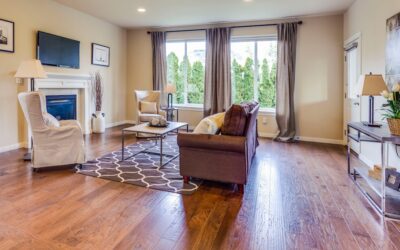
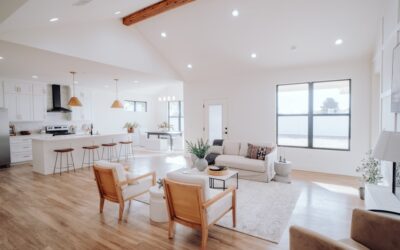
Walk across a floor reclaimed from a 150-year-old textile mill and you are walking on trees that started growing before the Civil War. Heart pine wood flooring comes from the dense inner heartwood of the longleaf pine, a species that once blanketed the American Southeast and grew so slowly it packed 20 or more growth rings into a single inch. That density gives antique heart pine a deep amber glow, tight grain, and a durability that plays in the same league as many hardwoods. It is one of the most storied floors you can put in a home, and one of the most misunderstood.
- What Heart Pine Actually Is
- How Hard Is It, Really?
- The Look: Color, Grain, and Patina
- What Heart Pine Wood Flooring Costs
- Solid, Engineered, and Widths
- Living With and Caring For Heart Pine
- Where Heart Pine Comes From
- How to Buy Quality Heart Pine
- Pros and Cons at a Glance
- Is Heart Pine Right for Your Home?
What Heart Pine Actually Is
Heart pine refers specifically to the reddish heartwood at the center of a longleaf pine trunk, not the pale sapwood around it. True antique heart pine is reclaimed from old buildings, barns, and factory beams, timber harvested from virgin forests that were largely logged out by the early 1900s. New-growth heart pine, milled from younger longleaf pines grown today, exists too, but it grows faster, packs fewer rings per inch, and is softer and lighter in color than the antique material.
This distinction drives everything: appearance, hardness, and price. When a seller says heart pine, ask whether it is antique reclaimed or new growth, because they are very different products at very different costs.
How Hard Is It, Really?
Pine has a reputation as a soft wood, and that is fair for common yellow pine. Antique heart pine is a different animal. Its Janka hardness typically falls between 1,200 and 1,300, roughly on par with red oak at 1,290. The tight ring density from centuries of slow growth is what pushes it there. New-growth heart pine is softer, often in the 870 to 1,000 range, closer to standard southern yellow pine.
Even antique heart pine dents more readily than very hard species like hickory or maple. Many owners embrace this. Dings, scuffs, and the marks of daily life read as character on a heart pine floor rather than damage, which is a big part of its charm in farmhouses and historic homes.
The Look: Color, Grain, and Patina
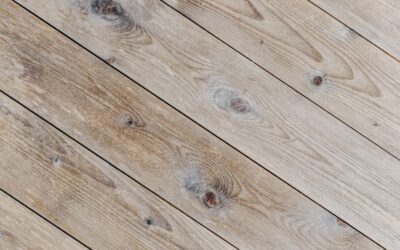
Fresh-milled heart pine starts a light honey-orange and deepens over years of light exposure into a rich amber, sometimes almost caramel. That oxidation is prized. The grain is tight and often shows pin knots, resin streaks, and the occasional nail hole from its former life as a barn beam, all of which sellers grade and price around.
- Vertical grain (quartersawn): straight, uniform lines, the most formal look.
- Flat grain (plainsawn): wider cathedral patterns with more movement.
- Mixed grain: a blend, common in reclaimed lots and full of character.
Because the color keeps warming for years, heart pine wood flooring looks best embraced in its natural state or with a clear penetrating finish. Heavy dark stains fight the wood’s inherent glow.
What Heart Pine Wood Flooring Costs
This is not a budget floor, especially the antique material, which is finite and labor-intensive to reclaim. Expect materials in these ranges:
- New-growth heart pine: $5 to $9 per square foot.
- Antique reclaimed heart pine: $9 to $18 per square foot.
- Premium wide-plank or vertical-grain antique: $15 to $25-plus per square foot.
- Installation and finishing: $4 to $9 per square foot on top.
For a 300-square-foot room in antique heart pine, all-in costs commonly land between $4,500 and $9,000. The premium buys history, density, and a look that new wood simply cannot fake, but it is a real investment.
Solid, Engineered, and Widths
Antique heart pine is usually sold as solid boards, frequently in wide planks of 5 to 10 inches that show off the grain. Solid heart pine can be sanded and refinished multiple times over its life, which matters for a floor you intend to keep for decades. Engineered heart pine exists too, layering a reclaimed veneer over a stable core, and it is the better choice over concrete slabs, in basements, or with radiant heat, where solid wide planks risk gapping and cupping.
Keep interior humidity between 35 and 55 percent to minimize seasonal movement, particularly with wide solid boards. Acclimate the wood in the room for one to two weeks before installation so it reaches equilibrium with your home.
Living With and Caring For Heart Pine
Because the surface is softer than oak or maple, a few habits protect it:
- Use felt pads under all furniture legs and replace them as they wear.
- Sweep or vacuum grit regularly, since sand acts like sandpaper underfoot.
- Place mats at entries to catch debris and moisture.
- Clean with a pH-neutral wood cleaner and a lightly damp mop, never soaking wet.
- Refresh a penetrating oil finish every few years, or recoat a urethane finish as traffic lanes appear.
High heels and heavy pet nails will leave marks. On heart pine, that is the point; the floor earns a lived-in patina that many owners consider its finest feature.
Where Heart Pine Comes From
The story behind reclaimed heart pine is part of what you pay for. Longleaf pine forests once covered an estimated 90 million acres across the American Southeast, from Virginia to Texas. Intensive logging through the 1800s and early 1900s nearly wiped out the old-growth stands, and today only a small fraction of the original forest remains. That is why virgin heart pine can no longer be harvested at scale; the antique material on the market is salvaged, not cut fresh.
Reclaimers pull it from demolished textile mills, warehouses, barns, and old homes, then denail, kiln-dry, and remill the timbers into flooring. A single mill beam might yield a few hundred board feet of flooring that carries nail holes, bolt scars, and the patina of a century of use. Buying it keeps usable old-growth wood out of a landfill, which appeals to homeowners who value sustainability alongside character.
How to Buy Quality Heart Pine
Because grading is not standardized the way it is for oak, you need to ask the right questions. Confirm whether the wood is antique reclaimed or new growth, since the difference in hardness, color, and price is enormous. Ask about the ring count per inch; tighter rings mean denser, more durable wood, and true antique stock often shows 15 to 30 rings per inch.
- Request the grain orientation you want: vertical for a uniform look, flat for more figure.
- Ask how the material was dried; kiln-dried reclaimed wood is more stable than air-dried.
- Check the board lengths and widths available, since long, wide boards command a premium.
- Order 10 to 15 percent extra for cutting waste and character-culling.
- See a sample in person, as photos rarely capture the depth of the amber tone.
A reputable reclaimer will happily explain a board’s provenance. Vague answers about age or source are a reason to shop elsewhere.
Pros and Cons at a Glance
The upsides are considerable: unmatched warmth and character, real historical provenance in the antique material, hardness comparable to oak, and the ability to refinish solid boards several times. The trade-offs are equally clear: antique stock costs a premium and can be hard to source in matching lots, the wood dents more than harder species, and new-growth versions are noticeably softer and less rich in color.
Is Heart Pine Right for Your Home?
Heart pine wood flooring suits homeowners who want a floor with soul, who value patina and history over factory-perfect uniformity, and who have the budget for a premium material. It shines in farmhouses, historic renovations, and rooms where warmth is the goal. If you need a flawless, dent-proof surface for a high-traffic commercial space, look to a harder species. But for the right home, few floors tell a better story, or age more gracefully, than genuine antique heart pine.
Prefer to explore on your own?
See how new flooring looks in your actual room in seconds — free, no signup.
Try the free Floor Studio →