
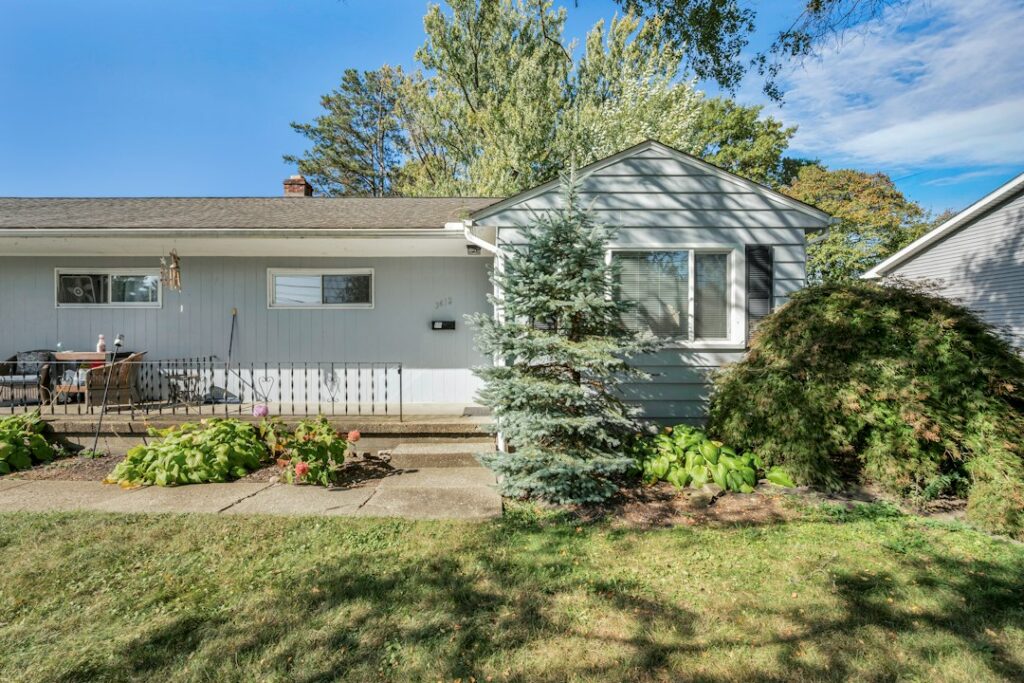
Hardie Artisan siding is James Hardie’s premium fiber cement line, built around 5/8-inch-thick boards that the manufacturer describes as twice the thickness of its standard fiber cement siding. The extra thickness creates deeper shadow lines and lets installers miter outside corners on site instead of using corner boards. It comes in four profiles (Lap, V-Groove, Shiplap and Square Channel), ships primed for field painting, and pairs with a matching 1.5-inch-thick Artisan Trim.
The trade-off is cost and handling. Thicker boards weigh more, need more careful cutting and usually cost noticeably more to buy and install than standard HardiePlank lap siding. For many homes, standard plank is the better value; Artisan earns its price on architectural designs where crisp corners, deep reveals and a heavier, wood-like look matter.
Widths and availability vary by region and change over time, so confirm current sizes with a dealer or the current spec sheet before you order.
Hardie Artisan Siding Specs at a Glance
| Spec | Value | What it means |
|---|---|---|
| Board thickness | 5/8 inch | About twice standard plank; deeper shadow lines |
| Profiles | Lap, V-Groove, Shiplap, Square Channel | Traditional lap look plus three flat-wall styles |
| Lap widths (catalog) | 7.25 in. (6 in. exposure); 8.25 in. (7 in. exposure) | Wider boards mean fewer courses per wall |
| Shiplap and Square Channel | 10.25 in. wide (9 in. exposure) | Wide, clean modern lines |
| V-Groove | 8.25 in. wide (7 in. exposure) | Fine linear detail; horizontal, vertical or soffit |
| Board length | 12 ft | Fewer butt joints on long walls |
| Artisan Trim | 1.5 in. thick; widths vary by market | Stands proud of the thick siding |
| Finish | Primed, smooth texture | Paint any color in the field |
| Warranty | 30-year non-prorated limited, transferable substrate warranty | Covers the board, not the paint |
Artisan Versus Standard HardiePlank
Standard HardiePlank lap siding is the brand’s mainstream product: thinner boards (commonly 5/16 inch), several textures including Select Cedarmill and Smooth, and the option of the factory-applied, baked-on ColorPlus finish. Artisan doubles the thickness, focuses on a smooth texture and arrives primed rather than factory-painted, so you or your painter choose the color.
| Feature | Standard plank | Artisan |
|---|---|---|
| Thickness | Thinner standard board | 5/8 inch |
| Corners | Usually corner trim boards | Mitered corners possible on site |
| Textures | Wood grain and smooth options | Smooth |
| Finish | Primed or factory-painted options | Primed for field paint |
| Flat-wall profiles | Limited | V-Groove, Shiplap, Square Channel with lock joint |
| Relative cost | Lower | Higher material and labor |
Both share the same core material and the same 30-year substrate warranty structure. Fiber cement is noncombustible and resists rot, insects and woodpeckers, which is a large part of why either option outlasts wood clapboard with far less maintenance.
The Four Profiles and Where They Fit
Lap
Artisan Lap mimics thick, traditional wood clapboard. The heavier board casts a deeper shadow along each course, which reads as more authentic on Colonial, Craftsman and Cape Cod homes. It is the closest Artisan profile to standard plank in appearance, just bolder.
V-Groove
V-Groove adds a fine V-shaped joint between boards. The manufacturer notes it can go horizontally, vertically or overhead as soffit, which makes it useful for porch ceilings and accent walls on modern farmhouse designs.
Shiplap
Shiplap gives a flat, overlapping-board look with a subtle reveal. It suits coastal and transitional homes and works well vertically on gables.
Square Channel
Square Channel has a wider, square-cut channel between boards, giving the boldest linear pattern of the four. The wide channel also makes mitered corners stand out, which is a favorite detail on contemporary homes.
The flat-wall profiles use a lock-joint system that the manufacturer says enables faster, cleaner installation and a flatter look. Profiles can be mixed on one facade, for example Lap on the main walls and V-Groove on a gable or porch ceiling. Newer multifamily-oriented collections have added further profiles, so ask your dealer what is stocked in your area.
Painting and Color Choices for Artisan
Because Artisan ships primed rather than factory-finished, the paint job is part of the project, and it has a big effect on how long the siding looks good. Use a high-quality 100 percent acrylic exterior paint, usually in a satin or low-luster sheen, which hides minor surface variation on the smooth boards better than gloss. Two finish coats over the factory primer is the common approach. Paint as soon as practical after installation so the primer is not left exposed to weather for months.
Dark colors look striking on thick, deep-shadowed profiles like Square Channel, but they absorb more heat and fade faster in strong sun. If you want a dark exterior, ask your painter about paints formulated for heat-reflective or fade-resistant performance, and plan on repainting sooner than you would with a mid-tone. Light and mid-tone colors are more forgiving and show the shadow lines nicely in raking afternoon light.
Field painting also means you can repaint later in any color, which is an advantage over factory finishes when tastes change. Ask your contractor whether painting is in the bid or a separate trade, since that single line item can swing comparisons between quotes.
Cost Ranges
Prices vary widely by region, home complexity and paint scheme, so treat these as rough general ranges for planning only.
| Item | General range | Notes |
|---|---|---|
| Standard fiber cement lap, installed | About $6 to $13 per sq ft | Baseline for comparison |
| Artisan siding, installed and painted | About $10 to $20 per sq ft | Thicker boards, slower install, field painting |
| Artisan material alone | Often 30 to 60 percent above standard plank | Varies by profile and dealer |
| Field painting | About $2 to $5 per sq ft | Needed because boards ship primed |
| Old siding tear-off and disposal | About $1 to $3 per sq ft | Higher if lead or asbestos is present |
A 2,000-square-foot wall area can easily differ by tens of thousands of dollars between standard plank and a fully mitered Artisan job, so get itemized bids for both before deciding.
Installation Overview
Artisan is usually a contractor install. Installation must follow the manufacturer’s current instructions to keep the warranty valid, including clearances, fastening and flashing details. The broad sequence looks like this:
- Remove old siding and inspect sheathing. Replace rotten sheathing and fix framing issues first.
- Install a water-resistive barrier and flashing. Windows, doors and roof-wall intersections need proper flashing before siding goes on.
- Set trim. Artisan Trim at windows, doors and transitions establishes reveal lines.
- Install starter strip and first course. Keep clearances from grade, roofing and decks per the instructions.
- Run courses, staggering joints. Twelve-foot boards reduce joints on long walls; the lock joint on flat-wall profiles keeps courses aligned.
- Miter corners. Careful, accurate miters are what make Artisan look premium. Sloppy miters undo the effect.
- Caulk and paint. Use a compatible exterior caulk and a quality exterior acrylic paint on the primed boards.
Cutting Safety: Silica Dust
Fiber cement contains crystalline silica. Cutting it with an ordinary circular saw blade releases fine respirable dust that can cause serious lung disease with repeated exposure. Use fiber cement shears where possible, since they shear the board with little dust. For saw cuts, use a fiber cement blade on a saw with dust collection connected to a HEPA vacuum, or wet-cutting methods, and cut outdoors. Wear an N95 or better respirator (P100 for heavy cutting), eye protection and gloves. Clean up with a HEPA vacuum or wet methods; never dry-sweep or use compressed air on the dust.
Troubleshooting and Common Problems
- Visible gaps at mitered corners. Usually poor cutting or framing out of plumb. Recut, and back the corner properly per the instructions.
- Paint peeling early. Often caused by painting in the wrong temperature range or skipping cleaning of the primed surface. Follow the paint label for minimum temperature.
- Cracked boards near edges. Fasteners placed too close to edges or overdriven. Follow the nailing schedule.
- Moisture staining at the bottom course. Inadequate clearance from grade, roofs or decks. Correct clearances matter for both appearance and warranty.
- Wavy walls. Thick boards show framing flaws less than thin ones, but bowed studs still telegraph. Shim or correct framing.
When to Call a Pro
Hire a contractor experienced with fiber cement, ideally one familiar with Artisan details, for any whole-house job. The boards are heavy, long and brittle until fastened, and mitered corners take practice. Siding replacement often needs a building permit, and homes built before 1978 should have existing paint tested for lead before tear-off; older siding and some sheathing materials may also need asbestos testing. Work above the first story calls for scaffolding or staging and a crew that uses fall protection.
Frequently Asked Questions
How thick is Hardie Artisan siding?
Artisan siding boards are 5/8 inch thick, about twice the thickness of standard fiber cement lap siding from the same maker. Artisan Trim is 1.5 inches thick.
Does Hardie Artisan siding come prefinished?
The manufacturer’s catalog lists Artisan products as primed with a smooth texture, ready for field painting in any color.
What profiles does Artisan come in?
Lap, V-Groove, Shiplap and Square Channel, plus matching Artisan Trim. Availability can vary by region.
Is Artisan worth the extra cost?
It is worth it when you want mitered corners, deep shadow lines and a heavier, custom look. For straightforward lap siding on a budget, standard plank offers the same core durability for less.
What warranty does Artisan carry?
The manufacturer lists a 30-year non-prorated limited, transferable substrate warranty. Paint is covered separately by the paint maker.


