Dull, scratched, and tired-looking hardwood floors are the number one cosmetic complaint in homes over five years old. Refinishing costs $4-$8 per square foot and takes a week of disruption. A hardwood floor rejuvenator can buy you another 3-5 years of good-looking floor for under $50 and a single Saturday afternoon. The catch is that rejuvenators only work when the floor’s underlying finish is still intact. Knowing the difference between surface wear and finish failure is what separates a successful $40 fix from a sticky, peeling mess.
- What a Floor Rejuvenator Actually Does
- When Rejuvenators Are the Right Choice
- Brand-by-Brand Breakdown
- Prep Work That Makes or Breaks the Result
- Application Technique
- How Often to Reapply
- Rejuvenator vs Screen-and-Recoat vs Full Refinish
- What Rejuvenators Cannot Fix
- Site-Finished vs Factory-Finished Floors
What a Floor Rejuvenator Actually Does
Rejuvenators are clear or lightly tinted polymer coatings that bond to your existing polyurethane finish, fill micro-scratches, and restore sheen. They do not penetrate wood. They do not repair gouges, water stains, or pet damage that has gone through the topcoat. Think of them as a clear nail polish for your floor: cosmetic restoration on an intact surface.
The most common chemistry is acrylic polymer with a small amount of urethane crosslinker. Bona Hardwood Floor Refresher uses this formula. Rejuvenate Wood Floor Restorer adds modified silicones for additional gloss. Quick Shine Floor Finish leans heavily on carnauba wax.
When Rejuvenators Are the Right Choice
- Floor finish is dull but still smooth to the touch
- Light surface scratches that do not catch a fingernail
- Foot-traffic patterns in front of sinks, doors, and chairs
- Minor cloudiness or haze from improper cleaning
- You are getting the house ready for sale and want a quick visual lift
If your floor catches a fingernail at the scratches, shows bare wood, has cupped boards, or has water rings that have penetrated the finish, skip the rejuvenator and budget for a screen-and-recoat ($1.50-$2.50 per square foot) or a full sanding refinish ($4-$8 per square foot).
Brand-by-Brand Breakdown
Bona Hardwood Floor Refresher is the contractor favorite. Water-based, low VOC, dries in 30-45 minutes, and outlasts most competitors at 3-5 years on a properly prepped floor. Cost runs about $30 per 32-ounce bottle, covering 300-400 square feet per coat. Pair with the Bona Microfiber Applicator Pad for best results.
Rejuvenate Professional Wood Floor Restorer offers a higher gloss with a stronger polymer film. Better for floors that already have a satin or semi-gloss finish. About $25 for a 32-ounce bottle. Has a slight tendency to streak in dry conditions.
Quick Shine Floor Finish is the budget option at $15 for a 27-ounce bottle. It is mostly carnauba wax and acrylic. Looks great for the first six months and then tends to dull faster than the polymer-based products. Reapplication is easy because each coat builds on the last.
Prep Work That Makes or Breaks the Result
Failed rejuvenator jobs almost always trace back to inadequate cleaning. The floor must be free of dust, pet hair, oils, and old wax before the product goes down. Any contamination becomes permanently visible.
- Vacuum thoroughly with a soft brush attachment, including baseboards
- Damp-mop with Bona Hardwood Floor Cleaner or 1/4 cup white vinegar in a gallon of warm water
- For floors with wax or oil-soap residue, strip with TSP solution or a dedicated stripper like Bona Power Plus Hardwood Floor Cleaner
- Wipe down with a tack cloth to catch fine dust
- Allow the floor to dry fully, 2-4 hours depending on humidity
Test in a closet or under a piece of furniture first. Some older oil-based finishes do not bond well to water-based rejuvenators and will streak.
Application Technique
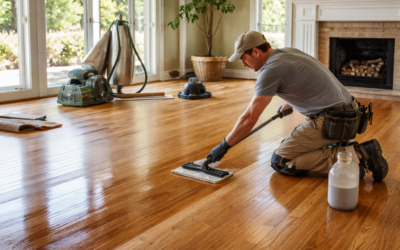
Work in 4×4-foot sections. Pour a thin S-shape of product on the floor, then spread with a microfiber applicator pad in long, overlapping passes parallel to the grain. Keep a wet edge by moving quickly. Do not go back over a section once it starts to tack up; you will leave streaks.
Plan your exit. Start in the corner farthest from the door and work backwards. Maintain ventilation but avoid direct fans, which can cause uneven drying. Indoor temperature should sit at 65-75 degrees Fahrenheit for proper film formation.
Stay off the floor for 60-90 minutes for foot traffic, 24 hours before replacing furniture, and 48-72 hours before placing area rugs.
How Often to Reapply
Most polymer rejuvenators last 2-4 years in moderate-traffic residential settings. Wax-based products like Quick Shine often need reapplication every 6-12 months. Watch for foot-traffic patterns reappearing as the signal to recoat.
Each rejuvenator application adds 1-3 mils of film thickness. After 3-4 applications without removing the buildup, the floor can develop a yellow or cloudy haze. At that point, strip with a manufacturer-recommended remover before recoating, or move up to a professional screen-and-recoat.
Rejuvenator vs Screen-and-Recoat vs Full Refinish
- Rejuvenator: $0.05-$0.15 per sq ft, 1-day project, lasts 2-4 years
- Screen-and-recoat with professional polyurethane: $1.50-$2.50 per sq ft, 2-day project, lasts 7-10 years
- Full sand-and-refinish: $4-$8 per sq ft, 5-7 day project, lasts 15-25 years
A hardwood floor rejuvenator is the right call when your floor is cosmetically tired but structurally sound. It is the wrong call when the finish has actually failed. Honest assessment of the floor’s condition, careful prep, and patient application turn a $40 bottle into floors that look like a $3,000 refinish.
What Rejuvenators Cannot Fix
Some floor problems no rejuvenator will solve. Water damage that has gone through the finish and stained the wood requires sanding the affected boards. Deep pet urine stains have penetrated below the finish and bleached the wood; these need board replacement. Cupped or crowned boards from humidity issues need the humidity fixed first, then the floor sanded flat.
Gray or black discoloration along board edges signals moisture problems and likely subfloor damage. A rejuvenator over these conditions hides the cosmetic symptom while the structural problem grows worse underneath. Address the cause first, then apply a coating.
Site-Finished vs Factory-Finished Floors
Rejuvenators work best on site-finished floors with standard polyurethane. Factory-finished floors with aluminum oxide topcoats are harder to adhere to because the surface is engineered to resist absorption. Some products like Bona Refresher are specifically formulated to bond with factory finishes, but always test in an inconspicuous area first.
If the factory finish has worn through in spots, the bare wood will absorb rejuvenator differently than the intact areas, creating blotchy results. Spot-touch with finish first, then apply the rejuvenator uniformly.
Prefer to explore on your own?
See how new flooring looks in your actual room in seconds — free, no signup.
Try the free Floor Studio →