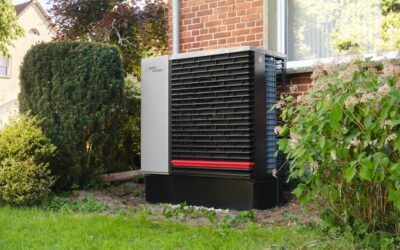
Here is what surprises most homeowners: a heat pump is an air conditioner that can run backward, and that single trick lets one machine cool the house in summer and heat it in winter. A heat pump ac unit moves heat rather than burning fuel to make it, which is why it can deliver two to four units of heat for every unit of electricity it consumes. That efficiency is the whole reason these systems are taking over new installations across much of the country.
A heat pump ac unit uses a refrigerant cycle and a reversing valve to pump heat outdoors in cooling mode and indoors in heating mode. Replace an aging air conditioner and furnace with one, and you often cut heating costs while keeping the same cool comfort you already expect in July.
- How a Heat Pump AC Unit Works
- Types of Heat Pump Systems
- Understanding SEER2, HSPF2, and Sizing
- Cold-Climate Performance
- Cost, Rebates, and Payback
- Installation and What a Good Contractor Does
- Single-Stage, Two-Stage, and Variable-Speed Compressors
- Ductwork and Airflow Matter
- Maintenance to Keep Efficiency High
How a Heat Pump AC Unit Works
The core is the same vapor-compression cycle your refrigerator uses. Refrigerant absorbs heat where it evaporates and releases heat where it condenses. In summer, the indoor coil absorbs heat from your rooms and the outdoor coil dumps it outside, exactly like a standard AC.
The magic is the reversing valve. In winter, it flips the refrigerant flow so the outdoor coil absorbs heat from the cold outdoor air, yes, even at 30°F there is usable heat in the air, and the indoor coil releases it into your home. Because it is moving existing heat rather than creating it, the process is far more efficient than electric resistance or combustion heating.
Types of Heat Pump Systems
Not every home needs the same configuration. The main formats:
- Central ducted air-source: Pairs an outdoor unit with an indoor air handler and uses your existing ductwork. The most common whole-home replacement.
- Ductless mini-split: One outdoor unit feeds one or more wall or ceiling indoor heads, no ducts required. Ideal for additions, older homes, or room-by-room zoning.
- Geothermal (ground-source): Exchanges heat with the ground through buried loops for the highest efficiency, but at a much higher install cost.
- Packaged/dual-fuel: Pairs a heat pump with a gas furnace that takes over in extreme cold for the best of both.
For most existing homes with ductwork, a central air-source system is the straightforward swap. Homes without ducts, or with hot and cold rooms, benefit hugely from ductless mini-splits.
Understanding SEER2, HSPF2, and Sizing
Efficiency is rated two ways. SEER2 measures cooling efficiency, and HSPF2 measures heating efficiency; higher numbers mean lower bills. As of 2023 the federal minimum is 14.3 to 15.2 SEER2 depending on region, while high-performance units reach 18 to 24 SEER2. A jump from 14 to 18 SEER2 can trim cooling energy by roughly 20 percent.
Sizing matters even more than raw efficiency. Contractors measure capacity in tons, where one ton equals 12,000 BTU per hour. A rough rule is 400 to 600 square feet per ton, so a 2,000-square-foot home often needs a 3- to 4-ton unit, but a proper Manual J load calculation is the only correct way to size. An oversized unit short-cycles, wastes energy, and never dehumidifies well; an undersized one runs constantly and still falls short.
Cold-Climate Performance
The old knock on heat pumps was poor heating in deep cold, and modern equipment has largely answered it. Cold-climate heat pumps with variable-speed inverter compressors now maintain full or near-full capacity down to 5°F and keep producing heat below 0°F. Look for models certified by the Northeast Energy Efficiency Partnerships cold-climate list if you live in a snowy region.
Most central systems still include backup heat, either electric-resistance strips or, in dual-fuel setups, a gas furnace, that engages during the coldest snaps. Set the balance point, the outdoor temperature where backup kicks in, sensibly so you use the efficient heat pump as long as it is economical and only lean on the backup when you truly need it.
Cost, Rebates, and Payback
Budget realistically. A central air-source heat pump typically runs $5,500 to $12,000 installed, ductless mini-splits run $3,500 to $8,000 for a multi-zone setup, and geothermal can reach $20,000 to $45,000 because of the ground loops. The exact number depends on capacity, efficiency tier, and how much ductwork or electrical work is involved.
Incentives cut that meaningfully. The federal 25C tax credit covers 30 percent of the cost of a qualifying heat pump, up to $2,000 per year, and many states and utilities stack rebates of $1,000 to $8,000 on top. Between lower operating costs and those incentives, payback versus a gas furnace and separate AC often lands in the 4-to-10-year range, and you own just one system to maintain.
Installation and What a Good Contractor Does
A quality install is what separates a system that hits its rated efficiency from one that disappoints. Insist that your contractor performs a Manual J load calculation, checks and, if needed, seals ductwork, sets the correct refrigerant charge by weight, and verifies airflow. Sloppy charge or leaky ducts can erase 20 to 30 percent of rated performance.
Plan for the outdoor unit to sit on a pad or bracket with clearance for airflow and drainage, and in snowy climates raise it on a stand 12 to 18 inches so it is not buried by drifts. A typical whole-home changeout takes one to two days.
Single-Stage, Two-Stage, and Variable-Speed Compressors
How the compressor modulates shapes both your comfort and your bills. Single-stage units run at full output or off, which is the cheapest to buy but swings temperatures and humidity more. Two-stage compressors add a lower setting for mild days, so the system runs longer, gentler cycles that hold temperature steadier and dehumidify better in summer.
Variable-speed inverter compressors are the top tier and the reason modern heat pumps perform so well in cold weather. They ramp output up or down continuously, often running at 30 to 100 percent capacity, which keeps rooms within a degree of setpoint, cuts energy use, and runs remarkably quietly. If you are choosing between a mid-efficiency single-stage unit and a variable-speed model, and you plan to stay in the home several years, the inverter system usually wins on comfort and long-run operating cost even though it costs more up front.
Ductwork and Airflow Matter
A heat pump is only as good as the air distribution behind it, and this is where many installations quietly lose efficiency. Leaky, undersized, or poorly insulated ducts can waste 20 to 30 percent of the system’s output, so a house with old ductwork may need sealing with mastic and, in some cases, resizing before the new equipment can hit its rated numbers. Ducts running through an unconditioned attic especially benefit from sealing and added insulation.
Airflow targets matter too. Heat pumps generally want around 350 to 400 cubic feet per minute of airflow per ton of capacity, and a good installer verifies static pressure and adjusts blower settings to hit it. If your home has chronic hot and cold rooms, addressing duct problems, or choosing ductless mini-splits that skip ducts entirely, will do more for comfort than simply buying a higher-SEER2 outdoor unit.
Maintenance to Keep Efficiency High
Heat pumps ask for a little routine care in exchange for years of low bills:
- Change or wash the air filter every 1 to 3 months; a clogged filter chokes airflow and drives up energy use.
- Keep the outdoor coil clear of leaves, grass clippings, and snow, and hose it gently each season.
- Have a technician check refrigerant charge, electrical connections, and the reversing valve once a year.
- Watch for excessive ice on the outdoor coil in winter; brief defrost cycles are normal, but constant heavy ice signals a problem.
Before you sign, get at least three itemized proposals and compare them on more than price. Each should list the equipment brand and model, the tonnage backed by a Manual J calculation, the SEER2 and HSPF2 ratings, the compressor type, any duct work included, and the warranty terms, typically 10 years on parts with registration, plus a labor warranty from the installer. A contractor who measures your home, inspects the ducts, and explains the balance point and backup strategy is worth more than one who simply quotes a cheaper box, because installation quality is what determines whether you actually get the efficiency you paid for.
Sized correctly, installed carefully, and maintained twice a year, a heat pump ac unit gives you efficient cooling and heating from a single system, and with today’s tax credits and cold-climate models, it is the smart default for most homeowners replacing aging equipment.