Two homeowners on the same street can get foundation quotes thousands of dollars apart, even when both need helical piers. The helical piers cost on an existing home depends less on the pier itself and more on how deep it has to go, how much load it carries, how hard the site is to reach and what engineering and warranty come with it.
As a broad planning range, many residential helical pier installations fall somewhere between roughly one thousand and a few thousand dollars per pier, installed. A typical repair uses anywhere from a handful of piers for one corner to a dozen or more along a full wall, so whole-job totals commonly range from several thousand dollars to the tens of thousands. Your region, soil and contractor all shift those numbers.
- Helical Piers Cost at a Glance
- What a Helical Pier Is (Briefly)
- What Drives the Price per Pier
- Whole-Job Cost Examples
- What Happens on Installation Day
- Helical Piers Versus Other Pier Types
- How to Compare Bids
- Ways to Manage Cost Without Cutting Corners
- Warning Signs in a Quote
- When to Call a Licensed Professional
- Frequently Asked Questions
Here is what goes into each quote, how to compare bids and where homeowners can control cost without cutting corners.
Helical Piers Cost at a Glance
Every contractor prices differently, but most bids combine the same elements. Understanding them helps you read a quote and spot what is missing. Helical piers cost more or less depending on how each of these components plays out on your site.
| Cost Component | What It Covers | Relative Impact |
|---|---|---|
| Pier material | Steel shaft, helix plates, extensions, bracket | Moderate |
| Installation labor | Excavation, driving, loading, backfill | High |
| Depth | Extensions needed to reach load-bearing soil | High |
| Engineering | Evaluation, stamped drawings, final letter | Moderate |
| Permits and restoration | Permit fees, landscaping, concrete patching | Low to moderate |
What a Helical Pier Is (Briefly)
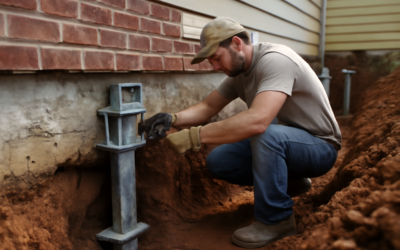
A helical pier is a steel shaft with one or more screw-like plates welded near the tip. Hydraulic equipment turns it into the ground like a large screw until it reaches soil that can carry the required load. A steel bracket then connects the pier to the footing, transferring the house’s weight onto the pier. On existing homes, piers are used to stabilize settling foundations and sometimes to lift them back toward level. Residential helical piers are popular because they install with relatively compact equipment and can be load-tested as they go in.
What Drives the Price per Pier
Installation Depth
Depth is often the single biggest variable. Piers are driven until the installation torque shows they have reached competent soil. In firm soil that might happen at a modest depth; in soft clay or fill it can take many more feet of extensions. Each extension adds material and labor. Contractors often quote a base depth per pier and charge extra per foot beyond it, so read that line carefully.
Load Requirements
A two-story house with brick veneer puts far more weight on each pier than a single-story frame house. Heavier loads may call for larger shafts, more helix plates or closer pier spacing, all of which increase cost. The engineer’s calculations set these requirements.
Access and Site Conditions
Open yards are straightforward. Tight side yards, decks, patios, landscaping, driveways and interior basement locations increase labor. Piers installed from inside a basement may require breaking and patching the slab. Concrete removal, hand digging and restoring hardscape all show up on the bill.
Number of Piers and Spacing
Spacing is set by the engineer based on load and footing strength. More piers raise the total, but the per-pier price often drops on larger jobs because mobilization and setup costs are spread out.
Lifting Versus Stabilizing
Stabilizing stops further settlement. Lifting attempts to raise the foundation back toward its original position, which takes more time, careful monitoring and sometimes interior repairs afterward to drywall, doors and flooring. Expect lifting to cost more.
Engineering and Permits
A licensed structural engineer’s evaluation, stamped drawings and final inspection letter add to the project but protect you. Many jurisdictions require a permit for pier work. Permit fees vary widely by location.
Warranty
Transferable lifetime warranties on the installed piers are common among established contractors, and that coverage is partly built into the price. A lower bid with a short or non-transferable warranty is not always the better deal.
Whole-Job Cost Examples
These scenarios are illustrative only. Actual pricing varies by region, soil and contractor.
- Single settling corner: a few piers with good exterior access and moderate depth. Totals often land in the lower several-thousand-dollar range, plus engineering.
- One full wall: perhaps six to ten piers along a side of the house with some landscaping in the way. Totals commonly reach the low to mid tens of thousands.
- Perimeter stabilization with lift: a dozen or more piers, deep installation in soft clay, and interior finish repairs afterward. This can climb well into the tens of thousands.
Add drainage correction if the engineer identifies water as a cause. Fixing downspouts and grading is usually inexpensive compared with the piers themselves, and skipping it can undermine the repair.
What Happens on Installation Day
Knowing the sequence helps you understand what you are paying for. The crew marks pier locations from the engineer’s plan and confirms utilities have been located. They excavate a small pit at each location down to the bottom of the footing, prepare the footing face, and drive the pier with a hydraulic torque motor mounted on compact equipment. Installation torque is recorded as each pier goes in, because torque correlates with load capacity. Once every pier reaches its target, brackets are attached and the load is transferred, either holding the house in place or raising it in small, monitored increments. The pits are backfilled and compacted, and the site is cleaned up. Many residential jobs take one to a few days, though larger or interior jobs can run longer. Ask for the installation log with depths and torque readings for your records; it supports your warranty and helps at resale.
Helical Piers Versus Other Pier Types
Push piers (resistance piers) are driven hydraulically using the weight of the house as resistance. They can reach deeper bearing layers and are sometimes priced similarly or slightly lower per pier, but they need enough structural weight to drive against. Helical pier installation does not rely on the home’s weight, which suits lighter structures, porches, additions and new footings. Concrete pilings are another option in some regions. The engineer should choose the system; cost should decide between contractors, not between methods.
How to Compare Bids
- Start with an independent engineer’s report so every contractor prices the same scope.
- Ask each bidder for pier count, shaft size, helix configuration, target torque or load, and included depth.
- Get the price per extra foot of depth in writing.
- Confirm who handles excavation, concrete removal, backfill, landscaping and interior patching.
- Compare warranty length, transferability and what the warranty actually covers.
- Verify license, insurance and permit responsibility.
- Hold back a portion of payment until the engineer signs off.
Ways to Manage Cost Without Cutting Corners
- Clear the work area yourself (move plants, patio furniture and storage) if the contractor credits you for it.
- Handle simple drainage fixes like downspout extensions and regrading before the crew arrives.
- Schedule during drier months when excavation is easier, if the damage is not urgent.
- Get at least three bids from licensed foundation contractors using the same engineered scope.
- Ask whether financing or phased work is possible for non-urgent sections.
Warning Signs in a Quote
- No mention of depth, load criteria or installation torque
- Pier counts well below what the engineer specified
- Pressure to sign the same day for a discount
- Large deposits before any work begins
- Vague warranty language or no permit
When to Call a Licensed Professional
Helical pier work is not a DIY project. Installation uses heavy hydraulic equipment and directly affects your home’s structure. Start with a licensed structural engineer to confirm piers are the right fix and to design the layout, then hire a licensed foundation contractor to install them with a building permit. The contractor must call 811 before digging so buried utilities are marked, and any plumbing, gas or electrical lines disturbed during excavation must be handled by licensed trades.
Frequently Asked Questions
How much does it cost to install helical piers per pier?
Many residential installations fall roughly between one thousand and a few thousand dollars per pier, installed. Depth, load, access and region move the price, so get quotes based on an engineer’s scope.
How many helical piers does a house need?
It depends on the damaged area, the home’s weight and footing strength. A single corner may need only a few, while a full wall or perimeter can take a dozen or more. A structural engineer sets the count and spacing.
Are helical piers used for residential footings on new additions?
Yes. Helical pier footings are often used for additions, porches, decks and sunrooms, especially on soft soil or tight sites where large excavation is impractical. They still require engineering and permits.
Why do helical pier quotes vary so much?
Bids may assume different depths, pier counts, shaft sizes, restoration work and warranties. Using one engineer’s report as the scope for every contractor makes quotes much easier to compare.
Does homeowners insurance cover helical piers cost?
Standard policies often exclude settlement and earth movement, but coverage varies. Review your policy and speak with your insurer, especially if damage followed a sudden event such as a plumbing leak.