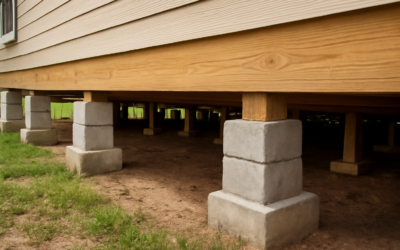
Bouncy floors, doors that stick in summer, and a marble that rolls toward one corner of the kitchen are classic signs that a raised foundation needs attention. The average pier and beam foundation repair cost runs $2,000 to $12,000, with simple re-shimming at the low end and full beam or pier replacement at the high end. Unlike slab repair, most pier and beam work happens in the crawlspace with hand tools and jacks, which keeps many repairs more affordable. The final bill depends on what failed, how many piers are involved, and how easy the crawlspace is to work in.
- Pier and Beam Foundation Repair Cost at a Glance
- How Pier and Beam Foundations Fail
- Cost Breakdown by Repair Type
- Factors That Change Your Price
- Warning Signs Worth Checking
- When to Call a Licensed Professional
- How to Save on Pier and Beam Repairs
- Sample Budgets for Common Scenarios
- Is Pier and Beam Repair Covered by Insurance?
Pier and Beam Foundation Repair Cost at a Glance
National averages give you a starting point before you call contractors. Prices below reflect 2026 contractor quotes across the South, Midwest, and West, where raised foundations are most common.
| Repair Type | Typical Cost | Notes |
|---|---|---|
| Re-shimming and leveling | $500 to $3,000 | Adjusts existing piers with steel shims |
| New concrete piers | $300 to $1,000 each | Replaces failed or missing supports |
| Steel adjustable jacks | $150 to $500 each | Installed under beams between piers |
| Sill plate or beam replacement | $100 to $300 per linear foot | Rot or termite damage |
| Joist sistering or replacement | $100 to $400 per joist | Sagging or cracked joists |
| Crawlspace drainage and vapor barrier | $1,500 to $8,000 | Addresses moisture root cause |
| Full foundation rebuild | $20,000 to $50,000+ | Rare, severe cases |
Most homeowners fall in the $3,500 to $7,500 range for a typical repair: re-leveling the house, adding four to eight supports, and replacing a section of damaged sill or beam.
How Pier and Beam Foundations Fail
A pier and beam foundation holds the house 18 to 36 inches above the ground on concrete, masonry, or wood piers. Horizontal beams (girders) sit on the piers, and floor joists span between the beams. Every component can shift or deteriorate.
- Soil movement: Expansive clay soils, common in Texas, Oklahoma, Louisiana, and parts of California, swell when wet and shrink when dry. Piers heave or settle as a result.
- Moisture and rot: Poor ventilation or standing water in the crawlspace rots wood beams, sill plates, and joists over time.
- Termites: Subterranean termites travel up piers and feast on untreated wood.
- Original shortcuts: Older homes built with wood blocks or stacked bricks as piers often need upgraded supports.
- Added loads: Remodels that add heavy tile floors, stone countertops, or a bathtub can overload joists that were sized for lighter use.
Understanding the cause matters because it drives the price. Re-leveling a house on clay without fixing drainage just means you will pay again in a few years.
Cost Breakdown by Repair Type
Shimming and Re-Leveling
The most common and least expensive fix. Crews jack the beams back to level and insert steel shims between the pier cap and the beam. Wood shims were once standard, but they compress and rot; insist on steel. Cost runs $500 to $3,000 for most houses and takes one day. Many companies recommend re-shimming every few years in expansive soils and offer annual adjustment plans for $300 to $600.
Adding or Replacing Piers
If piers are cracked, sinking, tilted, or spaced too far apart, new ones are needed. A poured concrete pier with a footing costs $300 to $1,000 each. Pressed concrete pilings driven to refusal or bell-bottom piers drilled 8 to 12 feet deep cost more but resist soil movement better. Expect a range of $500 to $1,500 per deep pier.
Beam and Sill Replacement
Rotted beams or sill plates must be cut out and replaced with pressure-treated lumber, usually while the house is temporarily supported on shoring jacks. At $100 to $300 per linear foot, replacing a 20-foot beam section runs $2,000 to $6,000.
Joist Repair
Sagging or cracked joists are sistered by fastening a new full-length joist alongside the old one. Each sistered joist costs $100 to $400. If your floors bounce under heavy furniture, adding a mid-span beam or support line may be cheaper than sistering every joist.
Crawlspace Moisture Control
Adding a 6 to 20 mil vapor barrier, foundation vents, a sump pump, or full encapsulation costs $1,500 to $15,000 depending on the square footage and how thoroughly you seal it. It is often the best long-term investment because moisture is behind most rot and soil movement.
Factors That Change Your Price
- Crawlspace clearance: Less than 18 inches means crews may have to dig access trenches, adding $500 to $2,500.
- Access points: If there is no crawlspace door, one may have to be cut through the skirting or even the floor.
- House size and weight: Two-story homes and houses with heavy tile or stone finishes require more supports.
- Soil and region: Expansive clay regions have more specialists and more competition, but also deeper pier requirements.
- Engineering and permits: A structural engineer’s report runs $400 to $1,000, and permits add $100 to $500 in many cities.
- Interior repairs: Leveling a house can crack drywall, pop tiles, or bind doors. Budget $500 to $3,000 for cosmetic fixes afterward.
Warning Signs Worth Checking
Catching problems early saves money. Walk your home and look for these indicators:
- Floors that slope, dip, or feel soft and springy
- Diagonal drywall cracks radiating from door and window corners
- Interior doors that swing open or will not latch
- Gaps between the baseboard and floor, or between the ceiling and walls
- Cracked floor tile or separating hardwood and vinyl plank seams
- Musty smells or visible mold coming from floor vents or the crawlspace
Flooring often gives the earliest warning. Tile grout lines that crack in a straight path across a room, laminate that peaks at the joints, or hardwood that cups suddenly can all point to movement or moisture below the subfloor. Fix the structure before replacing the floor, or the new flooring will fail the same way.
When to Call a Licensed Professional
Foundation work is structural, and mistakes can crack walls, break plumbing lines, or cause a section of floor to drop. Homeowners can safely inspect the crawlspace with a flashlight, measure floor slope with a 4-foot level, and keep an eye on crack widths over time. Anything beyond that, including jacking, cutting beams, or adding piers, belongs to a licensed foundation contractor, ideally with an independent structural engineer’s evaluation.
Call a professional promptly if you see cracks wider than 1/4 inch, floors sloping more than 1 inch over 10 feet, rapid changes over a few weeks, rotted wood you can push a screwdriver into, or active termite damage. If gas or water lines run through the crawlspace, leveling can stress them, so the contractor should coordinate with a licensed plumber when needed.
How to Save on Pier and Beam Repairs
- Get an independent engineer first. A $500 report written by someone who does not sell repairs protects you from overselling and gives contractors a common scope to bid on.
- Collect three bids. Prices for identical scopes can vary by 40 percent or more.
- Ask about transferable warranties. Lifetime warranties on piers add resale value, but read what is covered; many exclude re-shimming.
- Fix drainage. Gutters, downspout extensions that discharge at least 5 feet from the house, and grading that slopes 6 inches over the first 10 feet cost little and prevent repeat repairs.
- Keep soil moisture consistent. In drought-prone clay regions, a soaker hose around the perimeter during dry months limits shrinkage.
- Schedule repairs in dry season. Crawlspaces are easier to work in, and some contractors discount off-peak jobs.
Sample Budgets for Common Scenarios
Real quotes rarely match a single line item, so here is how typical jobs add up for a 1,600 sq ft single-story house on a raised foundation.
- Minor settling, sound wood: Re-shim 20 to 30 existing piers with steel shims and add three steel adjustable jacks under a sagging beam. Expect $1,800 to $3,200, finished in one day.
- Moderate movement plus rot: Re-level the house, add six new concrete piers, replace 16 feet of rotted sill plate near a leaky bathroom, and sister four joists. Expect $6,000 to $10,500 over two to four days.
- Severe clay heave with moisture issues: Install 12 to 15 deep drilled piers, replace a main girder, add a 12 mil vapor barrier, and regrade the yard. Expect $15,000 to $28,000, plus interior drywall and flooring repairs.
Get each quote itemized by pier count, linear feet of lumber, and number of shims so you can compare bids line by line instead of guessing at the difference between two totals.
Is Pier and Beam Repair Covered by Insurance?
Standard homeowners policies usually exclude settling, soil movement, and gradual deterioration such as rot and termites. Coverage may apply if the damage resulted from a sudden, covered event like a burst pipe that flooded the crawlspace. Document everything with photos and a contractor’s written assessment before filing a claim.
If you are buying or selling, foundation repair documentation matters. Buyers and lenders feel far more comfortable with a completed repair that comes with engineer sign-off and a transferable warranty than with an unexplained slope. Budgeting realistically now, and addressing moisture along with the structure, keeps a raised foundation sound for decades.