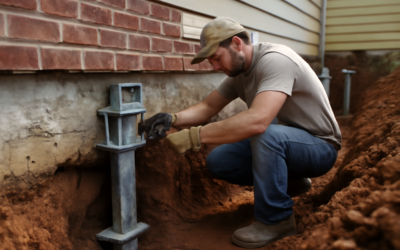
Digging a dozen 4 foot holes in rocky clay, hauling bags of concrete across a yard and waiting a week for footings to cure is the least fun part of any deck build. Helical piers for decks skip most of that. A steel shaft with screw-like plates is driven into the ground with a hydraulic motor, torque readings confirm capacity on the spot, and you can often frame the deck the same day. They aren’t right for every project, but on wet sites, slopes, tight access and frost-heave-prone soils they frequently beat poured footings on both speed and performance.
Part of our Decks & Outdoor guide — explore the full guide →
The short answer for most homeowners: helical piles make sense when soil is poor, the site is hard to reach with concrete, or the schedule matters. On firm, easy-to-dig soil with good access, traditional concrete footings are usually cheaper.
- How Helical Piers for Decks Work
- When Helical Piles Beat Concrete
- Load Capacity: What a Deck Pier Can Carry
- Comparing Helical Piles to Other Footing Options
- DIY vs Professional Installation
- Step-by-Step Overview of a Typical Install
- Helical Piers for Decks: Cost Ranges
- Common Problems and How to Avoid Them
- Safety and When to Call a Licensed Professional
- Frequently Asked Questions
How Helical Piers for Decks Work
A helical pier, also called a helical pile or screw pile, is a galvanized steel shaft with one or more round helix plates welded near the tip. The installer attaches the shaft to a hydraulic drive head mounted on a mini excavator, skid steer or a handheld rig, and rotates it into the soil like a giant wood screw. The plates pull the shaft down and, once in place, bear on the soil much like a footing would.
The key advantage is measurable capacity. Torque needed to turn the pile correlates with soil strength, so the installer keeps driving until the gauge shows the target torque for the required load. That’s verification you simply don’t get when you pour concrete into a hole and hope the bottom is on good soil. Extensions are bolted on if the pile needs to go deeper to reach competent ground, so helical deck footings can adapt to soil that changes from one corner of the yard to the other.
At the top, a bracket or cap plate accepts a post base or bolts directly to a beam. Many systems include adjustable brackets that let you fine-tune height before framing.
When Helical Piles Beat Concrete
- Frost heave zones: Helix plates sit below the frost line, and the slim shaft gives frost little surface to grip. That makes helical piles for deck projects in cold climates very stable.
- Wet or high water table sites: Holes that fill with water make concrete pours messy and unreliable. Screw piles don’t care.
- Poor or variable soil: Fill, soft clay and organic soils can be bypassed by driving deeper until torque confirms capacity.
- Tight access and slopes: No concrete truck, no wheelbarrows, and small rigs fit through gates. Hillside decks are a common use.
- Tree roots: A narrow shaft disturbs far less root area than an excavated footing.
- Speed: Typical decks get all piles installed in a few hours with no curing wait.
- Low disruption: No spoil piles to haul off, and lawns recover quickly.
Concrete still wins on easy sites where a crew can auger holes quickly and a few bags per footing finish the job. It’s also the default where local inspectors are unfamiliar with helical systems, though most jurisdictions now accept them with manufacturer documentation or an engineer’s letter.
Load Capacity: What a Deck Pier Can Carry
Residential helical piles for decks typically carry anywhere from about 2,000 to more than 10,000 pounds per pile depending on shaft diameter, helix size and soil. Small-diameter deck piles often have a single 8 to 10 inch helix, while heavier piles use larger or multiple plates for more capacity.
To figure out what you need, your deck plans determine the tributary load on each footing. A typical residential deck is designed for a live load of 40 pounds per square foot plus dead load. A footing supporting a 6 by 8 foot area carries roughly 2,400 to 3,000 pounds, while beams spanning farther or decks carrying hot tubs, roofs or heavy snow loads demand much more. The installer matches pile type and target torque to those numbers, and many will provide an installation log showing final torque at every pile for the inspector.
Lateral load matters too. Freestanding and tall decks rely on bracing and connections to resist sway; a single slender pile isn’t designed to act as a cantilevered post. Your design should still include proper beam connections, bracing and ledger attachment where applicable.
Comparing Helical Piles to Other Footing Options
| Footing Type | Best For | Main Drawback |
|---|---|---|
| Poured concrete footing | Firm soil, easy access, budget builds | Digging, curing time, frost heave risk if shallow |
| Helical pile | Wet, soft, sloped or frost-prone sites | Higher cost per footing, needs equipment |
| Precast pier block with driven pins | Low ground-level decks, light loads | Limited capacity, local code acceptance varies |
| Surface pier blocks | Freestanding platforms, temporary uses | Not frost-protected, often not permitted for attached decks |
Precast concrete blocks that anchor with steel pins driven at angles are another no-dig option people sometimes compare with screw piles. They work well for low, light decks on suitable soil, but helical piles reach deeper bearing layers and carry heavier loads with verified capacity.
DIY vs Professional Installation
Professional installation is the norm. Contractors bring a hydraulic drive head, calibrated torque gauges and engineering data for the specific pile system, and they can document capacity for your building inspector. Many installers will set eight to twelve piles in a morning, and the result is rated for a specific load.
DIY installation is possible with small-diameter deck piles and rented handheld drive units, but there are real tradeoffs. Handheld rigs produce large reaction torque that can throw the operator, so they need a reaction bar and two people. Without a calibrated torque reading, you can’t confirm capacity, and many inspectors won’t sign off without an installation log. For small freestanding platforms on cooperative soil, a careful DIYer with the right rental gear can manage. For attached, elevated or heavily loaded decks, hire a certified installer.
Step-by-Step Overview of a Typical Install
- Plan and permit. Get deck plans showing pile locations and loads. Submit pile specifications or an engineer’s letter with your permit application.
- Call 811. Always call 811 a few business days before driving piles. Steel shafts can rupture gas lines, water lines and buried electrical cables just as easily as a shovel can.
- Lay out pile locations. Mark centers with string lines and stakes, checking that the layout is square.
- Drive the piles. The installer positions the shaft plumb, drives it while monitoring torque, and adds extensions as needed until target torque and minimum depth (below frost) are both met.
- Cut to height. Shafts are cut to elevation using a laser level, and caps or adjustable brackets are installed.
- Record results. Final depth and torque for each pile go into the installation log for the inspector.
- Frame the deck. Posts or beams attach directly to the brackets with code-approved fasteners. Many builders start framing the same afternoon.
Helical Piers for Decks: Cost Ranges
Expect to pay more per footing than for basic concrete, but less in labor time and site restoration. Installed helical piers for decks commonly run a few hundred dollars per pile, with typical deck projects of 6 to 12 piles landing somewhere in the low to mid thousands. Costs rise with deeper installations requiring extensions, larger shafts for heavier loads, difficult access and travel to rural sites. Many installers charge a mobilization fee that makes small jobs with only a few piles relatively expensive per footing.
Concrete footings for the same deck might cost less in materials, but add in labor for digging, hauling spoil, rental augers and the time lost waiting for cure. On hard sites, the gap closes fast and helical systems sometimes come out cheaper overall.
Common Problems and How to Avoid Them
Pile hits rock or debris
Buried rock, old foundations or construction debris can stop a pile short of target depth. The installer may relocate the pile slightly, use a different shaft design, or consult an engineer about alternate support.
Target torque not reached
In very soft soils, the installer keeps adding extensions until capacity is verified. That increases cost, so a soil assessment beforehand helps you budget.
Pile out of plumb
Driving at an angle reduces capacity. A skilled operator checks plumb throughout and corrects early; a pile that wanders significantly should be backed out and reinstalled.
Corrosion in aggressive soils
Hot-dip galvanized steel holds up well in most soils, but very acidic or salty sites may call for heavier coatings. Ask the installer about local corrosion experience.
Safety and When to Call a Licensed Professional
Always call 811 before any digging or pile driving, and keep people well clear of rotating equipment and drive heads. Attached and elevated decks usually require permits, and footings must be anchored securely and designed for the deck’s live, dead, wind and snow loads. Follow any HOA approval process before work begins.
Hire a licensed contractor or certified helical pile installer for attached decks, decks more than a few feet above grade, decks on steep slopes, and any structure carrying a roof, hot tub or heavy snow. A licensed structural engineer should review designs on unusual soils or where loads are unclear. If your project ties into an existing house foundation, the work may need an engineer’s stamped plan in many jurisdictions.
Frequently Asked Questions
Are helical piers better than concrete for decks?
On wet, soft, sloped or frost-prone sites they often are, because capacity is verified and there’s no curing wait. On easy, firm soil, concrete is usually cheaper.
How deep do helical deck footings go?
They’re driven at least below the local frost line and deeper until the target torque is reached, which can range from several feet to well over ten feet in soft soil.
Can I install helical piles for a deck myself?
Small freestanding decks are possible with rented gear, but most inspectors want a torque log from a certified installer for attached or elevated decks.
Do helical piers for decks need permits?
Most attached or elevated decks need a permit regardless of footing type, and many jurisdictions require pile specifications or an engineer’s letter.
How long do helical piles last?
Galvanized piles in typical soils are designed to last for decades, often matching or outlasting the deck framing they support.