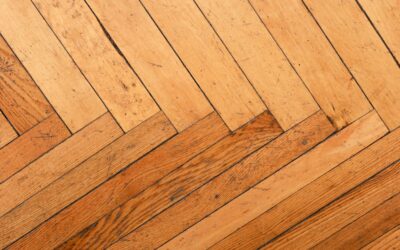
Herringbone is the oldest decorative flooring pattern still in widespread use — French parquet de Versailles dates from the 17th century, and the basic herringbone goes back further than written records. A modern herringbone pattern flooring install costs more than straight planks, takes longer to lay, and rewards the extra effort with a finished floor that adds visible value to a home. This guide covers the pattern variations, cost premium, material options, and installation tricks that make the difference between a striking herringbone and an obvious DIY mistake.
Herringbone vs Chevron: Know the Difference
The two patterns are constantly confused. True herringbone uses rectangular planks laid at 90-degree angles to each other, with one plank’s end butting against another’s side. Chevron uses planks cut at 45-degree (or sometimes 60-degree) angles so they meet point-to-point, forming continuous V-shaped peaks.
Herringbone is more forgiving of installation imperfections because the pattern absorbs slight misalignment. Chevron requires precise mitered cuts and is significantly more expensive both in material and labor. Most homeowners ordering “chevron” actually want herringbone.
Material Options
Herringbone works in almost any plank flooring material. The best choices depend on budget, room conditions, and desired aesthetic.
- Solid hardwood: Traditional, refinishable, $8 to $20 per square foot installed. Best for living areas and bedrooms.
- Engineered hardwood: Stable in humid environments, $7 to $18 installed. Most pre-cut herringbone parquet is engineered.
- Luxury vinyl plank (LVP): Waterproof, budget-friendly, $5 to $12 installed. Karndean and Coretec offer convincing herringbone-cut LVP.
- Porcelain tile: Wood-look porcelain in herringbone gives the look in wet areas, $9 to $20 installed.
- Laminate: Pre-cut herringbone laminate from Pergo and Quick-Step, $4 to $9 installed.
The Cost Premium
Herringbone costs more than straight-plank installation for two reasons. The pattern requires roughly 10% to 15% more material due to additional cutting waste, and installation labor typically runs 30% to 50% higher because of the careful layout and precision cutting. A standard hardwood install at $7 per square foot for labor becomes $9 to $11 in herringbone.
Pre-cut herringbone planks (smaller blocks designed specifically for the pattern) reduce installation time but cost more per square foot than cut-down standard planks. The trade-off is roughly even on total project cost.
Plank Size Selection
Plank size dramatically changes the visual scale of a herringbone pattern. Small blocks (3 by 12 inches) read as classic European parquet — busy and detailed, ideal for entry halls and small rooms. Mid-size blocks (5 by 24 inches) work in most rooms and look contemporary. Large planks (7 by 36 inches or bigger) create an oversized statement pattern best suited to expansive open floor plans.
Match the scale of the pattern to the size of the room. A small bathroom in giant-plank herringbone looks awkward. A great room in tiny parquet looks busy. The standard 2:1 length-to-width plank ratio (e.g., 6 by 12, 8 by 16) produces the cleanest herringbone visual.
Layout Direction Matters
Herringbone can run parallel to walls (45 degrees from one major wall) or directly perpendicular to a wall (with the V-shapes pointing into the room). The 45-degree layout is more common and easier to live with — the eye reads it as a single pattern flowing through the room.
Test the layout direction with painter’s tape on the subfloor before installing. Walk the room from the main entry, sit in the primary furniture spots, and look down. The pattern should feel intentional from every angle. Once installed, the direction cannot be changed without ripping out the floor.
Border and Field Combinations
Traditional herringbone often features a contrasting border running along the room perimeter, framing the pattern field. The border can be plain straight planks of the same wood, contrasting wood (walnut framing oak is classic), or even a separate inlaid design. Borders typically run 3 to 6 inches wide.
Modern installations more often run herringbone wall-to-wall without borders, simply trimming the pattern at the wall and finishing with a baseboard or quarter round. This is cleaner and significantly cheaper to install but loses some traditional character.
Installation Challenges
Herringbone is harder to install than straight plank for several reasons. The pattern’s interlocking nature means small alignment errors compound across the room. Cutting planks at the walls requires angled cuts on every piece. Subfloor preparation must be exceptional — any height variation or out-of-plumb wall reads visibly in the finished floor.
Hire installers with documented herringbone experience and ask to see photos of completed work. The going rate for hardwood herringbone installation is $8 to $14 per square foot. Pay for experience — herringbone done badly is impossible to hide and expensive to redo.
Best Rooms for Herringbone
Herringbone works best in rooms where it can be appreciated from a distance and where it does not compete with other strong design elements. Entry halls, dining rooms, hallways, formal living rooms, and home offices all suit the pattern. The visual movement adds interest in low-furniture spaces.
Bedrooms are workable but the pattern is partially hidden by beds and rugs. Kitchens look stunning in herringbone but require careful material selection (waterproof LVP or porcelain) and the pattern can feel overwhelming in small spaces. Bathrooms in herringbone tile have become a strong trend in the last 5 years.
Maintenance and Long-Term Care
Herringbone requires the same maintenance as straight-plank flooring of the same material. Hardwood needs regular sweeping, occasional damp microfiber mopping with a wood-safe cleaner, and refinishing every 8 to 15 years. The pattern’s many seams catch slightly more grit than a straight floor, so weekly vacuuming with a hard-floor attachment matters.
If a single plank gets damaged, replacement is more complex than in a straight install — the angled fit makes spot repair harder and often requires removing several adjacent pieces. Keep a box of attic stock from the original purchase for future repairs.
Frequently Asked Questions
Is herringbone pattern flooring more expensive?
Yes — typically 25% to 50% more than straight-plank installation due to additional cutting waste and longer install time. Plan for $2 to $5 per square foot premium.
What is the difference between herringbone and chevron flooring?
Herringbone uses rectangular planks at 90-degree angles. Chevron uses angled planks meeting point-to-point in continuous V-shapes. Chevron costs significantly more.
Can I install herringbone flooring myself?
Possible with experience, but challenging. Pre-cut herringbone laminate or LVP click-lock systems are the most DIY-friendly. Hardwood herringbone is best left to pros.
What rooms work best for herringbone?
Entry halls, dining rooms, hallways, living rooms, and bathrooms all suit the pattern. Bedrooms work but the pattern is partially hidden by furniture.
How do I choose the right plank size for herringbone?
Small blocks (3×12) for traditional parquet looks, mid-size (5×24) for most modern rooms, large planks (7×36) for expansive open floors. Match scale to room size.
Prefer to explore on your own?
See how new flooring looks in your actual room in seconds — free, no signup.
Try the free Floor Studio →