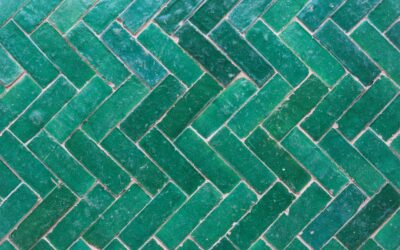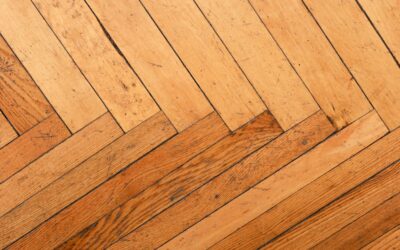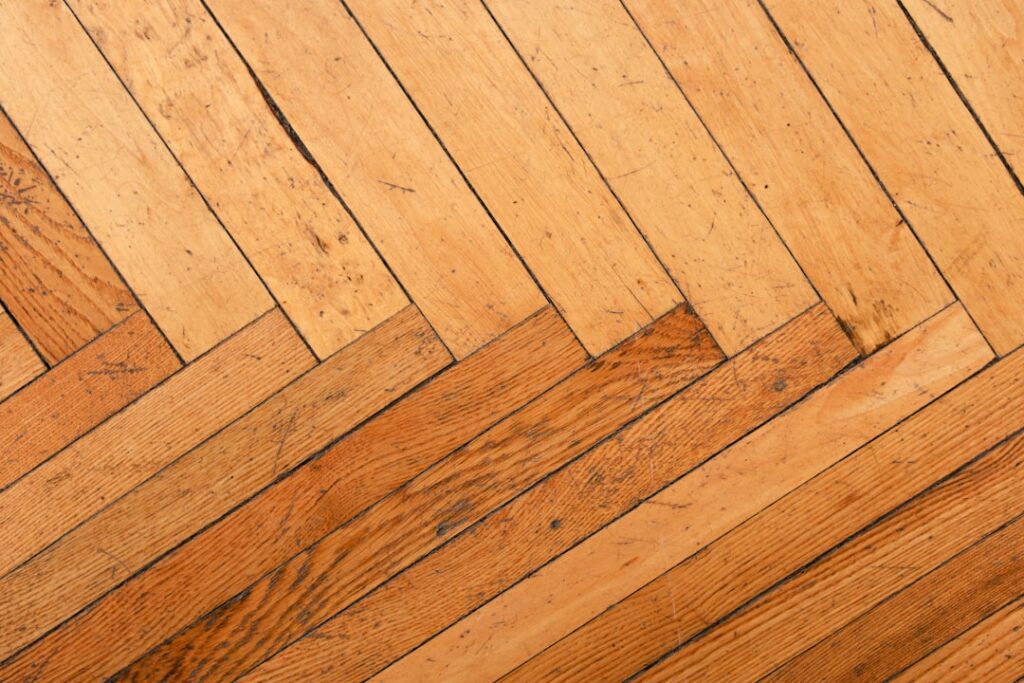
Most homeowners think these two patterns are interchangeable. They are not. The debate of chevron flooring vs herringbone comes down to a single geometric detail that changes the cost, the cutting waste, and the entire feel of a room. One creates a continuous zig-zag chevron point. The other forms an interlocking L-shape. Knowing the difference before you order 400 square feet of engineered oak will save you a painful return trip to the supplier.
The Geometric Difference in One Sentence
Chevron planks are cut at a 45-degree angle on both ends so their points meet in a continuous V. Herringbone planks are cut at a 90-degree square end and staggered so the end of one plank meets the side of another at a right angle. That is the entire structural distinction, and it drives every other decision.
Hold two planks flat. If the tips kiss in a clean peak running down the middle of the floor, that is chevron. If one plank stops halfway along the next, creating a broken zig-zag, that is herringbone. Both create movement and visual interest. Only one requires angled mitre cuts at the factory.
Installation Difficulty and Labor Cost
Herringbone is more forgiving for a skilled installer. Standard rectangular planks mean fewer specialty pieces, and small layout errors can be corrected with a tap of the mallet. Expect labor between $6 and $9 per square foot for a pro install.
Chevron requires factory-angled ends, so every plank must land precisely. Misalignment shows immediately along the center spine. Installers typically charge $8 to $12 per square foot, and many refuse to tackle chevron unless they have done it before. Budget an extra 10 to 15 percent for cutting waste either way.
Material Cost Comparison
Herringbone planks are essentially standard rectangles, so you can use almost any hardwood, engineered wood, or luxury vinyl plank cut down to a smaller size. Pricing starts around $4 per square foot for engineered oak and climbs past $15 for solid walnut or white oak from brands like Shaw Floors, Mohawk, or Bruce.
Chevron planks must be pre-mitered, which narrows your supplier list and raises the price. Engineered chevron runs $8 to $18 per square foot. Solid hardwood chevron from European manufacturers like Hakwood or Junckers can exceed $25 per square foot. The pattern itself does not change the wood grade, but the factory process adds cost.
Visual Effect in Different Room Sizes
In a small entryway or a narrow hallway under 8 feet wide, chevron tends to look more refined. The continuous V draws the eye forward and makes the space feel elongated. Herringbone can feel busy in tight quarters, especially with high-contrast species like walnut or hickory.
Larger rooms forgive both patterns. A 15-by-20-foot living area with herringbone feels classic and European — think Parisian apartment. The same space in chevron reads as more modern and architectural. Run the pattern perpendicular to the longest wall to widen the room visually, regardless of which style you choose.
Plank Size and Proportions
- Herringbone: planks typically 4 to 6 inches wide and 18 to 24 inches long. A 1:4 or 1:5 ratio gives the cleanest traditional look.
- Chevron: planks usually 3 to 5 inches wide and 12 to 24 inches long, with 45-degree cuts on both ends. Wider chevron reads as contemporary; narrower planks feel classic.
- Parquet blocks: both patterns scale down to 2-inch blocks for mosaic-style herringbone, which is rare in chevron because of the cutting complexity.
Subfloor and Underlayment Considerations
Both patterns demand a flat subfloor — within 3/16 inch over 10 feet. Dips and humps telegraph through the pattern far more visibly than a straight-lay plank. If you are installing over concrete, use a moisture barrier and self-leveling compound before the first row goes down.
For floating engineered installations, a 3mm foam or cork underlayment works for both. Glue-down jobs, which are common for chevron to keep the mitered joints tight, need a premium urethane adhesive like Bostik BEST or Mapei Ultrabond. Expect $40 to $60 per gallon, and a gallon covers about 60 square feet.
Which Pattern Fits Your Style
If you love clean, symmetrical architecture and your home leans mid-century modern or Scandinavian, chevron usually wins. The crisp center line complements minimalist furniture and neutral walls. If your space is traditional, transitional, or Victorian-inspired, herringbone carries more historical weight and pairs beautifully with classic molding and darker wall colors.
Resale matters too. Realtors in markets like Boston, Chicago, and Brooklyn note that herringbone reads as timeless — buyers associate it with prewar craftsmanship. Chevron feels current but can date faster if trends shift. Neither pattern hurts resale; both command a premium over standard straight-lay when executed well.
Maintenance and Long-Term Wear
Cleaning routines are identical. Sweep or dry mop daily, damp mop weekly with a pH-neutral cleaner like Bona Hardwood Floor Cleaner, and avoid standing water at the joints. The real difference shows up in repair. A damaged herringbone plank can often be popped out and replaced without disturbing neighbors. A chevron repair requires a new mitered piece, which may need to be custom cut if the original run is discontinued.
Order 15 to 20 percent overage on either pattern and stash the boxes in a climate-controlled space. Ten years from now, a matching replacement plank is worth more than the $80 it cost today.
Final Takeaway
The choice between chevron flooring vs herringbone is not about quality — both are beautiful, both add value, and both have been used in grand homes for centuries. Chevron gives you a sharper, more modern V-point at a higher material and labor cost. Herringbone gives you classic interlocking rectangles with more installer flexibility and broader product availability. Pick the pattern that matches your architecture, budget the full 15 percent overage, and hire an installer who can show you photos of a chevron or herringbone job they finished themselves.
Prefer to explore on your own?
See how new flooring looks in your actual room in seconds — free, no signup.
Try the free Floor Studio →