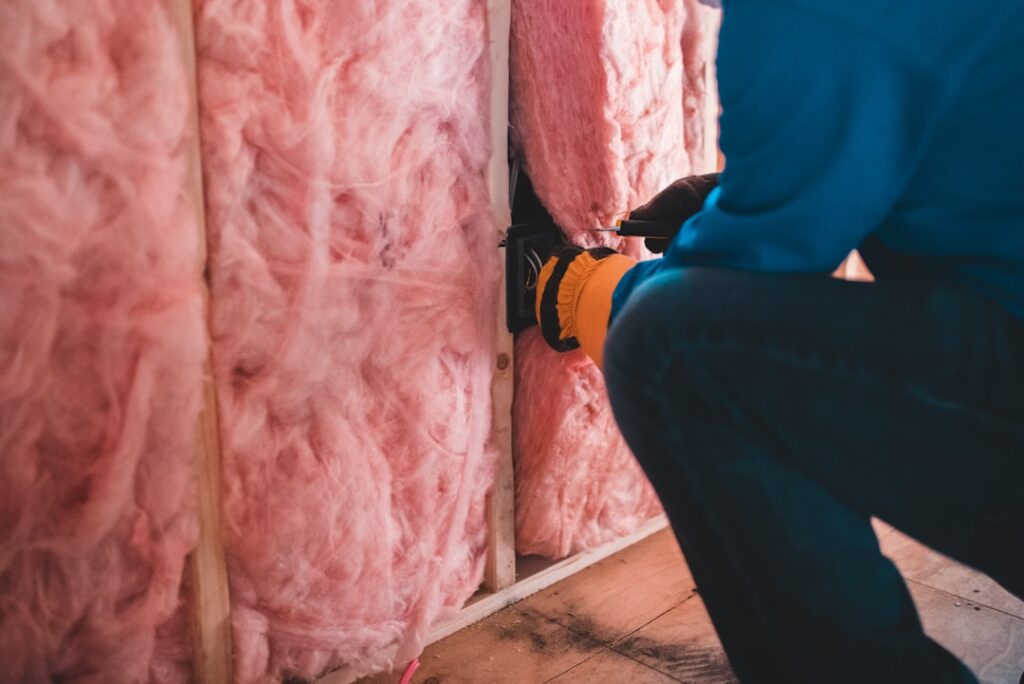
When wall depth, attic clearance, or a tight retrofit limits how much material you can fit, the highest R value insulation per inch becomes the deciding factor in your project. R-value measures a material’s resistance to heat flow—the higher the number, the better it slows heat moving through your walls, roof, and floors. But the material with the highest R-value is not always the best or most affordable choice. This guide ranks the common options by R-value per inch and explains where each one actually makes sense.
- Understanding R-Value Per Inch
- The R-Value Rankings by Material
- Aerogel: The Absolute Champion
- Closed-Cell Spray Foam: The Practical Winner
- Polyiso Foam Board: Highest R Rigid Board
- R-Value Is Not the Whole Story
- Matching Insulation to the Job
- Recommended R-Values by Location
- How Climate Zone Changes the Math
- Combining Materials for Best Results
- The Bottom Line
Understanding R-Value Per Inch
R-value is additive, so a material rated R-6 per inch gives you R-30 at five inches thick. That per-inch figure is what matters when space is limited—two materials can reach the same total R-value, but the higher-per-inch product does it in a thinner package. This is why a shallow 2×4 wall cavity or a low-clearance attic often forces you toward premium foams even though fluffy batts are cheaper. Keep in mind that manufacturer R-values are measured under lab conditions; real-world performance depends on installation quality and air sealing.
The R-Value Rankings by Material
Here is how the common residential insulations stack up per inch, from highest to lowest:
- Aerogel: R-10 or higher per inch—the highest available, but very expensive and rare in homes.
- Polyisocyanurate (polyiso) foam board: R-6 to R-6.5 per inch, the highest of common rigid boards.
- Closed-cell spray foam: R-6 to R-7 per inch, plus it air-seals and blocks moisture.
- Extruded polystyrene (XPS) board: R-5 per inch, moisture-resistant.
- Expanded polystyrene (EPS) board: R-3.6 to R-4.2 per inch, the budget rigid option.
- Open-cell spray foam: R-3.5 to R-3.7 per inch.
- Fiberglass and mineral wool batts: R-3 to R-4.3 per inch depending on density.
- Blown cellulose: R-3.2 to R-3.8 per inch.
Aerogel: The Absolute Champion
Aerogel blankets deliver the highest R-value of any insulation, often R-10 per inch or more, in a flexible, thin material. It is used in aerospace, industrial pipe insulation, and extreme space-constrained retrofits. The catch is cost—aerogel runs many times the price of foam and is rarely practical for a whole house. Where it earns its keep is a specific, unavoidable thin gap—say insulating a historic window reveal or a thin door—where nothing else can deliver the needed R-value in the available depth.
Closed-Cell Spray Foam: The Practical Winner
For most homeowners chasing maximum performance, closed-cell spray foam is the realistic high-R champion. At R-6 to R-7 per inch it rivals polyiso, but it does three jobs at once: it insulates, it air-seals every crack it expands into, and it acts as a vapor and water barrier. That combination makes it dramatically more effective in practice than its R-value alone suggests, because air leakage is responsible for a huge share of real-world heat loss. It also adds rigidity to walls. The downside is cost—$1.50 to $3.50 per board foot installed—and the fact that it should be professionally applied.
Polyiso Foam Board: Highest R Rigid Board
Polyisocyanurate is the go-to rigid board for continuous exterior insulation over sheathing, roofs, and basement walls because it packs the most R-value into the least thickness of any common board. One caveat: polyiso’s R-value drops in very cold temperatures, so in the coldest climates designers sometimes derate it or pair it with XPS. Foil-faced polyiso also serves as a radiant barrier and vapor retarder, making it a strong all-rounder for reducing thermal bridging when installed on the outside of the framing.
R-Value Is Not the Whole Story
Chasing the single highest R-value number can lead you astray. Consider these factors alongside per-inch performance:
- Air sealing: a leaky R-30 assembly can underperform a well-sealed R-20 one. Spray foam’s air seal is its hidden superpower.
- Moisture behavior: closed-cell foam and XPS resist water; fiberglass and cellulose do not and can lose R-value when damp.
- Cost per R: cellulose and fiberglass deliver far more R-value per dollar when you have the space to fill.
- Fire and code: foams usually need a thermal barrier like drywall over them.
Matching Insulation to the Job
The smart approach is to use the high-R materials only where space forces you to, and cheaper bulk insulation everywhere else. In a roomy attic, blown cellulose or fiberglass to R-49 or R-60 is the cost-effective answer. In a shallow cathedral ceiling or a 2×4 wall, closed-cell foam or polyiso earns its premium by hitting code in limited depth. On the exterior over sheathing, a layer of polyiso or XPS breaks thermal bridging through the studs. Basements and rim joists are ideal spray-foam territory because of the moisture and air-sealing benefits.
Recommended R-Values by Location
The U.S. Department of Energy recommends target R-values by climate zone. In most of the country, attics should reach R-49 to R-60, walls R-13 to R-21 (plus continuous exterior insulation in cold zones), and floors over unconditioned space R-25 to R-30. Reaching those numbers with a high-per-inch material simply means fewer inches of thickness—useful, but only necessary where thickness is constrained. Where you have room, a lower-per-inch material at greater thickness reaches the same target for less money.
How Climate Zone Changes the Math
The right insulation strategy shifts dramatically with where you live. The Department of Energy divides the country into climate zones, and a home in Zone 2 (the Gulf Coast, southern Florida, Texas) has far lower insulation targets than one in Zone 7 (northern Minnesota, Maine). In hot southern climates, the priority is often radiant heat control and moderate R-values, so foil-faced polyiso and radiant barriers pull their weight. In cold northern zones, high total R-value and airtightness dominate, which pushes designers toward thick cellulose in attics and closed-cell foam or continuous exterior foam board on walls to stop thermal bridging through the studs. Humid climates add moisture management to the equation, favoring closed-cell foam and moisture-tolerant materials, while dry climates give you more latitude. Always check your specific zone’s recommended R-values before deciding how much and which type of insulation to buy.
Combining Materials for Best Results
The highest-performing walls and roofs rarely use a single product—they layer materials to get each one’s strengths. A common high-performance wall assembly puts fluffy cavity insulation (cellulose or fiberglass) between the studs for cheap bulk R-value, then adds a continuous layer of rigid foam board on the exterior to break the thermal bridge through the framing and boost the whole-wall R-value. Similarly, a “flash and batt” approach sprays a thin layer of closed-cell foam against the sheathing for air sealing and moisture control, then fills the rest of the cavity with less expensive batts. This hybrid strategy captures the air-sealing and high-per-inch benefits of premium foam where they matter most while keeping overall cost down—often the smartest path when you want strong performance without spraying foam through the entire structure. The same logic applies to roofs and floors: a layer of rigid polyiso above the roof deck stops thermal bridging through the rafters while batts or blown insulation fill the cavities below, and a thin flash of closed-cell foam over a crawlspace floor seals out ground moisture before cheaper insulation is added. By reserving the expensive high-R materials for the specific job each does best—air sealing, moisture control, and breaking thermal bridges—and letting bulk insulation do the heavy lifting where you have depth, you get most of the performance of an all-foam approach at a fraction of the cost.
The Bottom Line
Aerogel technically holds the crown for highest R value insulation per inch, but closed-cell spray foam and polyiso foam board are the practical high-performers homeowners actually use. Reserve them for tight cavities, exterior continuous insulation, and moisture-prone areas, and fall back on affordable cellulose or fiberglass where you have the depth to spare. The best insulation strategy is not one material at maximum R-value—it is the right material in each spot, installed tightly and air-sealed so the R-value on the label is the R-value you actually get.