If you are asking whats the best insulation for your home, the honest answer is that it depends on where you are insulating, your climate, and your budget. There is no single winner. The right choice for an open attic is different from the right choice for a finished wall cavity or a damp crawlspace. This guide breaks down the main insulation types, what R-value means, where each material shines, and roughly what each costs so you can match the product to the job.
R-Value: The Number That Matters Most
R-value measures resistance to heat flow. The higher the R-value, the better the material slows heat from moving through it. R-value is additive, so two layers of R-19 stack to R-38. Just as important is R-value per inch, because that tells you how much insulating power you get in a tight space. A material with a high R-per-inch lets you hit your target in a thinner assembly, which matters in walls and rim joists where depth is limited.
The Department of Energy recommends attic insulation around R-49 to R-60 in most of the country, with walls typically R-13 to R-21 and floors R-25 to R-30. Your local building code sets the minimums for your area.
Fiberglass Batts
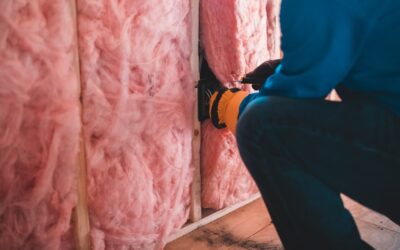
Fiberglass batts are the familiar pink or yellow rolls. They are the cheapest option and the most DIY-friendly, delivering about R-2.9 to R-3.8 per inch. Batts work well in standard, obstruction-free framing bays in walls, floors, and attics. The catch is that they only perform if installed perfectly: any gaps, compression, or wires routed through them create thermal bridges that cut effectiveness. Expect roughly $0.30 to $1.50 per square foot for materials.
Blown-In Cellulose
Blown-in cellulose is made from recycled paper treated with borate for fire and pest resistance. Blown into attics or dense-packed into wall cavities, it conforms around obstructions far better than batts, yielding about R-3.2 to R-3.8 per inch. It is an excellent attic choice because it fills every nook and is relatively affordable at about $0.60 to $1.80 per square foot installed. Many home centers loan a blower with a bulk purchase, making attic jobs DIY-capable.
Spray Foam: Open-Cell vs Closed-Cell
Spray polyurethane foam expands on contact, sealing air leaks and insulating in one step. There are two kinds:
- Open-cell: Lighter and softer, about R-3.5 to R-3.7 per inch. Good for interior walls and attics where moisture is not a concern. More affordable than closed-cell.
- Closed-cell: Dense and rigid, the highest R-per-inch at about R-6 to R-7. It doubles as an air and vapor barrier, making it ideal for rim joists, crawlspaces, and tight cavities where you need maximum performance in minimal thickness.
Spray foam is the most expensive option, often $1.00 to $4.00-plus per square foot, and large jobs should be left to pros for proper mixing and curing.
Mineral Wool and Rigid Foam Board
Mineral wool (rock wool) batts deliver about R-4.0 to R-4.3 per inch, resist fire, repel water, and dampen sound, which makes them a favorite for interior walls and basements. They cost a bit more than fiberglass, around $1.00 to $2.00 per square foot. Because the fibers are denser and more rigid than fiberglass, mineral wool holds its shape in the cavity and is far less prone to slumping over time, which keeps its R-value stable for the life of the home. It is also a strong pick for sound control between bedrooms, home offices, and shared walls.
Rigid foam board comes in panels that are perfect for continuous exterior sheathing, basement walls, and under slabs. Depending on the type, polyiso, XPS, or EPS, you get roughly R-3.6 to R-6.5 per inch, with the bonus of stopping thermal bridging across studs when applied as a continuous layer.
Best Insulation by Application
Here is the practical matchup most homeowners need:
- Attic (target R-49+): Blown-in cellulose or fiberglass is the most cost-effective. Spray foam works for conditioned attics.
- Walls: Dense-pack cellulose or batts for retrofits; closed-cell foam for new builds wanting an air seal.
- Basement walls: Rigid foam board or closed-cell spray foam, both of which tolerate moisture.
- Crawlspace: Closed-cell spray foam or rigid board on the walls, especially in encapsulated crawlspaces.
- Rim joists: Closed-cell foam or rigid board, where high R-per-inch and air sealing matter most.
Air Sealing and Climate Zones
Insulation slows heat transfer, but it does not stop air leaks on its own. Air sealing, caulking gaps, sealing penetrations, and weatherstripping, can deliver a bigger comfort improvement than adding inches of insulation. Seal first, then insulate. Spray foam is unique in doing both at once. Common leak points worth chasing down include the attic hatch, recessed light cans, plumbing and wiring penetrations, the rim joist, and gaps around windows and doors. A few tubes of caulk and a can of expanding foam are inexpensive, yet sealing these leaks can noticeably cut drafts and lower your heating and cooling bills before you add a single batt.
Vapor management goes hand in hand with air sealing. In cold climates you generally want a vapor retarder toward the warm interior side, while mixed and hot-humid climates call for assemblies that can dry in both directions. Getting this wrong can trap moisture inside walls and lead to mold or rot, so check the recommended approach for your region before you close up any cavity.
Climate zone drives your targets too. Cold northern zones need the deepest attic R-values and benefit from continuous exterior foam to fight thermal bridging. Hot, humid southern zones prioritize air sealing, radiant control, and moisture-resistant materials in crawlspaces. Check your zone on the DOE map and follow your local code minimum as a floor, not a ceiling.
DIY vs Hiring a Pro
Fiberglass batts, rigid board, and blown-in cellulose in an accessible attic are realistic weekend DIY projects with rented equipment. Spray foam, dense-pack wall retrofits, and any job requiring you to open finished walls are best left to insulation contractors who have the gear and experience to avoid moisture and air-quality problems. So when you ask whats the best insulation, start with the location, set your R-value target, seal the air leaks, and pick the material that fits the space and your skill level.