Ductless systems have quietly become the go-to solution for room additions, garages, and homes without ductwork, and a Hitachi mini split sits among the most reliable options in that market. Backed by decades of compressor engineering, Hitachi’s ductless line delivers efficient heating and cooling with the kind of whisper-quiet operation that makes it disappear into a bedroom or home office. Before you commit, it helps to understand how the models differ, how to size a unit, and what real-world installation costs look like.
Why Consider Hitachi Ductless
Hitachi has built HVAC compressors for global markets for over 50 years, and that experience shows in the durability of its scroll and rotary compressors. The ductless line focuses on inverter-driven systems, meaning the compressor ramps its speed up and down to match demand instead of cycling fully on and off. That translates to steadier temperatures, lower energy bills, and less mechanical wear over the unit’s life.
Indoor units run remarkably quiet, some as low as 19 decibels on the lowest fan setting, which is quieter than a whisper. For anyone converting an attic, sunroom, or detached garage into livable space, that silence plus the lack of ductwork makes ductless the practical choice.
Understanding SEER and Efficiency
Efficiency is measured by SEER for cooling and HSPF for heating. Hitachi’s residential mini splits commonly range from 18 to 25 SEER2, well above the federal minimum. A higher SEER cuts your cooling cost, and the inverter compressor is the main reason these units hit those numbers.
For a rough sense of savings, moving from an old 10 SEER window unit to a 20 SEER mini split can roughly halve the cooling portion of your electric bill. In heating mode, Hitachi’s heat-pump models pull warmth from outdoor air efficiently down into the low teens Fahrenheit, and cold-climate variants keep working below zero.
Single-Zone vs. Multi-Zone Systems
The right configuration depends on how many spaces you need to condition.
- Single-zone: one outdoor condenser paired with one indoor head, ideal for a single room, addition, or garage
- Multi-zone: one outdoor unit feeding two to five indoor heads, letting you condition several rooms with independent temperature control
Multi-zone systems cost more upfront but avoid cluttering your yard with multiple condensers. Each indoor head runs on its own thermostat, so you can cool a bedroom while leaving an unused guest room off, which trims energy use.
Sizing Your Mini Split
Sizing is measured in BTUs, and getting it right matters more than brand. An oversized unit short-cycles, wasting energy and leaving humidity behind, while an undersized one runs constantly and never quite catches up. As a starting rule, plan roughly 20 BTU per square foot of conditioned space.
- 150-350 sq ft: 9,000 BTU head
- 350-550 sq ft: 12,000 BTU head
- 550-800 sq ft: 18,000 BTU head
- 800-1,200 sq ft: 24,000 BTU head
Adjust up for rooms with lots of west-facing glass, high ceilings, or poor insulation, and have an HVAC pro run a Manual J load calculation for anything beyond a simple single room.
Installation and Costs
A single-zone Hitachi mini split typically costs $2,000 to $4,500 installed, while multi-zone systems run $4,500 to $9,000 depending on the number of heads. The equipment is only part of that; professional installation includes mounting the indoor head, setting the condenser on a pad or brackets, running the refrigerant line set, and pulling a vacuum on the lines before charging.
That vacuum step is why DIY is risky. Improper evacuation leaves moisture in the lines that destroys the compressor over time and usually voids the warranty. Licensed refrigerant handling is required by law for the charge, so budget for a professional even if you handle the mounting yourself on a pre-charged kit.
Maintenance for a Long Life
Ductless units reward simple upkeep. Wash the indoor unit’s reusable filters every four to six weeks during heavy-use seasons, since clogged filters choke airflow and drop efficiency fast. Keep the outdoor condenser clear of leaves, and hose the coil fins gently each spring. Once a year, check that the condensate drain line is clear so it doesn’t back up and leak onto the wall below the indoor head.
Indoor Unit Styles
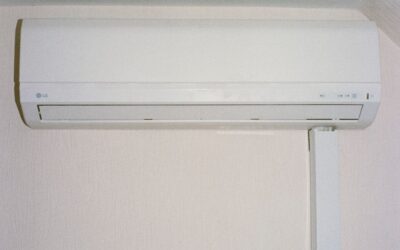
Hitachi offers more than the familiar wall-mounted head, and the right style depends on the room. Wall-mounted units are the most common and most affordable, mounting high on an interior wall. Ceiling cassettes recess into a dropped ceiling and blow air in four directions, ideal for larger open rooms where a wall unit would look out of place. Floor-mounted consoles sit low on the wall like a radiator, handy for rooms with lots of glass or limited high wall space.
Each style connects to the same outdoor condenser, so in a multi-zone setup you can mix a wall unit in a bedroom with a floor console in a sunroom. Match the head to the room’s layout and ceiling type rather than defaulting to wall-mounted everywhere.
Warranty and Support
Hitachi backs its residential ductless systems with solid warranties, typically covering the compressor for a longer term than the parts, often 7 to 10 years on the compressor with professional installation and registration. That coverage is one reason to hire a licensed installer rather than attempting a full DIY job, since self-installed refrigerant work usually voids the warranty. Keep your installation paperwork and register the unit promptly to lock in the full term.
Is a Hitachi Mini Split Right for You?
If you’re heating or cooling a space without ducts, want per-room control, and value quiet, efficient operation, a Hitachi ductless system is a strong pick. It’s less cost-effective for a whole large home that already has good ductwork, where a central system may make more sense. But for additions, garages, sunrooms, and older homes fighting hot and cold spots, the combination of inverter efficiency, low noise, and Hitachi’s compressor track record earns its place. Size it properly, hire a qualified installer for the refrigerant work, and rinse the filters, and it should serve reliably for 15 to 20 years.