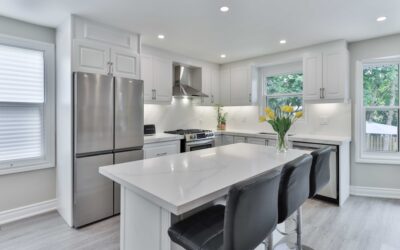
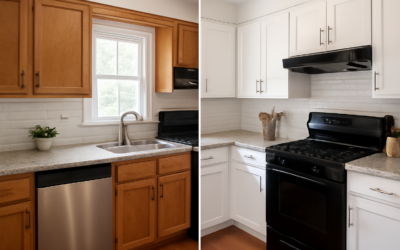
Ripping out perfectly solid cabinet boxes just to change how a kitchen looks is one of the most wasteful renovation moves a homeowner can make. If your existing cabinets are structurally sound but dated, how does cabinet refacing work becomes the most important question you can ask. Refacing keeps the boxes in place and replaces only the visible surfaces, delivering a brand-new look for roughly half the cost of full replacement and a fraction of the mess.
Part of our Kitchen Remodeling guide — explore the full guide →
What Cabinet Refacing Actually Is
Refacing is a surface-level transformation. The cabinet boxes, the frames bolted to your walls, stay exactly where they are. What changes is everything you see and touch: the doors, drawer fronts, and the exposed face frames and end panels.
This differs from a simple repaint, which only recolors the existing doors, and from refinishing, which strips and re-stains them. Refacing replaces the doors and drawer fronts entirely while covering the boxes with a matching veneer or laminate skin, so the whole kitchen looks like new cabinetry without the demolition.
The Step-by-Step Process
Understanding the sequence makes the project far less intimidating. A typical professional reface follows a predictable order over two to four days.
- Remove old doors and drawer fronts: All hardware, hinges, doors, and fronts come off, leaving bare boxes.
- Prep the boxes: Surfaces are cleaned, sanded, and any damage is repaired so the new skin adheres properly.
- Apply veneer or laminate: A thin layer of wood veneer or rigid thermofoil is cut and bonded to the exposed face frames and end panels.
- Install new doors and drawer fronts: Fresh fronts in your chosen style and finish are hung and aligned.
- Add new hardware: New hinges, pulls, and knobs complete the look, often with soft-close upgrades.
Material Options for Refacing
The skin material sets both the look and the budget. Each option has trade-offs in durability and price worth weighing before you commit.
- Wood veneer: Real wood, stainable, and natural-looking. The premium choice at the higher end of the price range.
- Rigid thermofoil (RTF): Vinyl molded over fiberboard, seamless and easy to clean, popular for white and solid-color kitchens.
- Plastic laminate: Durable, moisture-resistant, and the most budget-friendly, available in countless colors and patterns.
What Cabinet Refacing Costs
Cost is usually the deciding factor. Refacing a standard 10-by-12-foot kitchen typically runs $4,000 to $10,000, compared to $12,000 to $25,000 for full cabinet replacement. The exact figure depends on the number of cabinets, the material you choose, and whether you add features like new drawer boxes or pull-out shelves.
A budget DIY reface using peel-and-stick veneer and stock doors can come in under $2,000, while a high-end professional job with custom wood veneer approaches replacement cost. As a rule, refacing saves 30% to 50% over new cabinets when the existing boxes are in good shape.
When Refacing Makes Sense and When It Doesn’t
Refacing is the right call when your cabinet boxes are solid, the layout works for your needs, and you simply want a fresh look. It’s ideal for sturdy plywood or solid-wood boxes that have stood up well over the years.
Skip refacing if the boxes are water-damaged, sagging, or made of crumbling particleboard, because you’d be putting a new face on a failing structure. Likewise, if you want to change the kitchen layout, move cabinets, or add significant storage, full replacement gives you the flexibility refacing can’t.
Upgrades to Add During Refacing
Since the cabinets are already opened up, refacing is the perfect moment to add features that improve function. These upgrades cost far less now than as a separate project later, because the boxes are accessible and the installer is already on site.
- Soft-close hinges and drawer slides: Eliminate slamming for about $5 to $15 per door or drawer.
- Pull-out shelves and lazy Susans: Reclaim deep, hard-to-reach cabinet space.
- New crown molding: Adds a finished, custom look to the cabinet tops.
- Under-cabinet lighting: LED strips that brighten counters during the same job.
- Glass-front or open-shelf doors: Break up a wall of solid cabinetry for display.
How Long Refacing Lasts
A common worry is whether refacing holds up or just looks good for a year. Quality refacing, done with proper adhesives over sound boxes, lasts 15 to 20 years, comparable to the cabinets themselves. The doors and drawer fronts are new, full-quality components, so they wear exactly like any other cabinet door.
The veneer or laminate skin is where durability varies. Real wood veneer and rigid thermofoil hold up well in normal kitchen conditions, though RTF can occasionally delaminate near heat sources like ovens if poorly installed. Keep heat shields on cabinets flanking the range, wipe up moisture promptly, and a refaced kitchen will look fresh for the better part of two decades.
DIY Versus Hiring a Pro
Refacing sits in an accessible middle ground. A handy homeowner can tackle peel-and-stick veneer and replacement doors over a long weekend, saving labor that typically accounts for half the project cost. The work demands patience, accurate measuring, and clean cuts more than specialized skill.
Professional installers, on the other hand, bring precision veneer bonding and warranty-backed results, finishing most kitchens in a few days with factory-grade adhesives. Now that you understand how does cabinet refacing work, you can weigh the savings of doing it yourself against the polished, guaranteed finish of a professional crew and choose the path that fits your skills and budget.
Refacing Versus Painting Versus Replacement
Refacing sits in the middle of three common ways to refresh tired cabinets, and knowing where it falls helps you pick the right level of investment. Each option suits a different budget and goal.
- Painting ($200 to $1,000 DIY): The cheapest refresh. Keeps existing doors but only changes color, and brush marks or peeling can appear over time.
- Refacing ($4,000 to $10,000): New doors, fronts, and a fresh skin on the boxes. A genuinely new look without demolition.
- Replacement ($12,000 to $25,000): All-new cabinetry. The only option if you want a new layout or the boxes are failing.
If your boxes are sound and the layout works, refacing delivers most of the visual payoff of replacement at roughly half the price. Choose painting only for a quick budget update, and reserve full replacement for structural problems or layout changes.