Most homeowners assume insulation wears out on a schedule like a water heater, then are surprised to learn it can outlive them. The real answer to how long does attic insulation last is that the material itself lasts a very long time, often 80 to 100 years for fiberglass and cellulose, while its performance degrades much sooner if moisture, pests, or settling get to it. In other words, insulation rarely dies of old age. It dies of neglect and environmental damage. Knowing which failure mode threatens your attic tells you whether to leave it alone or plan a replacement.
Lifespan by Insulation Type
Different materials age differently, and the number that matters is not shelf life but how long it holds its R-value in place:
- Fiberglass batts and blown fiberglass: 80 to 100 years as a material. It does not rot or break down chemically, but it settles and compresses over decades, losing some loft.
- Blown cellulose: 20 to 30 years of peak performance, up to 80 as a material. It settles more than fiberglass, sometimes 15 to 20 percent, and is the most vulnerable to moisture.
- Mineral wool (rock wool): 80 to 100 years. Dense, water-shedding, and pest-resistant, it holds up better than most.
- Spray foam: 80-plus years and often quoted as lasting the life of the home. It does not settle and stays put unless physically damaged.
So on paper, everything lasts decades. The gap between material lifespan and useful lifespan is where your attention belongs.
What Actually Shortens Its Life
Insulation almost never fails on its own. It fails because something else in the attic went wrong. The usual culprits are:
- Moisture and roof leaks — wet fiberglass and cellulose lose most of their R-value instantly because water conducts heat far better than trapped air. Repeated wetting leads to matting, mold, and permanent loss of loft.
- Pests — mice, squirrels, and insects tunnel through insulation, compress it, and contaminate it with droppings and urine, which ruins the material and creates a health hazard.
- Air movement and settling — over years, blown materials compact under their own weight, and a settled layer that dropped from 12 inches to 9 has lost a chunk of its rated R-value.
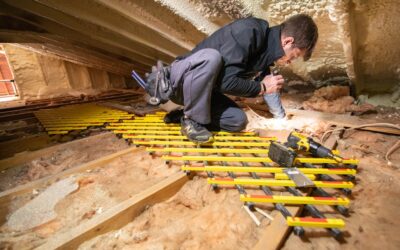
- Foot traffic — every trip across the attic to store boxes or service equipment crushes insulation flat in the walking paths.
Signs Your Insulation Is Past Its Prime
You do not need a lab to judge attic insulation. Grab a flashlight, a tape measure, and check for these red flags:
- Insulation sits below the tops of the ceiling joists, meaning you have less than R-30 in most homes.
- Visible water stains, damp spots, or a musty smell pointing to a roof or condensation problem.
- Matted, crusty, or discolored patches where moisture has been.
- Droppings, tunnels, or nesting material from rodents.
- Uneven upstairs temperatures, ice dams in winter, or heating and cooling bills creeping up year over year.
Any of these means the insulation is no longer doing its job even if the material is technically intact. A quick measurement of depth tells you most of the story: 12 to 16 inches of blown fiberglass or cellulose is roughly R-38 to R-49, the modern target for most climates.
Does R-Value Fade Over Time?
Loose-fill and batt insulation do not lose their inherent R-value per inch; a fiber is just as resistant to heat at year 40 as it was on day one. What changes is thickness. When cellulose settles from 10 inches to 8, you have lost 20 percent of your total R-value even though each remaining inch performs the same. Closed-cell spray foam is the exception in that its blowing agent stabilizes in the first months and then holds a steady aged R-value for the rest of its life with no settling.
This distinction matters for planning. If your cellulose has simply settled, you can often top it off with a few inches of fresh material rather than removing anything, restoring the depth and the R-value for a fraction of a full replacement.
When to Top Off vs Fully Replace
Not every tired attic needs a teardown. Choose based on condition:
- Top off when the existing insulation is dry, clean, and free of pests but simply thin or settled. Blowing 4 to 8 inches of new fiberglass or cellulose over the old layer is inexpensive, often $0.50 to $1.50 per square foot, and brings you up to current R-values.
- Remove and replace when insulation is water-damaged, moldy, rodent-contaminated, or compressed beyond recovery. Removal runs $1 to $2 per square foot on top of the cost of new material, but you cannot bury a contaminated layer and expect good results.
Before adding anything, fix the root cause. Sealing air leaks, repairing the roof, and blocking pest entry points protects your investment so the new insulation actually reaches its long potential lifespan.
Maximizing the Life You Get
The way to make attic insulation last its full 80 to 100 years is to control the environment around it. Keep the attic dry with proper ventilation, ideally a balanced intake at the soffits and exhaust at the ridge, so warm moist household air does not condense in the insulation. Air-seal the ceiling plane, top plates, and penetrations before insulating, because air movement carries moisture and undermines performance. Screen off pest entry points and keep foot traffic on rigid walk boards rather than directly on the insulation. Do those things and the material will comfortably outlast the roof above it.
How Ventilation and Air Sealing Extend Its Life
The single biggest factor in how long your insulation performs is whether the attic stays dry, and that is controlled by ventilation and air sealing, not by the insulation itself. Warm, moist air from the kitchen, bathrooms, and living space rises and leaks into the attic through gaps around light fixtures, the attic hatch, plumbing vents, and the top plates of walls. When that humid air hits the cold underside of the roof deck in winter, it condenses, dripping moisture down into the insulation. Over years this repeated wetting is what mats cellulose, compresses fiberglass, and grows mold, quietly shortening the insulation’s useful life long before the fibers themselves wear out.
Balanced ventilation fixes the other half of the equation. Intake vents at the soffits and exhaust vents at the ridge create a continuous washing of outdoor air through the attic, carrying away heat and moisture before it can condense. An attic that is both air-sealed at the ceiling plane and properly ventilated keeps its insulation dry, and dry insulation lasts its full material lifespan. This is why two identical houses with the same insulation can have wildly different outcomes at year 30, one still performing like new and the other needing a full replacement.
Insulation Around Heat Sources
Certain spots age faster because of what sits near them. Insulation packed against recessed can lights that are not rated IC (insulation contact) can be a fire risk and is often pulled back, leaving a gap that becomes a heat-loss path. Insulation near chimneys, flues, and exhaust fans can be displaced by required clearances. Over the years, HVAC technicians, electricians, and cable installers tramping through the attic compress and shove insulation aside around equipment, creating thin, worn areas even while the rest of the attic is fine. When you inspect, pay special attention to these high-traffic zones, because they typically degrade first and are easy to top off or re-fluff without touching the whole attic.
The Practical Takeaway
So how long does attic insulation last in real terms? Expect the material to endure for the better part of a century, but plan to inspect it every few years and to top it off or replace sections as moisture, pests, and settling take their toll. Fiberglass and mineral wool age gracefully, cellulose needs a closer eye, and spray foam essentially lasts the life of the house. The smart move is not to replace on a timer but to inspect, measure the depth, address any damage at its source, and add insulation when your R-value has slipped below the target for your climate zone.
Put simply, insulation is a buy-it-once material in most homes, provided you protect it from the three things that kill it early: water, pests, and compression. Keep the attic dry and sealed, keep animals out, and keep foot traffic off the insulation, and the fiberglass or mineral wool you install today will very likely still be doing its job when the roof above it has been replaced twice. That durability is exactly why the smart investment is not periodic replacement but the air sealing and ventilation that let the insulation reach its full, decades-long potential.