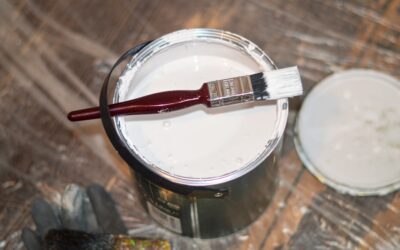
Buying too little paint means an extra trip to the store and a potential color mismatch between batches. Buying too much wastes money on cans that sit in the garage for years. So how much does a gallon of paint cover? The standard answer is 350-400 square feet per gallon on smooth, primed surfaces with a single coat. But real-world coverage varies widely depending on the surface texture, paint quality, color change, and application method.
Part of our Paint & Walls guide — explore the full guide →
Standard Coverage Rates
Paint manufacturers print coverage estimates on every can, and they are based on ideal conditions: smooth drywall, properly primed, using a quality roller. Here is what to realistically expect.
- Interior latex paint — 350-400 sq ft per gallon on smooth walls. Premium brands like Benjamin Moore Regal and Sherwin-Williams Duration hit the high end of this range.
- Interior primer — 300-350 sq ft per gallon. Primer is thinner and absorbs into the surface more than finish paint.
- Exterior latex paint — 250-350 sq ft per gallon. Exterior surfaces are rougher and more porous, reducing coverage.
- Ceiling paint — 350-400 sq ft per gallon. Ceiling paint is formulated thicker to reduce drips, and smooth ceilings offer consistent coverage.
- Cabinet and trim paint — 300-350 sq ft per gallon for enamel and alkyd paints, which are applied in thinner coats than wall paint.
What Affects Paint Coverage
Several factors push real-world coverage above or below the printed estimate. Understanding these helps you calculate more accurately.
Surface texture is the biggest variable. Smooth drywall with Level 5 finish gives you maximum coverage. Knockdown texture reduces coverage by 15-20% because paint fills the valleys and crevices. Heavy stucco, brick, or cinder block can cut coverage by 30-50% due to the extreme surface area.
Color change magnitude affects how many coats you need, not how far one gallon spreads. Going from beige to white may need only one coat. Covering dark red with light gray requires 2-3 coats regardless of paint quality, doubling or tripling your paint usage.
Application method matters too. Rollers apply paint most efficiently and match the manufacturer’s coverage estimate. Brushes use more paint per square foot due to thicker application. Sprayers cover fast but overspray wastes 20-30% of the paint into the air and onto masking.
How to Calculate Paint for a Room
Follow this straightforward formula to estimate your needs before heading to the store.
- Measure the perimeter of the room in feet (add all wall lengths together).
- Multiply the perimeter by the ceiling height to get total wall area in square feet.
- Subtract 20 sq ft for each standard door and 15 sq ft for each standard window.
- Divide the remaining square footage by 350 to get the number of gallons needed per coat.
- Multiply by the number of coats required (typically 2 for a color change, 1 for a refresh).
Example: A 12×14-foot room with 8-foot ceilings has a perimeter of 52 feet. Wall area is 416 sq ft. Subtract one door (20 sq ft) and two windows (30 sq ft) for 366 sq ft of paintable surface. That is just over 1 gallon per coat, so buy 2 gallons for two coats with a small amount left for touch-ups.
One Coat vs Two Coats
Some premium paints advertise one-coat coverage, and in specific circumstances they deliver. Painting the same color or a very similar shade over a properly primed surface can look complete in one coat with products like Benjamin Moore Aura or Sherwin-Williams Emerald.
Two coats are necessary when changing colors significantly, painting over repairs or patches, covering stains, or painting over dark colors with light ones. Even one-coat paints benefit from two coats on porous surfaces like new drywall or textured walls. The second coat fills holidays (thin spots) and provides a uniform, rich finish.
Plan for two coats in your paint calculation and be pleasantly surprised if one coat suffices.
Tips to Maximize Coverage
Priming bare surfaces before painting improves coverage dramatically. Primer seals porous materials so the finish paint sits on top rather than soaking in. A $15 gallon of primer saves you from needing an extra $50 gallon of finish paint.
Use the right roller nap. Smooth walls call for 3/8-inch nap rollers. Textured walls need 1/2-inch or 3/4-inch nap to reach into the crevices. Using too thin a nap on textured walls means you will make extra passes and use more paint trying to fill the texture.
Load your roller properly. Dip and roll on the tray screen until the roller is evenly loaded but not dripping. An evenly loaded roller distributes paint efficiently and covers more area per load than an overloaded roller that drips and leaves thick spots.
Buying the Right Amount
Always round up to the next full gallon. Leftover paint stored in a sealed can at room temperature stays usable for 5-10 years and is invaluable for touch-ups after furniture nicks, nail holes, or scuffs. Label the can with the room, date, and color formula for easy reference.
For very small projects under 100 square feet, quart sizes (covering about 90-100 sq ft) save money. Most paint lines offer quarts in the same custom colors as gallons, though some deep-base colors are only available in gallon sizes.
Coverage by Surface Type
Here is a quick reference for planning purposes. These assume one coat of quality latex paint.
- Smooth drywall — 350-400 sq ft per gallon
- Orange peel texture — 300-350 sq ft per gallon
- Knockdown texture — 280-330 sq ft per gallon
- Stucco (exterior) — 200-280 sq ft per gallon
- Brick — 150-250 sq ft per gallon
- Wood siding (painted) — 300-350 sq ft per gallon
- Wood siding (bare) — 200-300 sq ft per gallon
- Concrete block — 150-250 sq ft per gallon