Outdoor carpet turns a bare patio, porch, or garage floor into something softer and more finished, but sitting directly on a concrete slab means it collects everything the weather throws at it. Learning how to clean outdoor carpet on concrete the right way keeps the fibers looking fresh, stops mildew from taking hold underneath, and protects the slab from staining. The good news is that most of the job can be done with a garden hose, a stiff brush, and supplies you probably already own.
Part of our Windows & Doors guide — explore the full guide →
The trickiest part of cleaning outdoor carpet is not the washing itself but the drying. Because the carpet lies flat against a non-porous concrete surface, water gets trapped in between the two layers, and that trapped moisture is exactly where mold and musty odors begin. This guide walks you through the entire process, from a dry sweep to the final dry-down, so you get a genuinely clean result rather than a damp one.
Start by Removing Loose Debris
Before any water touches the carpet, get rid of the dry material sitting on top of it. Use a stiff push broom to sweep leaves, dirt, grass clippings, and cobwebs toward one edge, working with the direction of the nap so you lift grit out rather than grinding it deeper. On low-pile indoor-outdoor carpet, a shop vacuum does an even better job of pulling embedded sand and pollen out of the weave, and it takes only a few minutes for a typical 10-by-12-foot patio section.
This dry step matters more than people expect. If you skip straight to hosing, all that loose soil turns into a gritty mud that smears across the fibers and settles into the backing. Spending five minutes with a broom or vacuum first means the detergent can actually reach the stains instead of fighting a layer of surface dirt. Pay special attention to the edges and corners, where wind-blown debris tends to pile up and hide.
Hose It Down Thoroughly
Once the surface is swept, connect a garden hose and give the entire carpet a generous rinse. Start at the highest point of the slab, if there is any slope, and push the water toward the drain or the yard so the runoff carries dirt away rather than pooling in the middle. A standard hose nozzle set to a firm shower or jet pattern works well; you do not need a pressure washer, and in fact a high-powered washer can shred the fibers or peel the carpet off the concrete entirely.
Let the water do the loosening for a minute or two before you add any cleaner. Saturating the pile first opens up the fibers and dilutes any dried-in grime, which makes the detergent far more effective. If your outdoor carpet is glued down, keep the water moving and avoid blasting directly at the seams or edges where the adhesive could work loose over time.
Choose the Right Cleaning Solution
For routine dirt, a mild detergent is all you need. Mix about a quarter cup of liquid dish soap or a capful of mild laundry detergent into a gallon of warm water, or fill a bucket and stir until it is lightly sudsy. This gentle solution lifts everyday grime without leaving a sticky residue that attracts more dirt. Avoid harsh degreasers or full-strength bleach for general cleaning, since they can fade the color and degrade the latex or rubber backing.
When the carpet is heavily soiled, greasy, or has not been cleaned in a full season, a dedicated outdoor carpet cleaner is worth the small extra cost. These products, which run roughly $8 to $15 a bottle, are formulated to cut through the oils, algae, and traffic grime that plague patio surfaces, and many are safe for the drainage runoff to hit your lawn. Always read the label and test the product on a hidden corner first to confirm it does not lighten the fibers.
Scrub the Fibers
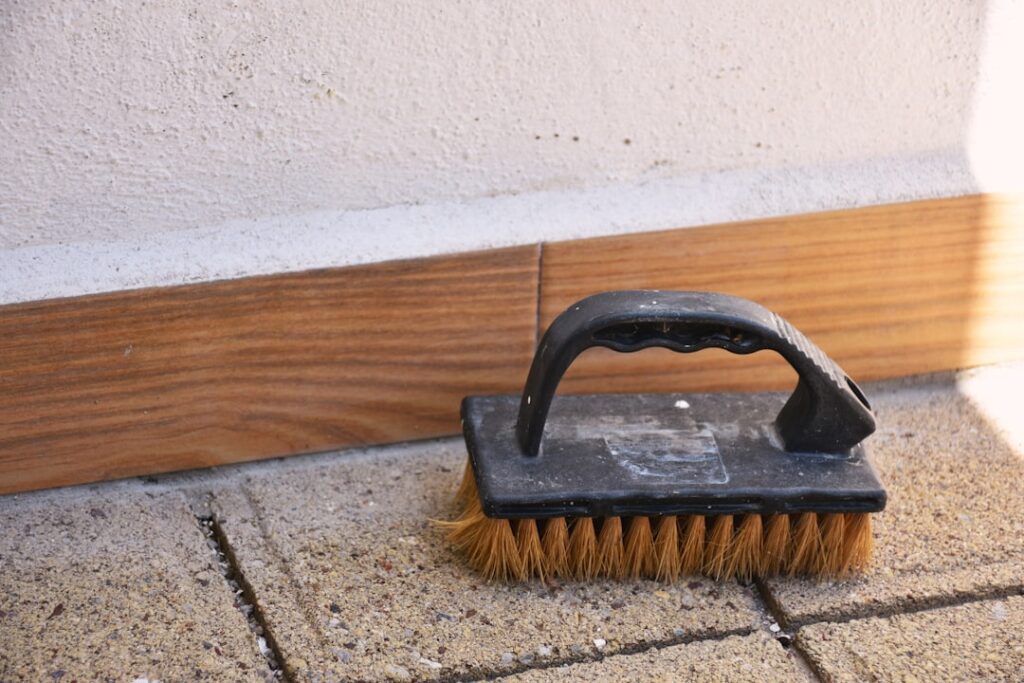
Pour or spray your cleaning solution across the wet carpet and work it in with a stiff-bristled scrub brush. A long-handled deck brush saves your back and lets you put real weight behind each stroke. Scrub in overlapping sections, moving in a back-and-forth then side-to-side pattern so the bristles agitate the fibers from multiple directions and dislodge dirt lodged deep in the weave. For a large patio, break the area into four or five zones so no section dries out before you rinse.
Give the soap five to ten minutes of dwell time to break down the grime, but do not let it dry completely in direct sun. On stubborn traffic lanes and doorway areas, a second pass with the brush after the dwell period lifts noticeably more soil. If you are cleaning a large or especially dirty carpet, rinse your brush in a bucket of clean water periodically so you are scrubbing with clean bristles rather than redepositing dirt.
Treat Mold, Mildew, and Stubborn Stains
Outdoor carpet on concrete is prone to mold and mildew because the slab holds moisture against the backing. If you see black or greenish spotting or catch a musty smell, mix white vinegar and water in a 1:1 ratio and apply it directly to the affected areas. Let the vinegar sit for around 15 minutes to kill the spores, then scrub and rinse. Vinegar is safe for most fibers and for the surrounding plants, which makes it a reliable first choice.
For more severe mildew or set-in organic stains, oxygen bleach (sodium percarbonate) is more effective than chlorine bleach and far gentler on the carpet’s color. Dissolve it in warm water per the package directions, apply it to the stain, and let it dwell for 15 to 30 minutes before scrubbing. Oxygen bleach breaks down into water and oxygen as it works, so it will not leave the harsh residue or fumes that chlorine bleach does. For grease spots, a dab of undiluted dish soap worked in with a brush usually lifts the oil.
Rinse Completely
Rinsing is not a step to rush. Any detergent or cleaner left behind in the fibers acts like a magnet for new dirt, so the carpet will look dingy again within days. Run clean water from the hose across the entire surface, again pushing the runoff toward a drain or the lawn, and keep rinsing until the water runs clear and no more suds appear when you press down on the pile with your foot.
On a glued-down carpet, lift and flush any water that pools along the edges so it does not seep under the backing. If the carpet is a loose-lay piece, this is a good moment to peel back the corners and rinse underneath, because dirt and soap often migrate below the carpet and sit on the concrete. A thorough final rinse is the difference between a carpet that stays clean for weeks and one that resoils almost immediately.
Dry to Prevent Trapped Moisture
Drying is the most important step for outdoor carpet on concrete, and the one most people cut short. Start by pushing as much standing water off the surface as you can with a squeegee or the flat edge of a push broom. Water trapped between the carpet and the slab has nowhere to evaporate quickly, and that lingering dampness is what breeds the mold and sour odors you were trying to eliminate in the first place.
If your carpet is a loose-lay piece, drape it over a railing, a couple of sawhorses, or lean it against a wall so air can circulate around both sides. Choose a warm, breezy day for the whole project so the carpet and the concrete beneath it can dry fully within a few hours. For glued-down carpet you cannot lift, aim a box fan across the surface and give it a full day of dry weather before you put furniture back. Never replace rugs, mats, or planters on the carpet until both the fibers and the slab underneath are completely dry to the touch.
Glued-Down vs. Loose-Lay Considerations
The way your carpet is installed changes how aggressively you can clean it. Glued-down outdoor carpet is bonded to the concrete with an adhesive, so you have to be gentler around the seams and edges, avoid soaking the perimeter, and rely on fans and airflow rather than lifting for drying. The upside is that a glued-down carpet will not shift while you scrub, so you can put firm pressure on the brush without worrying about bunching.
Loose-lay carpet, held down only by its own weight or a few edge fasteners, is more forgiving to clean because you can peel it back, rinse both sides, and hang it to dry completely. If a loose-lay piece is small enough, you can even move it onto a driveway or lawn to work on it, then let the concrete slab underneath dry and air out separately. Whichever type you have, checking underneath periodically for trapped grit and moisture will extend the life of both the carpet and the slab.
How Often Should You Clean It?
A light rinse and sweep every couple of weeks during the outdoor season keeps debris from building up and staining the fibers. Plan on a full deep clean, with detergent and scrubbing, at least twice a year, typically once in spring when you open up the patio and again in late summer or fall before you store or cover the carpet. Homes in humid climates, under heavy tree cover, or with pets may need the deep clean quarterly to stay ahead of mildew.
Between deep cleans, address spills and stains as soon as they happen, since fresh spots come out far more easily than set-in ones. A quick blot and rinse the moment a drink tips over or a muddy shoe tracks across the carpet prevents the kind of stubborn staining that eventually forces you to replace the whole piece. With this simple rhythm of routine sweeping, prompt spot treatment, and seasonal deep cleaning, outdoor carpet on a concrete slab can look good and stay mildew-free for many years.