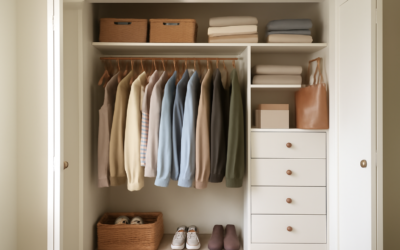
A slumped pair of tall boots that has spent six months collapsed in a corner rarely springs back to its original shape. Knowing how to store boots in closet spaces correctly keeps the leather upright, the toes uncreased, and the soles off the damp floor. The trick is not buying more closet, it is using the vertical and the dead space you already have. With a few inexpensive supports and a sensible system, even a tight reach-in closet can hold ankle booties, work boots, and knee-high leather without crushing anything.
Why Boots Need Different Storage Than Shoes
Boots have height and weight that flats and sneakers do not. Tall shafts flop over and develop permanent ankle creases when left unsupported. Leather that sits folded for months can crack along the bend. Heavy work boots dent softer footwear stacked beneath them. Treating boots like ordinary shoes is the single most common reason they wear out before the soles ever do.
Moisture is the other enemy. A closet floor near an exterior wall can stay cool and slightly damp, which invites mildew on leather and suede. Getting boots up off the floor and giving each pair a little air around it solves most long-term storage problems before they start.
Keep Tall Boots Upright
The goal with any tall boot is a straight, supported shaft. You have three good ways to get there, ranging from free to a small splurge.
- Pool noodles: Cut a foam pool noodle to the height of the shaft and slide one into each boot leg. At roughly $1 to $3 per noodle, this is the cheapest upright trick that exists, and one noodle usually fills two or three pairs.
- Boot shapers: Purpose-made plastic or cloth-covered inserts run about $10 to $25 a set. They hold a cleaner shape than foam and look tidier if your closet is on display.
- Rolled magazines or towels: In a pinch, a tightly rolled magazine sleeved in a sock does the same job as a shaper for free.
Whatever you use, the insert should be snug enough to hold the shaft vertical but not so tight it stretches the leather wider than the foot.
Shelf and Cubby Storage
Open shelving is the most flexible system for a mixed boot collection. A shelf set 12 to 14 inches above the next gives ankle boots and work boots room to stand without tipping. Reserve the top shelf for off-season or rarely worn pairs so the easy-reach zones stay open for daily boots.
If you are adding shelving, aim for adjustable brackets. Boot heights vary a lot, and the ability to move a shelf up two inches is the difference between a pair that stands proud and one that gets jammed in sideways. Clear acrylic shoe boxes, around $5 to $8 each, work well for ankle boots you want protected from dust while still visible.
Hanging Boots to Save Floor Space
When floor and shelf space run out, go up. Tall boots store beautifully when hung, and hanging keeps the shaft perfectly straight under its own weight.
- Boot hangers and clips: Spring clips grip the top of the shaft and hang from the closet rod. A pack of clips costs about $8 to $15 and clears the entire floor.
- Trouser hangers: The clamp style sold for pants holds boot tops just as well if you already own a few.
- Over-the-door racks: A hanging organizer with deep pockets keeps ankle boots and shorter pairs off the floor on the back of the closet door.
Hang boots by the top of the shaft rather than pinching the leather mid-calf, which can leave marks on softer hides.
Off-Season Boot Storage
Boots you only wear part of the year deserve a little more care before they go into hibernation. Clean off salt, dirt, and trail grime first, because debris left on leather draws moisture and stains over a long storage stretch. Let them dry fully away from direct heat, then condition leather pairs so they do not dry out.
Stuff each boot with acid-free tissue or a boot shaper to hold the shape, then store them in breathable cloth bags rather than sealed plastic. Plastic traps humidity and is a fast track to mildew. A silica gel packet tucked inside a storage bin helps in damp basements or garages. Label bins by season so you are not digging through winter boots in July.
Protecting Boots Long-Term
A few habits keep stored boots ready to wear. Avoid stacking heavy boots directly on top of lighter shoes, which dents the softer pair. Keep boots out of direct sunlight, since UV fades and dries leather and suede over time. Rotate the pairs you wear so no single boot carries the full weekly load, which also gives each pair a full day to dry between wears.
If pets or kids share the space, a closed cabinet or lidded bin keeps curious hands and chewing teeth away from expensive leather. Check stored boots once a quarter for any sign of mold, and wipe down the closet floor while you are in there.
Storage by Boot Type
Not every boot needs the same treatment, so it helps to sort your collection and store each type the way it likes. A little matching here keeps every pair in its best shape:
- Tall and knee-high boots: Always supported upright with shapers, noodles, or hung from clips so the shafts stay straight.
- Ankle boots and booties: Lined up on shelves or in clear boxes; they rarely slump and store easily.
- Work and hiking boots: Kept on a lower shelf or boot tray where their weight and dirt will not affect other footwear.
- Rain boots: Stored fully dry; a boot rack with airflow prevents trapped moisture and odor.
- Dress boots: Protected in cloth bags or boxes to keep dust and scuffs off the finish.
Grouping boots by type also makes them faster to find when you are getting dressed in a hurry.
Maximizing a Small Closet
If closet space is tight, the goal is squeezing every usable inch without crushing anything. A slim shoe rack on the floor doubles your standing space, while an over-the-door organizer puts the back of the door to work for ankle boots. Stackable shelf risers turn one tall, wasted gap into two usable levels.
Vertical storage is your best friend in a cramped closet. Hanging tall boots from rod clips frees the entire floor, and a tension rod mounted low inside a cabinet can hold more clips. Even a small closet holds a surprising number of boots once you stop stacking them flat and start storing them upright and hung.
Building a System That Lasts
The best closet setup mixes methods. Hang your tallest boots from clips to keep shafts straight, line ankle boots and booties on adjustable shelves at eye level, and reserve a top shelf or bins for off-season pairs. Add shapers or noodles to anything tall enough to slump, and you have a closet where every pair stands ready and keeps its shape. Spend a weekend setting it up once, and you will buy yourself years of boots that look as good coming out of the closet as they did going in.