Industrial carpet tiles were engineered to survive office corridors, airport lounges, and school hallways, so putting them in a basement or home gym is almost cheating. These modular squares shrug off foot traffic that would flatten a plush residential broadloom in a year. Most homeowners discover them while pricing a rec room and realize they get commercial toughness for less money than a mid-grade wall-to-wall carpet. The catch is that not all tiles are created equal, and the wrong backing in the wrong room will cost you.
Part of our Tile & Grout guide — explore the full guide →
This guide walks through what industrial carpet tiles actually are, where they shine in a house, what you should pay, and how to install and maintain them without hiring a crew.
- What Makes Industrial Carpet Tiles Different
- Where They Work Best in a Home
- Cost of Industrial Carpet Tiles
- Choosing the Right Backing and Fiber
- Installing Industrial Carpet Tiles Yourself
- Cleaning and Long-Term Maintenance
- Design Options and Layout Patterns
- Are Industrial Carpet Tiles Right for You?
What Makes Industrial Carpet Tiles Different
Commercial-grade tiles are built to a heavier specification than the residential squares you find peel-and-stick in a big-box aisle. The face fiber is usually solution-dyed nylon or, on budget lines, polypropylene, and the pile is cut short and dense so it resists crushing. A rating you will see is “Class 3” or “heavy commercial,” which signals the tile can handle 500-plus foot passes a day. That is far more abuse than any bedroom will ever see.
The other defining feature is the backing. Most industrial tiles use a rigid bitumen, PVC, or cushion composite backing that keeps each square dimensionally stable. That stability is why you can lift one tile, clean it, and drop it back without the whole floor shifting. Standard sizes are 18 by 18 inches, 24 by 24 inches, and the increasingly popular 20 by 20-inch metric square. Plank-format tiles at 10 by 40 inches also exist for a more contemporary look.
Where They Work Best in a Home
Basements are the number-one use case. A concrete slab that sweats in summer and stays cool year-round is a poor match for glued broadloom, but modular tiles with a moisture-tolerant PVC backing handle it well. If one tile gets soaked from a minor leak, you pull it, dry the slab, and reset it in minutes instead of tearing out 200 square feet.
Home gyms, playrooms, home offices, and finished garages are the other strong candidates. Anywhere you roll a chair, drop weights, or expect kids and pets to grind dirt into the floor, the dense low pile pays off. I would steer you away from installing them in a formal living room or master bedroom, though. The short commercial pile feels firm underfoot and reads as “office,” not “cozy,” no matter how good the color is.
Cost of Industrial Carpet Tiles
Pricing spans a wide range depending on fiber and backing. Here is a realistic breakdown for materials only:
- Entry-level polypropylene tiles: $1.00 to $2.00 per square foot
- Mid-grade solution-dyed nylon: $2.50 to $4.00 per square foot
- Premium cushion-backed commercial tiles: $4.00 to $7.00 per square foot
- Liquidated or overstock commercial lots: as low as $0.50 to $1.25 per square foot
For a 400-square-foot basement, expect roughly $600 to $1,400 in mid-grade tile. Because the tiles are self-installed with peel-and-stick tabs or a light adhesive, you often skip the $1.50 to $2.00 per square foot a pro would charge to lay stretched broadloom. Overstock and closeout commercial lots are the smart-money play here; carriers regularly dump discontinued colors, and a slightly off-trend gray still looks great in a gym.
Choosing the Right Backing and Fiber
Match the backing to the room, not the price tag. For any below-grade concrete, insist on a closed-cell PVC or vinyl composite backing that will not wick moisture or grow mildew. For a home office over a subfloor, a standard bitumen backing is fine and cheaper. Cushion-backed tiles add a small amount of underfoot give and knock down noise, which matters in a playroom or a room above a bedroom.
On fiber, solution-dyed nylon is the workhorse. Because the color runs all the way through each strand rather than sitting on the surface, it resists bleaching from spills and cleaning chemicals. Polypropylene costs less and handles moisture well but crushes faster under a rolling chair. If you have pets or plan to bleach-clean occasionally, spend the extra dollar per square foot on nylon.
Installing Industrial Carpet Tiles Yourself
Installation is genuinely a weekend job for one person. The process:
- Let tiles acclimate in the room for 24 to 48 hours so they reach room temperature and humidity.
- Find the center of the room by snapping two chalk lines corner to corner, then adjust so your border tiles are at least a half tile wide.
- Dry-lay a few rows first to confirm your layout and your arrow direction. Most tiles have directional arrows on the back; running them all the same way gives a monolithic look, while quarter-turning each tile hides seams and traffic patterns.
- Peel the adhesive tabs or trowel a thin release adhesive, then set tiles tight without gaps. Butt them, do not compress them.
- Cut border tiles with a sharp utility knife and a straightedge, scoring the backing and snapping.
A pro tip: buy 10 percent extra. Keep the spares in a closet so that if a tile gets stained beyond cleaning years later, you can swap in a factory-matched square instead of hunting a discontinued color.
Cleaning and Long-Term Maintenance
Routine care is simple vacuuming with a beater bar, which the dense pile tolerates well. For spills, blot rather than rub, then spot-clean with a mild detergent. The modular advantage shows up with stubborn stains: pull the affected tile, scrub it in a utility sink or hose it outside, let it dry fully, and reinstall. Try that with wall-to-wall carpet.
Every year or two, a rented hot-water extractor refreshes the whole floor. Because commercial fiber is built to be cleaned aggressively, you will not damage the face the way you might with a delicate residential frieze. Rotate high-wear tiles from a doorway into a low-traffic corner to even out the appearance and stretch the floor’s life past 15 years.
Design Options and Layout Patterns
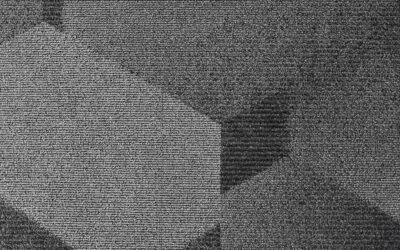
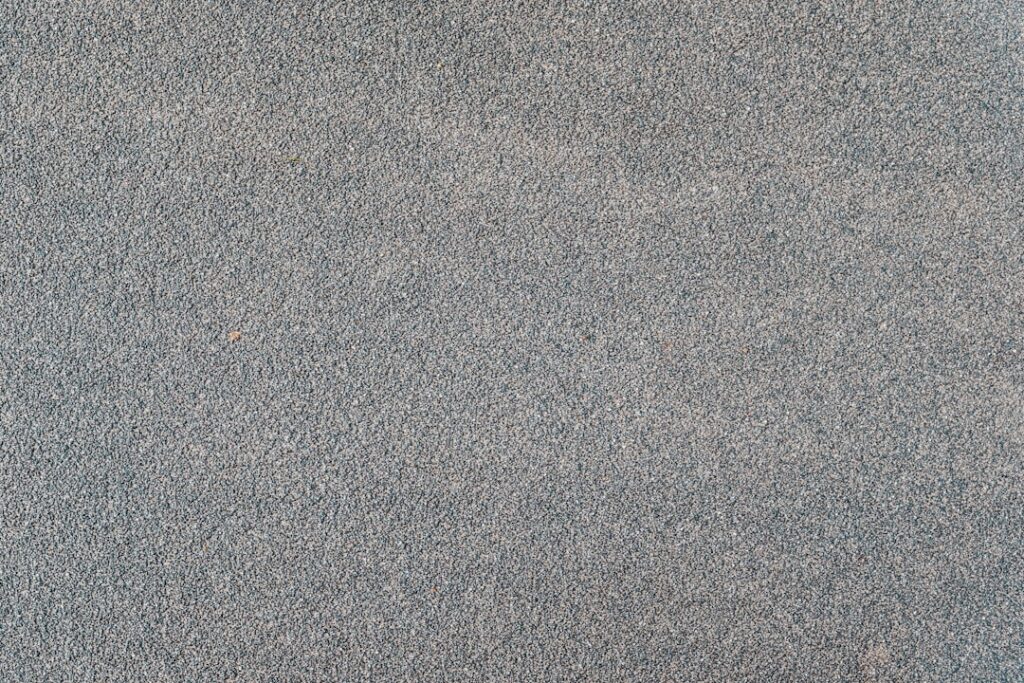
Commercial does not have to mean boring. Modern industrial tiles come in a wide palette of grays, blues, charcoals, and multi-tone speckled patterns that hide dirt between cleanings. The real design power, though, is in the layout. Because each tile carries a directional arrow on the back, you control the finished look by how you orient them.
A monolithic layout runs every arrow the same direction for a smooth, broadloom-like appearance. Quarter-turn, or ashlar, layouts rotate each tile 90 degrees for a subtle checkerboard that hides seams and wear beautifully. Mixing two coordinating colors in a brick or plank pattern lets you define zones in an open basement without a single wall. For a striking accent, drop a contrasting-color border around the perimeter or under a seating area, which is impossible to do affordably with wall-to-wall carpet.
Are Industrial Carpet Tiles Right for You?
If you want a soft, luxurious feel in a bedroom, look elsewhere. But if your priority is a floor that laughs at rolling chairs, dropped dumbbells, muddy paws, and the occasional basement seep, industrial carpet tiles are hard to beat on value and toughness. They install without a crew, repair one square at a time, and clean up in ways broadloom never will. For basements, gyms, offices, and playrooms, they are the most practical carpet decision a homeowner can make, and buying a discontinued commercial lot turns an already smart choice into a genuine bargain.