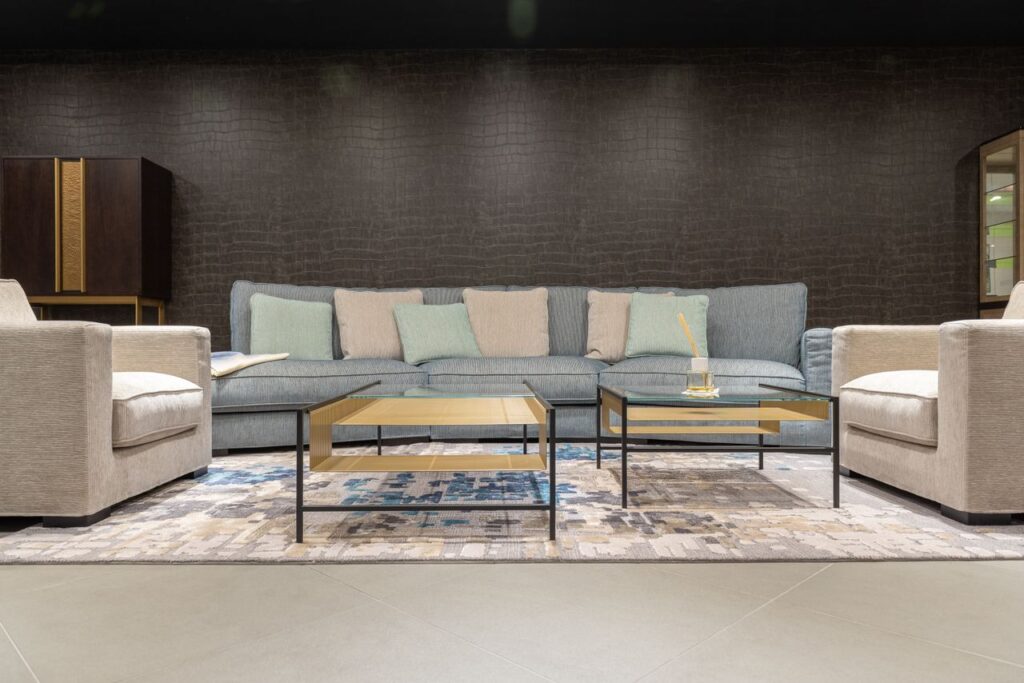
Broadloom carpet forces an all-or-nothing gamble: one wine spill or one worn traffic lane, and you are replacing the entire room. Living room carpet tiles flip that math by breaking the floor into 18 to 24-inch squares you can swap one at a time, which is why they have quietly moved from office buildings into homes. They give you the warmth and sound-dampening of carpet with the repairability of hard flooring, and most are DIY-friendly enough for a single afternoon.
Part of our Tile & Grout guide — explore the full guide →
The trick is choosing the right pile, backing, and installation method for a living space, because the commercial-grade tiles that dominate search results are not always the most comfortable choice for a room where people actually sit on the floor.
Why Tiles Beat Broadloom in a Living Room
The headline advantage is replaceability. When a tile gets stained, faded, or crushed flat by a chair leg, you lift that one square and drop in a spare from your leftover box. There is no visible seam or patch if you bought extras from the same dye lot. For a room that hosts kids, pets, and coffee cups, that alone justifies the switch.
Tiles also solve the logistics that make broadloom miserable in a home. A roll of carpet is heavy, awkward to carry up stairs, and usually needs a professional stretcher. Carpet tiles arrive in manageable boxes, cut with a utility knife and a straightedge, and go down over most existing hard floors without tearing anything out. If you rent or expect to move, peel-and-stick or floating tiles lift back up with far less damage than tacked-down broadloom.
Choosing Pile Height and Style for Comfort
Most carpet tiles sold online are low-profile loop pile, engineered for offices where rolling chairs and durability matter more than plushness. Loop pile wears extremely well and hides footprints, but it feels firm underfoot. For a living room where comfort counts, look instead for cut-pile or textured cut-pile tiles, which have the cut yarn ends that give traditional carpet its soft, luxurious feel.
Pile height for living spaces generally works best between 1/4 and 1/2 inch. Anything shorter feels commercial; anything taller crushes and shows wear faster. Consider a patterned or multi-tonal tile rather than a solid color, because pattern camouflages everyday soil and the faint checkerboard effect where adjacent tiles meet. If you want a seamless look instead, buy monolithic-lay tiles and install them all facing the same direction, which minimizes visible tile lines.
Fiber and Backing: What Actually Lasts
Fiber determines how the carpet handles stains and crushing. Solution-dyed nylon is the durability champion, resisting fading and bleaching even under sunlight and mild cleaners, and it springs back from foot traffic better than anything else. Polyester, often sold as PET, is softer and stain-resistant against water-based spills, cheaper, but it mats down faster in high-traffic lanes. For a busy family living room, solution-dyed nylon is worth the premium; for a formal room with light use, polyester is a fine value.
The backing is what separates a tile that stays flat from one that curls. Commercial-grade tiles use a heavy bitumen or PVC composite backing that adds weight and dimensional stability, so the tiles lie flat without adhesive. Residential peel-and-stick tiles have a lighter backing and rely on their sticky underside. Look for a cushioned or attached-pad backing if you want extra softness and warmth underfoot, which makes a real difference on a slab floor.
Installation Methods and Costs
Expect to pay roughly $2 to $5 per square foot for residential carpet tiles and $3 to $8 for premium commercial-grade product. A 12-by-15-foot living room, about 180 square feet, therefore runs somewhere between $360 and $1,000 in materials. Because installation is genuinely DIY-able, you often save the $1 to $2 per square foot a professional would charge for labor.
There are three common ways to lay them:
- Peel-and-stick: a permanent adhesive backing, best over clean, dry concrete or plywood; the most secure but the hardest to remove later.
- Tab or connector tiles: small stickers that join tile-to-tile into a floating mat, leaving the subfloor untouched and ideal for renters.
- Adhesive dots or releasable glue: the commercial standard, holding tiles in place while still allowing individual removal for cleaning or replacement.
Whichever method you choose, start from the center of the room using two chalk lines crossed at the midpoint, exactly as you would with hard tile, so the border cuts land evenly on all four walls.
Getting a Clean, Professional Result
The subfloor rules are simpler than with hard tile but still matter. The surface must be dry, clean, and reasonably flat; carpet tiles hide minor bumps better than vinyl but still telegraph loose debris and major dips. Vacuum thoroughly and patch any gouges deeper than about 1/8 inch. On concrete, confirm the slab is dry, because trapped moisture leads to mold under the backing.
Pay attention to tile direction, marked by an arrow on the back of each tile. Laying every arrow the same way gives a smooth, broadloom-like appearance; alternating them a quarter turn in a checkerboard, called quarter-turn install, deliberately breaks up the light and hides seams and traffic patterns. Neither is wrong, but mixing them randomly looks like a mistake. Cut border tiles face-down with a sharp utility knife against a metal straightedge, replacing the blade often, since a dull blade tears fibers instead of slicing them.
Cleaning and Long-Term Care
Day-to-day care is ordinary carpet care: vacuum weekly, more often with pets, and blot spills immediately with a clean cloth rather than rubbing them deeper into the pile. Because the tiles are modular, a stubborn stain has an option broadloom never offers. Lift the affected tile, take it to a sink or tub, scrub it directly, let it dry fully, and set it back down, or simply retire it and install a spare.
Rotating tiles is the maintenance trick most people miss. Every year or two, swap the crushed tiles from your main walkway with less-worn tiles from under the sofa or in a corner. This evens out wear across the whole floor and dramatically extends its life, often to 10 to 15 years for a quality nylon product. Keeping a box of matching living room carpet tiles from the original dye lot is the small insurance that makes all of this possible, so always order about 10 percent extra and store it flat.
Designing With Carpet Tiles
Modularity is not just practical, it is a design tool broadloom cannot match. Because tiles come in solids and coordinating patterns, you can lay a border in a contrasting color around the room’s perimeter, create a defined rug-like zone under the seating area on an otherwise bare floor, or checkerboard two tones for a subtle graphic effect. This lets you carpet only the part of the room that needs warmth, leaving hardwood or LVT exposed around the edges.
Consider the room’s light and size when choosing color. Darker, multi-tonal tiles hide soil and traffic but can shrink a small room visually, while lighter neutrals open the space up at the cost of showing more dirt. A textured or patterned mid-tone is the safest all-around pick for a family living room, camouflaging both stains and the faint seams between tiles. Mixing two closely related colorways rather than one flat solid also disguises the grid and gives the floor depth.
Comfort Underfoot and Insulation
Beyond looks, carpet tiles change how a room feels and sounds. A cushioned or attached-pad backing adds noticeable softness on a concrete slab, which matters in basements and slab-on-grade homes where a hard floor feels cold and unforgiving. The pad also dampens sound, reducing echo in the room and muffling footsteps for anyone below, a real benefit in condos and multi-story houses.
Carpet tiles also add a measure of thermal insulation. A carpeted floor feels several degrees warmer underfoot than bare tile or vinyl and slows heat loss through the floor, which can make a chilly room more comfortable and even trim heating costs slightly in winter. If comfort and warmth are your priorities, a nylon cut-pile tile with an attached cushion backing delivers far more of both than the thin commercial loop tiles that dominate the budget end of the market.