Plenty of homeowners pick a slab for its color and only later learn whether the stone can handle lemon juice, hot pans and a busy family. Infinity white quartzite is a trade name for a bright, white to soft cream natural stone with flowing gray and taupe veining, sold mostly as countertop and island slabs. It looks a lot like marble from across the room, yet a genuine quartzite is far harder and much less prone to etching.
Part of our Countertops guide — explore the full guide →
Expect a clean, light background, movement that runs in long soft drifts instead of tight spidery lines, and an installed price in the premium natural stone tier, commonly somewhere around $75 to $160 per square foot depending on slab grade, thickness, edge work and your region. Every block is different, so the slab you see in a photo will not match the one at your local yard. Visit, look at the actual slabs and test a sample before you commit.
- Infinity White Quartzite at a Glance
- What the Stone Looks Like in a Real Kitchen
- How Hard Is It Really?
- Finish Options and How Each One Lives
- What Drives the Installed Cost
- Pairings: Cabinets, Backsplash and Hardware
- Care and Sealing
- Cutting, Dust and Silica Safety
- Troubleshooting Common Problems
- When to Call a Pro
- Frequently Asked Questions
Here you will find the look, how hard the stone really is, finish choices, what drives the price, which cabinets and backsplashes pair well with it, and how to keep it looking clean for decades.
Infinity White Quartzite at a Glance
Trade names for natural stone are not standardized. Different importers sometimes use the same name for slightly different material, and some suppliers sell similar stone under other names. Treat the table as a general profile and confirm details with the slab yard.
| Spec | Typical Value | What It Means for You |
|---|---|---|
| Background color | Bright white to soft cream | Reads clean and light; shifts slightly warm under incandescent bulbs |
| Veining | Soft gray, taupe, occasional gold or beige drifts | Movement varies slab to slab; plan seams around it |
| Hardness | About 7 on the Mohs scale (true quartzite) | Resists scratches from knives and most kitchen tools |
| Etch resistance | High if the stone is true quartzite | Acids should not dull it; test a sample to confirm |
| Finishes | Polished, honed, leathered | Polished shows veining best; leathered hides fingerprints |
| Thickness | 2 cm or 3 cm slabs | 3 cm is most common for kitchens; 2 cm often gets a built-up edge |
| Installed cost | Roughly $75 to $160 per sq ft | Grade, edge profile, cutouts and region move the price |
| Sealing | Every 1 to 3 years, based on a water test | Porosity varies; a sealer slows stains in lighter stones |
What the Stone Looks Like in a Real Kitchen
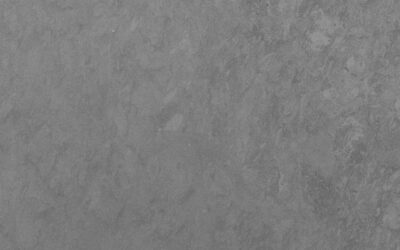
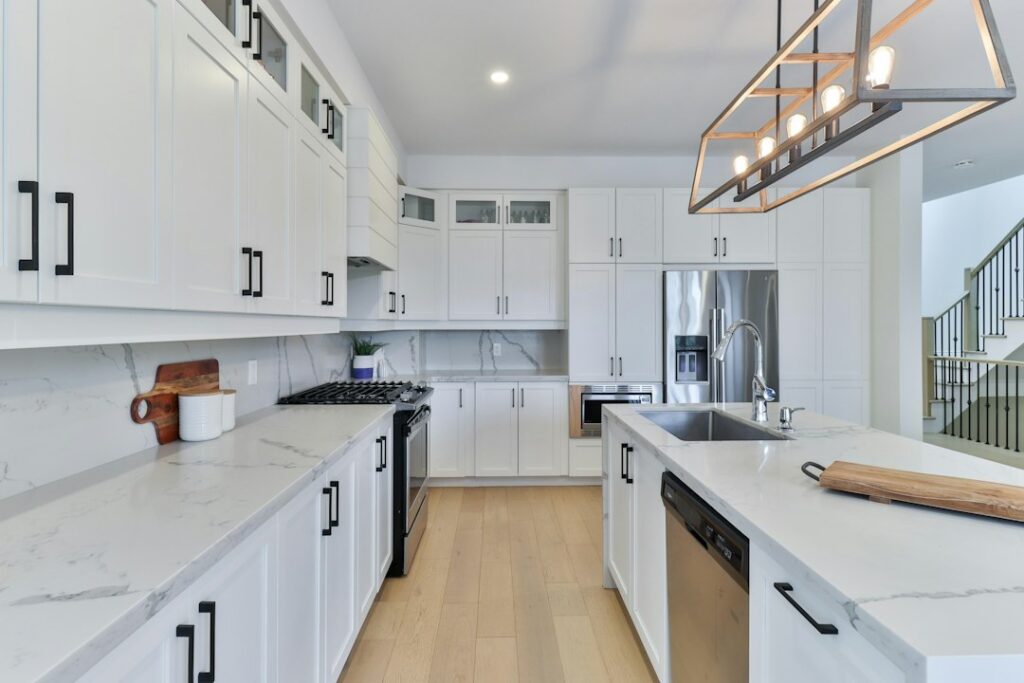
On a full island, the background takes over. Most slabs read as a calm white with soft gray clouds and longer veins that wander across the surface at a gentle angle. Some slabs carry warmer taupe or faint golden streaks, which gives the stone a creamier personality next to wood. Others lean cooler and come closer to a classic white marble look.
Lighting changes the read more than most people expect. Under cool LED lighting around 3500K to 4000K, the white looks crisp and the gray veins sharpen. Under warmer 2700K bulbs, the background drifts toward ivory. Take a sample or a remnant home and look at it in morning light, evening light and under your actual fixtures before you sign off.
Bookmatching is worth asking about for islands with a waterfall edge or a large full-height backsplash. When two consecutive slabs are opened like a book, the veining mirrors at the seam and creates a deliberate pattern. That needs sequential slabs from the same block, so ask the yard to hold the full bundle.
How Hard Is It Really?
Real quartzite is a metamorphic rock formed when sandstone is heated and compressed until the quartz grains fuse together. That quartz content is why it typically lands around 7 on the Mohs hardness scale, harder than a steel knife blade and well above marble at roughly 3 to 4. In daily use, that means fewer scratches and almost no dull etch marks from citrus, vinegar or wine.
Here is the catch that trips up buyers: some stones sold as white quartzite are actually dolomite or a marble and quartzite blend. Those “soft quartzites” look nearly identical but scratch and etch more easily. A soft-scratch stone is not a bad countertop, but you should know what you are buying.
Two Quick Tests on a Sample
- Glass test. Drag a sharp corner of the sample firmly across a glass tile or bottle. True quartzite scratches the glass. If the stone itself gets scratched or leaves a powdery line, it is likely softer material.
- Etch test. Put a few drops of lemon juice or white vinegar on the polished face, wait 10 to 15 minutes, then wipe and dry. Tilt the sample to the light. A dull spot means the stone contains calcite and will etch in your kitchen too.
Ask the yard for permission before testing, and use a sample, remnant or the back corner of a slab, never the face of a slab you might buy.
Finish Options and How Each One Lives
The same stone can look surprisingly different depending on the surface finish. Pick the finish based on how you cook and how much visible smudging bothers you.
- Polished: Glossy and reflective, with the deepest color and the clearest veining. It is also the most stain resistant finish because the surface is tightly closed. Fingerprints and water spots are easier to see on a dark island, less so on a light stone like this one.
- Honed: Matte and soft to the touch, with a more natural, relaxed look. It hides fine scratches well but can absorb oils a little faster, so keep up with sealing.
- Leathered: A textured, slightly undulating surface with a low sheen. It hides fingerprints and crumbs well and gives the veining some depth. Very textured surfaces can hold grime in the low spots, so wipe in a circular motion.
What Drives the Installed Cost
The slab itself is only part of the bill. Fabrication and installation can account for a large share of the total. In most US markets expect roughly $75 to $160 per square foot installed, with simple kitchens toward the lower end and complex islands, mitered edges and full-height backsplashes toward the top.
- Slab grade and consistency: Slabs with even background and attractive veining with few fissures command higher prices.
- Thickness: 3 cm slabs cost more per square foot than 2 cm, though 2 cm with a laminated edge adds labor.
- Edge profile: A simple eased edge is usually included. Ogee, bullnose and mitered waterfall edges add cost per linear foot.
- Cutouts: Undermount sinks, cooktops and faucet holes each add fabrication time.
- Seams and layout: Long runs or a large island may need two slabs, raising both material and labor cost.
- Tear-out and plumbing: Removing old tops and reconnecting sinks and faucets are often separate line items.
Get at least three written quotes that list slab cost, fabrication, edges, cutouts, removal and sealing separately. That makes it easy to compare apples to apples.
Pairings: Cabinets, Backsplash and Hardware
A light stone with soft movement works with almost any palette, but a few combinations stand out.
Cabinets
- White or off-white cabinets: A calm, bright kitchen. Choose a cabinet white that matches the stone’s undertone (cooler white for gray-veined slabs, warmer white for creamy slabs) so the two do not fight.
- Navy, charcoal or deep green islands: Strong contrast that makes the veining pop.
- White oak or walnut: Warm wood picks up any taupe or gold in the veins and keeps the room from feeling sterile.
Backsplash
Let the stone lead. A simple white or soft gray ceramic subway, a handmade-look tile in a muted color, or a full slab backsplash in the same stone all work. Busy patterned tile competes with veining, so save bold pattern for a powder room.
Hardware and fixtures
Brushed nickel and polished chrome suit cooler slabs. Brushed brass and warm bronze flatter slabs with gold or taupe drift. Matte black gives a sharp graphic edge against the white background.
Care and Sealing
True quartzite is easy to live with, but it is still a natural stone with some porosity. Light colors show oil and turmeric stains more than dark ones, so a good impregnating stone sealer is worth applying after installation and on a regular schedule.
- Do the water test. Pour a small puddle of water on the surface and wait 10 to 15 minutes. If the stone darkens, it is time to reseal.
- Clean the surface. Use a pH-neutral stone cleaner or mild dish soap and warm water. Let it dry completely, usually several hours.
- Apply the sealer. Work a penetrating stone sealer into the surface with a clean cloth in small sections, following the label’s dwell time.
- Wipe off the excess. Remove any sealer left on the surface before it dries to avoid a hazy film.
- Let it cure. Keep water and food off the counter for the full cure time on the label, often 24 hours.
For daily cleaning, skip bleach, vinegar and abrasive powders. Use trivets for very hot pans, since sudden temperature changes can stress any stone, and use cutting boards to protect your knives as much as the stone. Wipe oil, wine and coffee spills promptly.
Cutting, Dust and Silica Safety
Quartzite is very high in crystalline silica. Cutting, grinding or polishing it releases fine dust that can cause silicosis, a serious and incurable lung disease. Fabrication belongs in a shop with water-fed tools and dust controls, which is one reason countertop fabrication is almost always a pro job.
If you must do any small on-site work, such as easing an edge or drilling a faucet hole, use wet cutting or wet drilling to keep dust down, wear a fitted N95 or better yet a P100 respirator, and protect your eyes. Never dry sweep the dust. Clean up with a HEPA-filtered vacuum and damp wiping. Keep children and pets out of the area until cleanup is finished.
Troubleshooting Common Problems
- Dark spot after a spill: Water marks usually fade as the stone dries. For oil stains, a poultice made for stone can draw the stain out over 24 to 48 hours.
- Dull ring near the sink: This points to etching, which means the stone has calcite. A stone restoration pro can hone and repolish the area.
- Hazy film after sealing: Excess sealer dried on the surface. Reapply a small amount of sealer to soften it and buff off right away, or use the remover the maker recommends.
- Visible fissures: Natural fissures are common in quartzite and usually not cracks. A fabricator can fill open fissures with color-matched resin.
- Chip on an edge: Save the chip if you can. A fabricator can bond it back or fill with tinted epoxy.
When to Call a Pro
Template, fabrication and installation of quartzite countertops should be handled by an experienced stone fabricator. Slabs are heavy, brittle in thin sections and hard on tools. A pro will check that cabinets are level and strong enough, support overhangs with brackets where needed, and plan seams away from sink corners. Hire a licensed plumber if the job involves moving the sink, dishwasher or gas range connections, and a licensed electrician for any new outlets in the backsplash, which in kitchens need GFCI protection.
Frequently Asked Questions
Is infinity white quartzite real quartzite or marble?
It is sold as quartzite, but trade names vary by importer and some white stones sold as quartzite contain calcite. A glass scratch test and a lemon juice etch test on a sample tell you how it will behave.
Does infinity white quartzite stain easily?
True quartzite is dense but still slightly porous, and light stones show oil stains more readily. A penetrating sealer and prompt cleanup of oil, wine and coffee keep it clean.
How often should I seal a white quartzite countertop?
Most kitchens need resealing every 1 to 3 years. Use the water test: if a puddle darkens the stone within 10 to 15 minutes, it is time to reseal.
Is quartzite more expensive than quartz?
Usually yes. Premium white quartzite tends to cost more installed than most engineered quartz because slabs vary, fabrication is slower and natural stone grading adds cost.
Can I put hot pans on infinity white quartzite?
Quartzite handles heat well, but sudden temperature changes can stress stone and any resin used in fissures. Use a trivet for pans straight off a burner or out of the oven.