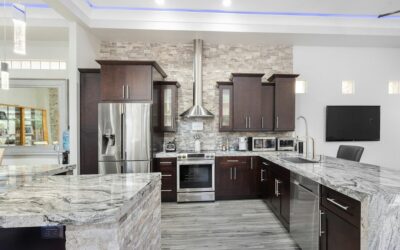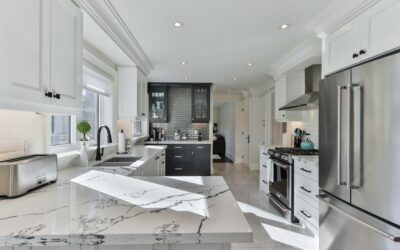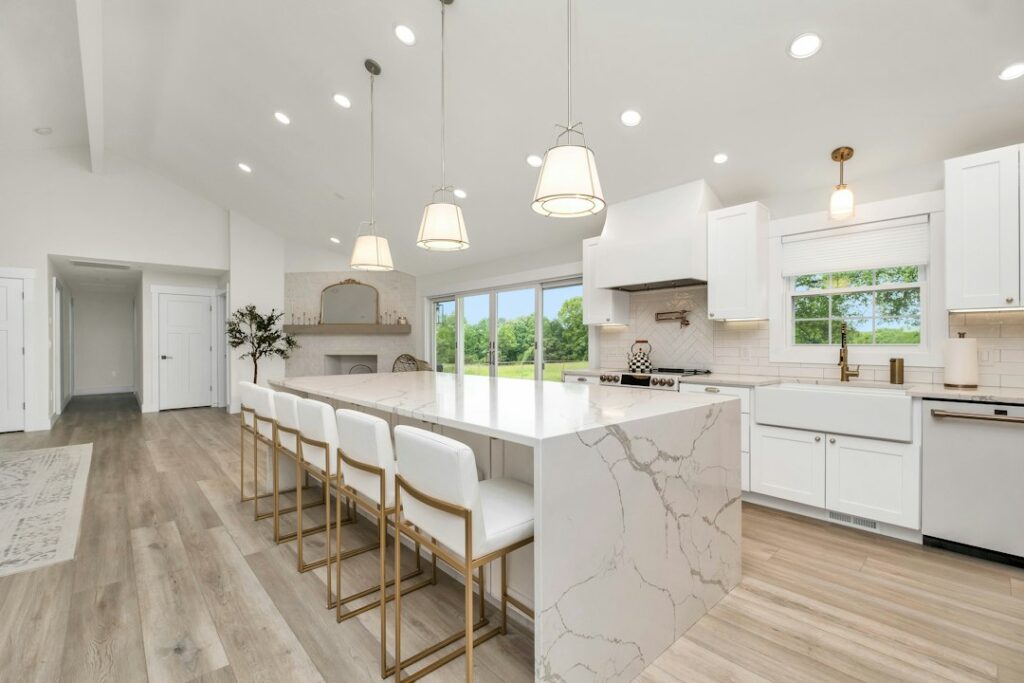
Search for a white stone countertop and you quickly run into the same name used for three different materials. Glacier white quartzite is the natural stone version: a crisp white to icy pale gray quartzite with fine, wispy gray veining and a slightly crystalline sparkle when light hits it at an angle. Engineered quartz and solid surface products also use “glacier white” for plain white colors, so confirm you are looking at real quarried stone before you compare prices.
Part of our Countertops guide — explore the full guide →
As a natural quartzite, it usually rates around 7 on the Mohs scale, resists knife scratches, and shrugs off most acidic spills that would etch marble. Installed pricing typically falls in the premium natural stone range, roughly $70 to $150 per square foot in many US markets, with the final number set by slab grade, thickness, edge work and local labor rates.
Here is how the stone looks in person and how to confirm its hardness, plus finish choices, pricing factors, pairing ideas and a simple care routine.
Glacier White Quartzite Specs and Quick Facts
Natural stone names are set by importers and distributors, not by any standards body. Use this profile as a starting point and confirm details on the actual slabs.
| Spec | Typical Value | What It Means for You |
|---|---|---|
| Background color | Crisp white to icy pale gray | Reads cool and bright; pairs easily with gray and white schemes |
| Veining | Fine, wispy light to mid gray lines | Subtle movement; some slabs show linear streaks, others soft clouds |
| Surface character | Slight crystalline sparkle, some translucency | Looks lively under raking light; may show a faint glow at thin edges |
| Hardness | About 7 on the Mohs scale (true quartzite) | Highly scratch resistant in daily kitchen use |
| Finishes | Polished, honed, leathered | Polished shows the most depth; honed reads soft and modern |
| Thickness | 2 cm or 3 cm | 3 cm is standard for kitchen tops without a built-up edge |
| Installed cost | Roughly $70 to $150 per sq ft | Higher for bookmatched islands, mitered edges and full-height backsplashes |
| Sealing | Every 1 to 3 years, based on a water test | Light stones show oil stains; sealing buys cleanup time |
How the Stone Reads in Person
Compared with creamier white quartzites, this stone tends to sit on the cool side. The background reads close to a fresh snow white, and the veins are thin and soft, like frost lines on a window rather than heavy rivers of gray. Some slabs are quiet enough to read almost solid from a few feet away. Others carry more defined linear streaks that run the length of the slab.
That cool, restrained look suits modern and transitional kitchens, but it can feel a bit stark if everything else in the room is also white and gray. Bring in warmth through wood, warm metal or a textured backsplash.
Because veining is light, seams are easier to hide than on dramatic stones. Still, ask your fabricator to show you a digital layout of where each piece will be cut from the slab. It takes a few minutes and helps you avoid ending up with the most interesting part of the stone hidden under a cooktop.
Checking Hardness Before You Buy
Quartzite forms when quartz-rich sandstone is subjected to intense heat and pressure, fusing the grains into one dense mass. That is why true quartzite is hard enough to scratch glass. The problem is that the stone trade sometimes sells softer dolomite or marble-quartzite blends under quartzite names. They can look nearly identical in a showroom.
Simple sample tests
- Scratch test: Press the sharp corner of a sample firmly across a piece of glass. True quartzite leaves a scratch in the glass. If the stone powders or gets scratched, it is softer.
- Acid test: Set a few drops of lemon juice on a polished sample for 10 to 15 minutes, wipe it dry and look at it in angled light. A dull, cloudy mark means calcite is present and the stone will etch.
- Knife test: A steel utility knife pressed across the surface should not leave a groove in true quartzite.
Always test samples or offcuts, never the face of a slab you have not purchased, and ask the yard first.
Finish Choices
- Polished: Brings out the crystalline sparkle and the cool depth of the white background. It is the most stain resistant finish and the easiest to wipe clean.
- Honed: A flat, velvety matte that softens the icy look and gives the stone a quieter, more contemporary feel. Matte surfaces can absorb oil a bit faster, so seal on schedule.
- Leathered: A gently textured surface with low sheen. It hides fingerprints, water spots and minor wear, and adds tactile interest to a subtle stone.
If you are torn, ask the yard for small samples in each finish and live with them on your existing counter for a week.
What Affects the Price
Two kitchens using the same stone can land at very different totals. These factors make the biggest difference:
- Slab selection: Clean, even slabs with attractive veining and few fissures cost more.
- Square footage and slab count: A large island may require an extra slab even if much of it becomes offcut.
- Edge profiles: Eased and small bevel edges are often included; ogee, full bullnose and mitered waterfall edges cost more per linear foot.
- Cutouts: Each undermount sink, cooktop and faucet hole adds fabrication time.
- Backsplash: A 4 inch splash adds modest cost; a full-height slab backsplash adds a lot of material and labor.
- Removal and hookups: Old countertop tear-out and plumbing reconnection may be separate charges.
Ask each fabricator for an itemized quote. A low per-square-foot number that excludes edges, cutouts and removal often ends up costing more.
Design Pairings That Work
Cabinet colors
- Bright white: Creates a clean, Scandinavian-feeling kitchen. Choose a white with a neutral or cool undertone so it does not look yellow beside the stone.
- Light gray or greige: Soft tonal layering that picks up the gray veins.
- Black, charcoal or deep navy: High contrast that lets the stone glow, especially on an island.
- Natural or light oak: The easiest way to warm up a cool white stone.
Backsplash and flooring
Glossy white or pale gray ceramic tile, a vertical stacked subway, or a full slab of the same stone all look sharp. Textured handmade-look tile adds character without competing. For floors, wide-plank wood-look porcelain or a warm hardwood keeps the room from feeling cold.
Hardware
Polished chrome and brushed nickel reinforce the cool, crisp look. Matte black adds contrast. Unlacquered or brushed brass is a good way to add warmth if the rest of the kitchen is cool.
Care Routine
True quartzite is one of the easiest natural stones to live with, but the light background makes oil, turmeric and red wine stains more noticeable. A penetrating stone sealer and a simple routine keep it bright.
- Clean daily with warm water and a few drops of mild dish soap, or a pH-neutral stone cleaner. Dry with a soft cloth.
- Avoid harsh products like bleach, ammonia, vinegar and abrasive scrub powders, which can wear down sealer and dull honed finishes.
- Test the seal every few months: leave a small pool of water for 10 to 15 minutes. If it darkens the stone, reseal.
- Reseal on a clean, dry surface. Apply the sealer evenly, let it dwell for the time on the label, then wipe off all excess before it dries.
- Protect the surface with trivets under hot cookware and cutting boards under knives.
Silica Dust Safety
Quartzite contains a very high percentage of crystalline silica. Any cutting, grinding, drilling or polishing creates fine respirable dust that can cause silicosis and other serious lung disease. Professional fabricators use wet saws, water-fed polishers and dust collection for this reason.
For any small field adjustment, cut or drill wet, wear a fitted N95 or P100 respirator plus eye protection, and keep others out of the work area. Never dry sweep or use compressed air on the dust. Clean up with a HEPA vacuum followed by damp wiping. If a job needs more than a minor touch-up, let the fabricator handle it in the shop.
Troubleshooting
- Stone darkens around the sink: The sealer has worn through. Let the area dry completely for a day or two, then reseal.
- Oil stain from cooking: Apply a stone poultice, cover it with plastic, and let it sit 24 to 48 hours to pull the oil out.
- Cloudy etched spots: The stone likely has calcite content. A stone restoration pro can hone and repolish small areas.
- Open fissure catching crumbs: Ask your fabricator to fill it with clear or tinted resin.
- Hazy surface after sealing: Excess sealer dried on top. Rewet with a little sealer and buff off immediately.
When to Call a Pro
Templating, fabrication and installation of quartzite slabs should be done by an experienced stone fabricator. Slabs commonly weigh hundreds of pounds, and thin sections around sinks crack easily if handled wrong. A good installer will check cabinet level and strength, add support brackets for overhangs, and plan seams carefully. Bring in a licensed plumber for sink and dishwasher moves, and a licensed electrician for any new backsplash outlets, which must be GFCI protected in kitchens.
Frequently Asked Questions
Is glacier white quartzite the same as glacier white quartz?
No. Quartzite is quarried natural stone with natural veining. Engineered quartz with a similar name is a manufactured slab of crushed quartz and resin, usually more uniform and often less expensive.
Does glacier white quartzite etch?
True quartzite resists etching from acidic foods. If a lemon juice test on a sample leaves a dull spot, the stone contains calcite and needs gentler care.
Is glacier white quartzite good for a kitchen island?
Yes. It is hard, heat tolerant and handles daily use well. Seal it and wipe up oil and wine promptly, since stains show on light stone.
How much does glacier white quartzite cost installed?
Most homeowners see roughly $70 to $150 per square foot installed, depending on slab grade, thickness, edges, cutouts, backsplash and local labor rates.
What cabinet color goes with glacier white quartzite?
White, light gray and black cabinets complement its cool tone. Natural oak or walnut adds warmth if the kitchen feels too stark.