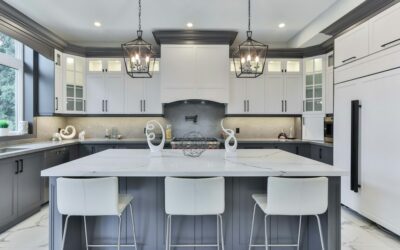
Most people shopping for a bright stone counter assume every pale slab is marble or engineered quartz. Many of the most popular white quartzite colors are neither: they are natural metamorphic rock, harder than marble, and sold under trade names such as Snow White, Princess White, Crystal White, Classic White, Calacatta Super White and Calacatta Taupe. Each name describes a look rather than a guaranteed specification, so two slabs with the same name from different quarry blocks can differ noticeably.
Part of our Countertops guide — explore the full guide →
The quick answer: choose by background tone first (cool bright white, warm cream or soft gray), then by veining (quiet, linear or bold), then by budget tier. Snow White and Crystal White sit at the brightest, cleanest end. Princess White and Classic White read softer and often carry gray movement. Calacatta Super White and Calacatta Taupe deliver dramatic marble-style veins, and they usually cost more because large, consistent slabs are harder to quarry.
- White Quartzite Colors Compared at a Glance
- A Closer Look at Each White Quartzite
- How to Choose Among White Quartzite Colors
- Sealing and Daily Care
- Silica Dust Safety When Cutting Quartzite
- Troubleshooting Common White Quartzite Problems
- Cost Factors and When to Call a Pro
- Frequently Asked Questions
Because quartzite is natural stone, always view full slabs in person and mark the areas you want for sink cutouts and seams. Photos online flatten the depth and translucency that make these stones attractive.
White Quartzite Colors Compared at a Glance
Use this comparison as a starting shortlist. Price tiers are relative, since regional supply, slab thickness and fabrication complexity move the final number more than the stone name does.
| Stone name | Background | Veining | Typical price tier |
|---|---|---|---|
| Snow White | Bright, cool white | Light, soft gray wisps | Mid |
| Crystal White | Bright white with glassy depth | Subtle linear streaks | Mid to upper |
| Princess White | Soft white to pale gray | Gray linear movement | Mid |
| Classic White | Warm off white | Gentle gray or beige drifts | Entry to mid |
| Calacatta Super White | Clean white | Bold gray, marble-like veins | Upper |
| Calacatta Taupe | White to cream | Taupe and warm brown veins | Upper |
As a general guide, installed quartzite counters often run from roughly $60 to $150 per square foot, with the popular white Calacatta-style slabs tending toward the higher half of that range. A standard kitchen with 40 to 60 square feet of counter area therefore lands in the mid four figures to low five figures once edges, cutouts and backsplash pieces are added.
A Closer Look at Each White Quartzite
Snow White
Snow White is chosen for its clean brightness. The background stays mostly white with light gray wisps that keep it from looking flat. It pairs well with white or pale wood cabinets and suits modern and transitional kitchens. If you want a counter that reads almost solid from across the room, start here.
Crystal White
Crystal White often shows a slightly translucent, glassy quality. Light seems to sit inside the stone. Veining is usually linear and restrained. It looks especially good under a polished finish, and it suits islands where the slab is the focal point.
Princess White
Princess White leans softer and grayer. Its linear gray movement hides crumbs and water spots better than the brightest whites, which makes it practical for busy family kitchens. It pairs easily with gray, navy or green cabinetry.
Classic White
Classic White typically has a warmer off white base with gentle gray or beige drifts. It is often among the more approachable white quartzites on price. Choose it for cream, natural wood or farmhouse-style cabinets where a stark white would feel cold.
Calacatta Super White
This stone is the go-to for people who love the look of a classic Italian marble but want quartzite toughness. Bold gray veins sweep across a clean white field. Bookmatched slabs (two consecutive slabs opened like a book) create striking mirrored islands and full-height backsplashes. Expect more waste during layout because fabricators work to keep veins flowing across seams.
Calacatta Taupe
Calacatta Taupe swaps gray veining for warm taupe and soft brown. It bridges white kitchens and warmer palettes, and it looks good with brass hardware and walnut or white oak cabinets.
How to Choose Among White Quartzite Colors
- Match the undertone to your cabinets. Cool whites (Snow White, Crystal White, Calacatta Super White) suit white, gray and blue cabinets. Warm whites (Classic White, Calacatta Taupe) suit cream, wood tones and greens.
- Decide how much movement you want. Quiet veining is easier to live with on a long perimeter run. Bold veining works best on an island or a feature wall.
- Check the slab size against your layout. Long islands may need jumbo slabs to avoid a seam. Ask your fabricator for slab dimensions before you commit.
- Test real samples. Take a large offcut home and look at it in morning light, evening light and under your actual fixtures.
- Do the lemon and oil test. Put a drop of lemon juice and a drop of cooking oil on a sample for 15 minutes. Etching or dark spots tell you how the stone behaves and whether it needs more frequent sealing.
- Confirm it is true quartzite. Some stones sold as white quartzite are actually dolomitic marble, which is softer and etches more. A good fabricator will do a scratch test with glass or a steel blade on an offcut.
Sealing and Daily Care
Quartzite is dense, but most white varieties still have some porosity, and white stone shows staining more than dark stone. A quality penetrating granite and quartzite sealer applied at installation, then renewed every one to two years (or when water stops beading), keeps oil, wine and coffee from soaking in. Test with a few drops of water: if the spot darkens within a few minutes, it is time to reseal.
For everyday cleaning, use warm water and a pH-neutral stone cleaner. Avoid vinegar, bleach and abrasive powders, which can dull polished finishes or degrade the sealer over time. Use trivets for hot pans and cutting boards for knives. Quartzite resists scratches far better than marble, but it can still chip at edges if heavy cookware strikes it.
Polished vs. honed vs. leathered
A polished finish brightens white quartzite colors and makes veining crisp. Honed finishes look soft and matte but show oily fingerprints more readily. Leathered finishes add texture and hide smudges well, though they need thorough sealing because the surface is more open.
Silica Dust Safety When Cutting Quartzite
Quartzite contains a high percentage of crystalline silica. Cutting, grinding or drilling it releases fine dust that can cause serious lung disease. Fabrication belongs in a shop with wet-cutting equipment and dust controls. If you must make a small field modification yourself (drilling a faucet hole, for example):
- Cut and drill wet, keeping a steady stream of water on the bit or blade.
- Wear a fitted N95 at minimum, or a P100 respirator for any grinding, plus eye protection.
- Clean up with a HEPA vacuum or wet wiping. Never dry sweep or blow dust with compressed air.
- Keep children and pets out of the work area until cleanup is finished.
Troubleshooting Common White Quartzite Problems
Yellow or brown spots appearing after install: Often iron minerals oxidizing or a reaction with a moisture source under the slab. Ask your fabricator to inspect before trying chemical cleaners.
Dull rings near the sink: Usually etching from acids, which suggests the stone may contain calcite. A stone restoration pro can hone and repolish small areas.
Dark patches from oil: Apply a poultice made for oil stains, let it sit 24 to 48 hours, then reseal.
Visible seam: Seams are normal on long runs. A skilled fabricator tints the epoxy to match the background, but bold-veined stones always show some transition.
Cost Factors and When to Call a Pro
Beyond the slab itself, budget for edge profiles, sink and cooktop cutouts, backsplash pieces, removal of old counters and possible plumbing reconnection. Mitered edges that make a slab look thicker add labor. Bookmatching a Calacatta-style island raises cost because two slabs must be bought together.
Countertop fabrication and installation should be handled by an experienced stone fabricator. Slabs are heavy, brittle at cutouts and require templating to within a fraction of an inch. A licensed plumber should reconnect sinks and dishwashers if your installer does not include that work. If your cabinets are older or out of level, ask the installer to assess them before templating, since quartzite does not forgive uneven support.
Shopping a range of white quartzite colors side by side at a stone yard is the fastest way to narrow your choice. Bring cabinet doors and flooring samples, and photograph the exact slabs you reserve so the right ones arrive on install day.
Frequently Asked Questions
What is the whitest quartzite?
Snow White and Crystal White are usually the brightest options, with minimal veining and a cool white background. Individual slabs vary, so compare full slabs in person.
Is Princess White quartzite gray or white?
Princess White sits between the two. It has a soft white to pale gray background with gray linear veins, which makes it forgiving in busy kitchens.
Does white quartzite stain easily?
Sealed quartzite resists most stains well, but white stone shows oil and colored liquids more than dark stone. Reseal every one to two years and wipe spills promptly.
Is Calacatta Super White quartzite or marble?
It is sold as quartzite, though some slabs marketed under similar names contain calcite. Ask for a scratch and acid test on an offcut before you buy.
How much do white quartzite countertops cost?
Installed costs commonly fall in a range of about $60 to $150 per square foot, depending on the stone, slab size, edge work and your region.