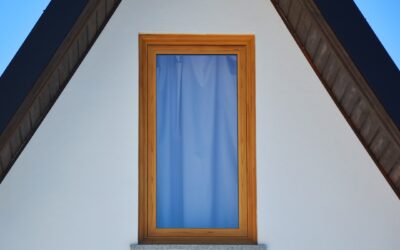
Most casement windows in American homes swing outward with a crank, but an inswing casement window opens into the room like a small door. That one change flips where the screen goes, how the window seals against rain, and how you clean it. It is the standard design across much of Europe, and it is gaining fans here for good reasons.
Part of our Windows & Doors guide — explore the full guide →
Choose inward-opening casements if you want screens on the outside, easy cleaning of both glass faces from indoors, exterior shutters that actually close, or windows that will not swing into a walkway, deck or garden. Skip them, or plan carefully, if furniture, blinds or deep sills sit right in front of the window, or if your installer has little experience with this style. Sealing quality depends heavily on the hardware and frame design.
- How an Inswing Casement Window Works
- Inswing vs Outswing: Key Differences
- Pros of Inward-Opening Casements
- Cons and Tradeoffs
- Screens, Hardware and Window Treatments
- Drainage and Weather Sealing Details
- Egress Rules to Confirm Locally
- Safety When Handling and Installing
- Cost and Choosing a Qualified Installer
- Frequently Asked Questions
We explain how these windows work, how they compare with outswing units, what hardware and screens are involved, plus egress, cost and installation considerations.
How an Inswing Casement Window Works
An inswing casement window is hinged on one side and opens inward toward the living space. Instead of a crank, most use a lever handle. Many models, often called tilt-turn windows, offer two positions: turn the handle one way and the sash swings in fully like a door; turn it another way and the top tilts in a few inches for secure ventilation while the bottom stays locked.
Multi-point locking hardware pulls the sash tight against the frame at several points around the perimeter when you close the handle. That compression against continuous gaskets is how a well-built inward-opening casement keeps out wind and water, even though rain pressure pushes against the sash rather than helping seat it.
Sash sizes vary, but most residential units range from about 18 to 36 inches wide and 24 to 72 inches tall. Wider openings are usually split into a pair of sashes or combined with a fixed panel, since very large inward-swinging sashes become heavy and intrude far into the room.
Frames are typically vinyl, aluminum, wood, clad wood or fiberglass, with insulated double or triple glazing. European-style units tend to have deeper frames and heavier sashes than typical crank-out casements.
Inswing vs Outswing: Key Differences
| Feature | Inswing | Outswing |
|---|---|---|
| Screen location | Outside | Inside |
| Cleaning exterior glass | Easy from indoors | Harder, needs a gap or wash hinge |
| Interior clearance | Needs open space | None needed |
| Wind effect on seal | Relies on locks and gaskets | Wind presses sash shut |
| Exterior shutters | Can close freely | Sash can conflict |
| Typical operator | Lever handle | Crank |
Sealing and Weather Resistance
With an outswing window, wind blowing against the house pushes the sash into its seals. An inward-opening sash faces the opposite force, so it depends on stiff frames, multi-point locks and well-designed drainage. Quality units handle driving rain very well. Cheaper or poorly adjusted ones can whistle or leak at the bottom rail.
Furniture and Interior Clearance
Plan for the swing. A 24 inch wide sash needs roughly 24 inches of clear space in front of the window. Desks, sofas, plants, deep sills and inside-mount blinds can all block it. Tilt mode helps, since it needs only a few inches, but you will still want full swing for cleaning.
Pros of Inward-Opening Casements
- Screens on the outside: bugs stay outdoors, and the screen does not block your view of the latch or cord.
- Easy cleaning: both faces of the glass can be washed from inside, a major plus on upper floors.
- Exterior shutters work: functional shutters, grilles or storm panels can close without hitting the sash.
- No exterior obstruction: sashes never swing into walkways, decks, patios or shrubs.
- Secure ventilation: tilt mode lets air in while the window stays locked.
- Strong locking: multi-point hardware is harder to force than a single latch.
Cons and Tradeoffs
- Interior space: the sash takes up room when open and can conflict with window treatments.
- Cost: often priced higher than comparable outswing casements, partly due to hardware.
- Fewer local options: some installers and suppliers stock limited styles and parts.
- Drips inside: opening during or right after rain can let water drip onto the sill or floor.
- Adjustment needs: heavy sashes may need hinge adjustment over the years to keep seals tight.
Screens, Hardware and Window Treatments
Screen Options
Because the sash swings in, the screen mounts on the exterior side of the frame. Choices include fixed exterior screens, which are simple and inexpensive; retractable roller screens that disappear into a cassette; and hinged screens that swing out for cleaning. On upper floors, ask how the screen comes off for cleaning before you buy.
Handles, Hinges and Locks
Look for multi-point locks, concealed or adjustable hinges, and a handle that clearly indicates locked, open and tilt positions. Child safety locks or restrictors that limit the opening are worth adding in kids’ rooms. Lubricate moving hardware once or twice a year with a light, non-greasy lubricant.
Blinds and Curtains
Inside-mount blinds usually block the sash. Choose blinds mounted directly on the sash, curtains on a rod that clears the swing, or outside-mount shades set high enough to clear.
Drainage and Weather Sealing Details
A good inswing frame includes a raised interior sill lip, exterior weep holes or drainage channels, and an outside drip cap or weather bar that sheds water away from the joint at the bottom of the sash. Keep weep holes clear of debris and paint.
Installation matters as much as the window. The rough opening should have a sloped sill pan or flexible flashing, taped jambs and a head flashing lapped under the weather barrier, so any water that gets past the window drains outward. Low-expansion foam and backer rod with sealant complete the air seal. Check gaskets yearly and replace any that are torn or compressed flat.
Egress Rules to Confirm Locally
Casements are a popular choice for bedroom egress because the whole sash opens. Typical residential requirements that many jurisdictions use include:
- A net clear opening of about 5.7 sq ft (often 5.0 sq ft at grade floors)
- A minimum clear opening height of around 24 inches
- A minimum clear opening width of around 20 inches
- A sill height no more than about 44 inches above the floor
Treat those as typical values only and confirm with your local building department. An inward-opening sash must also clear interior obstructions fully to count, and tilt mode alone does not provide egress. Furniture should never block an escape window.
Safety When Handling and Installing
Inswing sashes and frames with insulated glass are heavy. Wear gloves and eye protection, carry units with two people, and set them on padded blocks rather than on a glass corner. Never flex a unit or strike its edges, which can crack the glass or break a seal. Bedroom windows, doors and large low panes may require tempered safety glass. If the opening is on an upper floor, work from inside where possible and avoid carrying windows up ladders.
Cost and Choosing a Qualified Installer
Expect an inswing casement window to cost roughly $500 to $1,500 for a standard vinyl unit and $1,200 to $3,000 or more for tilt-turn, wood, clad or fiberglass models. Installation in an existing opening commonly adds $200 to $800 per window, more for full-frame replacement, rot repair, upper floors or resizing the opening.
Choose an installer who has fitted inward-opening units before, since sash adjustment and drainage details differ from crank-out windows. Ask how they flash the sill, whether they adjust hinges at handover, and what the labor warranty covers. Any change to the opening size is structural and typically needs a permit and a properly sized header from a qualified contractor.
Frequently Asked Questions
Do inswing casement windows leak more than outswing ones?
Not if they are well made and properly installed. Quality units use multi-point locks, compression gaskets and drainage channels to resist wind and rain. Cheap units or poor flashing are the usual causes of leaks.
Where does the screen go on an inward-opening casement?
On the outside. Fixed, retractable roller or hinged exterior screens are common, which keeps insects outdoors and frees the interior side of the window.
What is the difference between an inswing casement and a tilt-turn window?
A tilt-turn window is a type of inswing casement with an extra tilt position that opens the top a few inches for ventilation. A basic inswing casement only swings open like a door.
Can an inswing casement window be used for bedroom egress?
Often yes, if the full-swing opening meets local minimums for clear area, width, height and sill height and nothing inside blocks the sash. Confirm requirements with your building department.
How do I clean the outside glass?
Swing the sash fully into the room and clean the exterior face from indoors. Close the window before washing the interior side and wipe the gaskets with mild soapy water.