Yes — and the answer to do casement windows have screens surprises a lot of first-time buyers because the screen sits on the inside of the window, not the outside. Since a casement sash cranks outward, an exterior screen would block it, so every manufacturer mounts the screen on the interior face of the frame. Once you understand that flip, everything else about do casement windows have screens falls into place: how you remove them, how you clean them, and why they last longer than the screens on your old double-hungs.
Part of our Windows & Doors guide — explore the full guide →
I’ve installed hundreds of casements over the years, and interior screens are one of the style’s quiet advantages. They stay out of the sun and rain, they don’t rattle in wind, and they pop out in seconds when you want a crystal-clear view. Here’s the full picture.
- How Interior Casement Screens Work
- Screen Setups by Major Brand
- Retractable Screens: The Disappearing Option
- Pet-Resistant and Specialty Mesh
- Cleaning Casement Screens the Easy Way
- Replacing a Damaged Casement Screen
- Do You Have to Use the Screen?
- Troubleshooting: When Bugs Get Past a Casement Screen
- The Bottom Line
How Interior Casement Screens Work
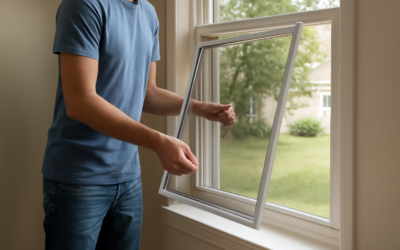
A casement screen is a light aluminum or fiberglass-framed panel that clips into the interior side of the window frame, covering the full glass area. The crank handle sits below or beside the screen, so you operate the window without touching it — the operator arm passes through a small gap or notch at the sill that manufacturers design into the frame.
Attachment methods vary by brand. Most use two or four spring-loaded plunger pins or flexible tabs at the corners; you squeeze or slide them, tilt the screen, and lift it free. Andersen 400 Series screens snap in with side latches. Pella uses top hooks and bottom swivel clips. Marvin’s fit into a pocket channel. None require tools, and removal takes under 30 seconds once you’ve done it twice.
Because the screen lives indoors, it never takes UV, hail, or wind-driven grit. I regularly see 20-year-old interior screens with mesh still tight and frames uncorroded — exterior screens on the same house are usually sagging and chalky by year ten.
Screen Setups by Major Brand
If you’re comparing window lines, screen quality is worth a look because it’s where budget manufacturers cut corners. What the big names ship:
- Andersen: TruScene screens (a $60 to $100 upcharge) use micro-fine stainless mesh with roughly 50 percent better clarity than standard fiberglass; standard screens are charcoal fiberglass, 18×16 mesh.
- Pella: Standard InView fiberglass mesh transmits about 14 percent more light than conventional screen; Vivid View upgrade is finer still but more fragile.
- Marvin: Aluminum-framed screens with charcoal fiberglass standard; high-transparency mesh optional on Signature lines.
- Milgard and most vinyl brands: Basic 18×16 charcoal fiberglass in a rolled aluminum frame — functional, replaceable for cheap.
Full screens are the norm on casements. There’s no half-screen option like a double-hung offers because the entire sash swings away from the opening.
Retractable Screens: The Disappearing Option
Some homeowners hate seeing mesh at all. Retractable screens solve that: the mesh rolls into a slim cassette mounted at the top or side of the frame, and you pull it across only when the window’s open. Pella built its reputation on this with the Rolscreen, integrated into many of its wood and Lifestyle Series casements — the screen glides down as a built-in feature and vanishes when released.
Aftermarket retractables exist too. Brands like Phantom and Wizard make custom-fit roll-away screens for $150 to $400 per window installed, versus $30 to $80 for a fixed replacement screen. They’re wonderful for view windows, but the mechanisms add failure points — a bent track or tired spring means a service call, and pets that paw at mesh will destroy a retractable faster than a framed screen.
Pet-Resistant and Specialty Mesh
Standard fiberglass mesh loses a fight with any cat. If your casement screens face animal traffic, re-screen with pet mesh — a vinyl-coated polyester roughly seven times stronger than standard fiberglass. Phifer PetScreen is the common brand; a 36×84-inch roll runs $15 to $25 at Home Depot or Lowe’s and does two or three windows. It’s slightly darker and reduces airflow a touch, but it shrugs off claws.
Other worthwhile mesh swaps for interior casement screens:
- 20×20 fine mesh: stops no-see-ums and gnats that stroll through standard 18×16 openings; essential near lakes and coastal marshes.
- Solar mesh: blocks 65 to 90 percent of solar heat gain on west-facing glass, though it darkens the room noticeably.
- Aluminum mesh: stiffer and dent-prone but nearly chew-proof; good in wildfire ember zones when code calls for metal screening.
Cleaning Casement Screens the Easy Way
Interior mounting makes this a five-minute job per window. My routine, twice a year:
- Crank the sash fully open and pop the screen out by its pins or tabs.
- Carry screens to the driveway and lay them flat on a towel.
- Wash with a soft brush and a bucket of warm water with a squirt of dish soap — never a pressure washer, which stretches mesh.
- Rinse gently with a garden hose, shake, and air-dry vertically for 20 minutes.
- While screens are out, vacuum the frame channel and wipe the gaskets, then reinstall.
Dusty rooms benefit from a quick monthly once-over with a vacuum brush attachment while the screen stays in place. Because casement screens face the room, they collect household dust more than outdoor grime — a lint roller genuinely works on light buildup.
Replacing a Damaged Casement Screen
Re-screening a frame is a 15-minute DIY. You’ll need replacement mesh, a $6 spline roller, and new vinyl spline ($4 a roll). Pry the old spline out of its channel, lay new mesh over the frame with an inch of overhang, roll the spline back in working from one corner, and trim the excess with a utility knife. Total cost per window: under $12.
Bent or broken frames are the other failure mode. Options, cheapest first: hardware stores sell cut-to-size screen frame kits for $12 to $20; local glass shops build custom frames for $25 to $50; and window manufacturers sell exact-fit OEM screens for $40 to $120 — worth it on brands like Andersen where the latch hardware is proprietary. Measure width and height of the old frame to the sixteenth of an inch, and note the corner style, before ordering.
Do You Have to Use the Screen?
No. Plenty of owners pull screens off picture-perfect view casements for the cleaner sightline and store them in a closet, reinstalling for bug season. Removal doesn’t affect window operation or warranty. Label each screen with painter’s tape on the frame edge — screens are rarely interchangeable between openings even when they look identical, since frames vary by an eighth of an inch window to window.
One caution: with the screen out and the sash cranked open, there’s nothing between your room and a 40-plus-inch fall opening. In kids’ bedrooms, keep screens in and add window opening control devices; casement operators can be fitted with limiters that stop the sash at 4 inches, which is also what many building codes now require above the first floor.
Troubleshooting: When Bugs Get Past a Casement Screen
Insects appearing indoors despite an intact screen usually means the sash, not the mesh. Check three spots. First, the operator-arm gap at the sill — some budget casements leave a slot around the linkage that wasps find; foam gap plugs from the manufacturer close it. Second, the screen frame’s perimeter fit: a bowed frame or a missing corner pin leaves a 1/4-inch gap along the jamb that looks closed from across the room. Third, the sash itself left cracked open — a casement cranked open even half an inch with the screen in place still seals the screen side, but bugs entering while the sash was wide open get trapped between glass and mesh and wander inside when you next remove the screen. Vacuum that cavity out each fall before wasps overwinter in it.
The Bottom Line
Casement windows come with screens on virtually every modern line — interior-mounted, full-coverage, and easier to live with than exterior screens. They clean faster, last decades, and upgrade cheaply to pet or fine mesh when your situation calls for it. If mesh-free views matter, Pella’s integrated Rolscreen or an aftermarket retractable gets you both worlds for a premium. When you’re shopping windows, pop the screen in and out at the showroom; a screen that fights you there will annoy you for twenty years at home.