Doors are easy to overlook, yet they quietly shape how every room feels. Thoughtful interior door design can make a hallway feel taller, a bedroom feel calmer, and an entire home feel more cohesive. Whether you are building new, remodeling, or simply swapping out tired hollow-core slabs, understanding your options helps you get the look you want without overspending.
Part of our Windows & Doors guide — explore the full guide →
- Why Door Design Matters More Than You Think
- Popular Interior Door Styles
- Choosing the Right Materials
- Color, Finish, and Visual Impact
- Hardware: The Jewelry of the Door
- Sizing, Trim, and Proportion
- Budgeting Your Door Project
- Matching Doors to Your Home's Architecture
- Special Doors for Specific Rooms
- Refreshing Doors Without Replacing Them
- Common Mistakes to Avoid
- Bringing It All Together
Why Door Design Matters More Than You Think
Interior doors touch nearly every part of daily life. They provide privacy, dampen sound, and act as visual punctuation between spaces. Because a typical home has 8 to 15 interior doors, they form a repeating design element that reads as a set. When they match your trim, hardware, and overall style, the house feels intentional. When they clash or look dated, they drag down even a beautifully renovated room.
Design choices also affect function. A solid-core door blocks noise far better than a hollow one, which matters for bedrooms, home offices, and bathrooms. A pocket door reclaims floor space in tight areas. A glass-paned door borrows light for a windowless hallway. Every decision balances aesthetics with how the room is actually used.
Popular Interior Door Styles
Style is the fastest way to signal a design direction. The most common choices in American homes include:
- Panel doors: The classic look, available in two-panel, five-panel, and six-panel configurations. Shaker-style two-panel doors are especially popular for their clean, transitional appeal.
- Flush doors: Smooth, flat slabs that suit modern and minimalist interiors.
- French doors: Paired glass doors that open a room to light and connection, ideal for offices and dining rooms.
- Barn doors: Sliding doors on exposed track hardware that add rustic or industrial character and save swing space.
- Pocket doors: Slabs that slide into the wall cavity, perfect for small bathrooms and closets.
- Louvered doors: Slatted for airflow, often used on laundry rooms and closets housing water heaters.
Choosing the Right Materials
Material affects durability, sound control, weight, and price. The main options are:
- Hollow-core: A honeycomb cardboard interior between two skins. The cheapest option at roughly $30 to $80 per door, lightweight but poor at blocking sound.
- Solid-core: An engineered wood-fiber core that mimics the heft and sound-dampening of real wood at $70 to $200 per door. The best value for bedrooms and bathrooms.
- Solid wood: Pine, oak, maple, or mahogany, offering premium looks and durability from $200 to $600 or more. Beautiful but prone to expansion and contraction with humidity.
- MDF: Smooth and stable, excellent for painted finishes, common in modern molded-panel doors.
- Glass and composite: Used for panes and specialty doors, prized for light transmission.
Color, Finish, and Visual Impact
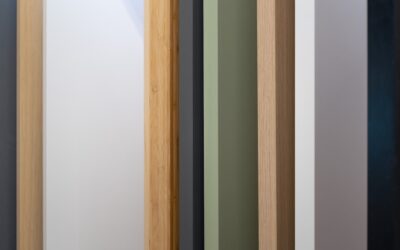
The finish you choose can either blend the doors into the wall or make them a statement. White or off-white doors remain the default because they brighten hallways and pair with any trim. But bold choices are trending. Painting interior doors a deep charcoal, forest green, or matte black creates striking contrast and instantly modernizes a space, especially against light walls.
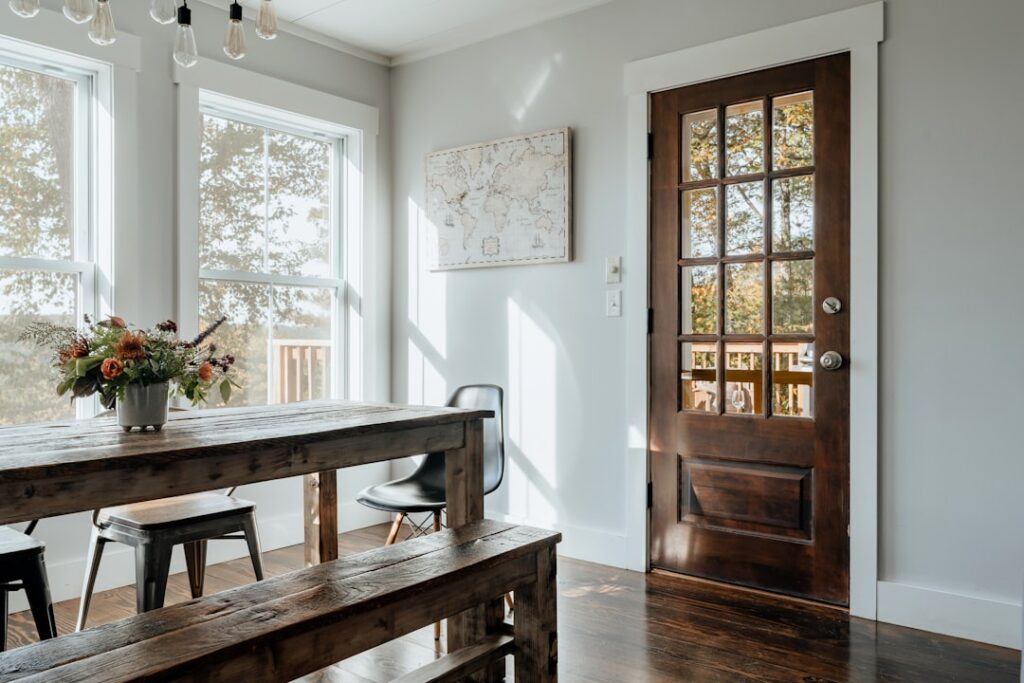
Stained wood doors bring warmth and work well in craftsman and traditional homes. For a designer touch, some homeowners paint doors the same color as the walls for a seamless, gallery-like effect, or lacquer them in a high-gloss accent color. Whatever direction you choose, keep the finish consistent throughout the home so the doors read as a coordinated set.
Hardware: The Jewelry of the Door
Handles, hinges, and knobs are small but powerful details. Matte black, brushed nickel, satin brass, and oil-rubbed bronze are the leading finishes. The rule of thumb is to coordinate door hardware with nearby fixtures such as light switch plates, cabinet pulls, and faucets so metals do not clash within sight lines.
Lever handles are easier to operate than round knobs and are required in some accessible designs. Upgraded hardware costs $15 to $60 per door but dramatically changes the perceived quality. Do not forget hinges, which are visible when doors are open. Matching the hinge finish to the handle is a low-cost move that elevates the whole look.
Sizing, Trim, and Proportion
Standard interior doors are 80 inches tall and 24 to 36 inches wide, with 30 and 32 inches being the most common. Taller 96-inch doors have become a design favorite in higher-end homes because they make ceilings feel loftier. When replacing doors, casing and trim style matter as much as the slab. Wider, flat casing suits modern homes, while fluted or beaded casing complements traditional interiors.
Proportion is key. A slim 24-inch door on a grand hallway looks undersized, while an oversized slab in a cramped hall feels awkward. Match door scale to the room and keep casing widths consistent throughout for a polished result.
Budgeting Your Door Project
Costs add up quickly across a whole house. A basic hollow-core door installed by a pro runs about $150 to $250 including labor, while solid-core and solid-wood doors installed can reach $300 to $700 each. Pre-hung doors, which come mounted in a frame, cost more but install faster and hang more accurately than slab-only replacements.
To control spending, prioritize. Upgrade to solid-core doors where sound matters most, keep budget hollow-core doors on closets, and reserve a statement door or two for high-visibility spots. Replacing just the hardware and repainting existing doors is an inexpensive refresh that can transform a home for a few hundred dollars.
Matching Doors to Your Home’s Architecture
The most cohesive interiors choose door designs that echo the home’s overall style rather than fighting it. A 1920s craftsman bungalow looks natural with five-panel or three-panel doors and simple, substantial casing, while a mid-century ranch pairs beautifully with flat slab doors and clean lines. Colonial and traditional homes call for six-panel raised designs, and a modern build can carry bold flush doors in dramatic finishes.
When you replace doors, take a cue from original architectural details still present in the house, such as window trim, baseboards, and the front door. Repeating those design language elements on interior doors ties the whole home together. If you are unsure, transitional Shaker doors are the safest universal choice because they read as neither strictly modern nor strictly traditional, blending gracefully into almost any setting.
Special Doors for Specific Rooms
Certain rooms benefit from purpose-built door solutions. A home office or media room deserves a solid-core door to block sound so calls and movies do not disturb the rest of the house. Bathrooms and bedrooms likewise gain privacy and quiet from solid cores. Where floor space is tight, such as a small powder room or a laundry closet, a pocket or barn door eliminates the swing arc entirely and can free up several square feet of usable space.
Closets are an opportunity to add function and style. Bypass sliding doors, bifold doors, and mirrored doors each suit different needs, and louvered doors help ventilate closets that house water heaters or generate humidity. For connecting spaces like a dining room to a kitchen, glass French doors let light flow while still allowing the rooms to be closed off. Thinking room by room about how each door is used leads to smarter choices than applying one style everywhere.
Refreshing Doors Without Replacing Them
If new doors are not in the budget, you can dramatically update existing ones for very little. A fresh coat of paint in a bold color, new hardware in an updated finish, and clean, crisp caulk lines around the casing can make dated doors look current. Adding applied molding to a plain flat door creates a faux-panel look for the cost of a few strips of trim and some paint. These low-cost refreshes prove that thoughtful door design is as much about details and finish as it is about buying new slabs.
Common Mistakes to Avoid
- Mixing too many door styles, which makes a home feel disjointed.
- Choosing hollow-core for bedrooms and bathrooms where privacy and sound matter.
- Ignoring hardware finish coordination with other fixtures.
- Forgetting to account for flooring thickness, leaving doors that drag or gap.
- Skipping proper priming on the top and bottom edges, allowing moisture to warp the door.
Bringing It All Together
Great interior door design is about consistency and intention. Pick a style that fits your home’s architecture, choose materials that match how each room is used, coordinate hardware finishes, and keep colors cohesive from room to room. Even modest doors look custom when the details align. Whether you refresh a few slabs or replace them all, the payoff is a home that feels more finished, quieter, and unmistakably yours. Start with the rooms you use most, and let the rest follow as budget allows.