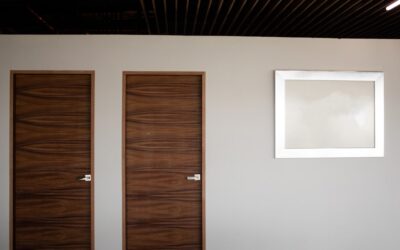
The door itself is often the cheapest part of the job. When homeowners are surprised by a quote, it is almost always because they priced the slab at the store and forgot that hanging it plumb, casing it, and finishing it is where the labor lives. The typical interior door installation price in 2026 runs $150 to $700 per door installed, with most standard prehung interior doors landing around $250 to $450 all in. Where your project falls depends on whether you are replacing a prehung unit, hanging a bare slab in an existing frame, or cutting a brand-new opening into a wall. This guide separates the door cost from the labor and shows you exactly what pushes the price up.
Part of our Windows & Doors guide — explore the full guide →
Average Installation Price Per Door
For a single standard interior door in a home with normal access, budget $250 to $450 installed, covering a builder-grade to mid-range prehung door plus professional labor. Simple slab swaps into existing, good-condition frames come in lower — $100 to $250 in labor. Complex jobs — a new opening, a solid-core or specialty door, or a custom size — climb to $500 to $1,000 or more.
If you are doing several doors at once, per-door pricing usually drops, because the carpenter’s setup and travel time spread across the batch. A whole-house replacement of 8 to 12 interior doors often prices at $200 to $350 per door rather than the one-off rate.
Prehung vs. Slab: The Big Divide
The single biggest factor in both material and labor is whether you buy a prehung door or a slab. A prehung door comes pre-mounted in its own frame with hinges attached — you set the whole unit into the rough opening, shim it plumb, and fasten it. A slab is just the door panel; you hang it on the existing frame’s hinges, which means mortising hinges and boring for the latch if the slab is not pre-machined.
- Prehung installation: more expensive to buy but faster and easier to install square. Labor typically $100 to $300. Best when the old frame is damaged or you want a clean, plumb result.
- Slab installation: cheaper door but more finicky labor because you must transfer hinge and latch locations precisely. Labor $75 to $250, more if the carpenter has to mortise hinges from scratch.
Counterintuitively, a prehung door is often the better value on a replacement even though the unit costs more, because it eliminates the fussy hand-fitting that eats labor hours on a slab.
What the Door Itself Costs
Material prices vary widely by construction and style. Here are typical 2026 costs for the door or prehung unit alone:
- Hollow-core prehung (builder grade): $60 to $150
- Solid-core prehung (better sound, heft): $150 to $350
- Solid-wood prehung: $250 to $700+
- Slab only, hollow-core: $40 to $100
- Slab only, solid-core or panel: $100 to $300
- French/double doors, barn doors, specialty: $300 to $1,500+
Solid-core doors cost more but feel substantially more solid and block noise far better — worth it for bedrooms, bathrooms, and offices. Hollow-core is fine for closets and low-traffic spaces where budget matters.
Labor Rates and What’s Included
Carpenters and handymen charge $35 to $90 per hour, and a straightforward prehung swap takes 1 to 3 hours. Many pros quote per door rather than hourly, at $100 to $300 in labor for a prehung install. That labor generally covers removing the old door, setting and shimming the new unit plumb and square, fastening it, and hanging it to swing and latch cleanly.
What is often not included, and adds cost, is trim and finishing. Installing new casing (door trim) runs $50 to $150 per door in labor plus $30 to $80 in material. Painting or staining the door and trim adds $50 to $150. Hardware — knob or lever and hinges — adds $20 to $120 depending on quality. Ask any quote whether casing, hardware, and paint are in or out, because a bare “door hung” price can balloon once the room is actually finished.
Factors That Raise the Price
Several situations push a simple install into higher territory. Cutting a new opening into an existing wall is the biggest one — framing a new rough opening, adding a header, and patching drywall can add $300 to $1,000 on top of the door, and more if the wall is load-bearing or hides plumbing or electrical. Non-standard sizes mean a custom door and possible frame modification. Out-of-square existing openings, common in older homes, require extra shimming and sometimes reframing.
Other cost-movers: pocket doors and barn doors need special hardware and framing, adding $200 to $800; solid-wood and fire-rated doors are heavier and pricier to hang; and haul-away of the old door plus any drywall or paint repair around the opening adds up. Access and location in the home rarely matter much for interior doors, but a tight hallway or a second-floor job can slow the work slightly.
Cost by Door Style and Type
Beyond prehung versus slab, the style of door changes the installed price meaningfully because some designs need special framing or hardware. Here is what to expect installed in 2026 for common types:
- Standard single hinged door: $250 to $450 installed
- Double/French doors: $600 to $1,500 installed — two leaves, more precise fitting, pricier hardware
- Bifold closet doors: $150 to $400 installed
- Sliding barn door with hardware: $400 to $1,200 installed
- Pocket door (into existing wall): $1,000 to $3,500 — requires opening the wall and installing a pocket frame
- Solid-wood or fire-rated door: $400 to $1,000+ installed
Pocket doors are the priciest because the wall must be opened and a track-and-frame kit built into it, essentially framing work plus finishing. Barn doors are middle-ground: the slab and track hardware cost more, but installation is simpler since there is no jamb to fit. Match the style to the room and the budget before you fall in love with a look that quietly triples the labor.
How to Save on a Door Project
A few smart moves keep the total down without cutting corners. Bundle multiple doors into one visit so the carpenter’s setup and travel spread across the batch, dropping the per-door rate. Buy standard sizes — a 30-inch or 32-inch prehung off the shelf costs a fraction of a custom order and avoids frame modification. Reuse existing casing where it is in good shape by choosing a slab swap instead of a prehung, saving both the trim material and the labor to install it.
Do the finishing yourself even if a pro hangs the door: painting or staining the door and trim on your own time can save $50 to $150 per door. And get itemized quotes from two or three installers, confirming exactly what is included — door, hardware, casing, paint, and haul-away — because the cheapest headline number often leaves out the finishing that the others include. For a whole-house door refresh, those combined savings can knock hundreds off the project while still leaving the tricky plumb-and-square work to someone who does it every day.
DIY Savings and When to Hire Out
Installing a prehung interior door is one of the more achievable DIY carpentry jobs and can save you the entire $100 to $300 labor cost, bringing a project down to just the $60 to $350 door price plus $30 to $80 for trim and $20 to $60 for hardware. The keys are getting the unit plumb and the reveal even, and having a level, shims, a finish nailer, and patience. Budget a half-day for your first one.
Hire a pro when you are cutting a new opening, the existing frame is badly out of square, you are hanging heavy solid-wood or double doors, or you simply want a guaranteed clean result across many doors. For a typical single prehung replacement, expect to pay around $300 installed with mid-range materials, or do it yourself for roughly half that. Either way, get an itemized quote that spells out door type, whether it is prehung or slab, and whether casing, hardware, and paint are included — that is where the real interior door installation price is decided.