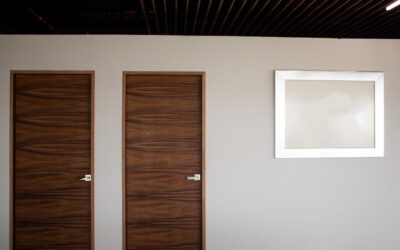
Swapping out dated, hollow builder-grade doors is one of the most overlooked ways to freshen up a home, and it is often more affordable than people expect. The interior door cost for a single door ranges from about $50 for a basic hollow-core slab to well over $1,000 for a solid wood door with custom trim and professional installation. Knowing what drives the price helps you budget accurately and decide where to spend and where to save. This guide breaks down the numbers by material, style, and installation.
Part of our Windows & Doors guide — explore the full guide →
Average Interior Door Cost
For most homeowners, the total interior door cost including the door and installation falls between $150 and $700 per door. The door itself typically runs $50 to $500, while professional installation adds $100 to $400 depending on whether you are hanging a slab or a prehung unit and how much trim work is involved.
Replacing all the doors in a home adds up quickly. A typical house has 8 to 15 interior doors, so a full replacement project often lands between $2,000 and $8,000. The exact figure depends heavily on the materials and styles you choose and whether you handle any of the work yourself.
Cost by Door Material
Material is the biggest factor in what you will pay. Each option balances price, sound insulation, and durability differently.
- Hollow-core: The budget choice at $30 to $150 per slab. Lightweight and affordable, but offers little sound blocking and dents easily.
- Solid-core: A popular middle ground at $70 to $250. The engineered core blocks sound well and feels substantial, ideal for bedrooms and bathrooms.
- Solid wood: The premium option at $150 to $600 or more. Beautiful and durable with excellent sound insulation, but it can warp with humidity.
- MDF and composite: Smooth, paintable, and stable at $50 to $200, resistant to warping and cracking.
- Glass or French doors: Higher cost at $200 to $1,000-plus, adding light and style between rooms.
Prehung vs. Slab Doors
One of the biggest cost and labor decisions is whether to buy a slab door or a prehung unit. The right choice depends on the condition of your existing frame.
Slab Doors
A slab is just the door panel with no frame or hardware. It is cheaper, often $30 to $300, but requires you to reuse the existing frame and hinges and mortise in the hardware. Slabs work well when your door jambs are in good shape and square.
Prehung Doors
A prehung door comes already mounted in a frame with hinges attached, ready to install into the rough opening. It costs more, typically $100 to $600, but installation is faster and the result is more precise, especially in older homes with out-of-square openings. Prehung units are the better choice when frames are damaged or you are changing the door size.
Cost by Door Style
Style affects both the door price and, in some cases, the installation complexity. Common interior door styles and their relative costs include:
- Flush (flat) doors: The most affordable, with a smooth, simple surface.
- Panel doors: Two-, four-, or six-panel designs that add classic detail, moderately priced.
- Shaker doors: Clean-lined and popular in modern and farmhouse homes, mid-range pricing.
- Barn doors: Sliding doors on exposed hardware, $150 to $600-plus including the track kit.
- Pocket doors: Slide into the wall to save space, but installation is costly since it requires opening the wall.
- French and glass doors: Elegant and light-filled, at the higher end of the price range.
Installation and Labor Costs
Labor is a significant part of the total, and it varies with the door type and your region. Installing a prehung door is usually quicker and runs $100 to $300 in labor, while hanging a slab door onto an existing frame can actually take longer because of the precise mortising and hardware work, sometimes $150 to $400. Pocket doors are the priciest to install, often $500 to $1,500, because the wall must be opened up to fit the hardware. Additional costs can include new trim and casing ($50 to $150 per door), hardware and hinges ($20 to $200 depending on quality), and painting or staining ($30 to $150 per door). Always confirm what a quote includes so you are comparing apples to apples.
Ways to Save on Interior Doors
You can trim your project budget with a few smart moves. Consider these cost-saving strategies:
- Reuse existing frames and buy slab doors when the jambs are square and solid.
- Choose MDF or hollow-core doors for closets and low-traffic rooms, and save solid-core for bedrooms and bathrooms where sound matters.
- Buy standard sizes rather than custom, which cost far more and take longer to order.
- Install the doors yourself if you are handy, since labor is often half the total cost.
- Replace doors in bulk to negotiate a better per-door installation rate.
- Paint doors yourself rather than paying for factory or on-site finishing.
When to Repair Instead of Replace
Replacement is not always necessary. If a door sticks, squeaks, or does not latch, simple repairs can save you the full cost. Tightening or replacing hinges, planing a sticking edge, adjusting the strike plate, or filling and repainting minor damage can restore a door for just a few dollars. Reserve full replacement for doors that are warped, badly damaged, hollow and noisy where you need sound control, or simply outdated in style. Being honest about which doors truly need replacing keeps your project focused and your budget in check.
Hidden Costs to Budget For
The door and installation are the headline numbers, but several smaller costs can catch you off guard if you do not plan for them. When you replace an old door, the surrounding trim and casing often need updating too, especially if the profiles do not match your new doors or the old trim gets damaged during removal. New casing runs about $50 to $150 per opening including materials and labor.
Hardware is another line item that adds up across a whole house. Knobs, levers, hinges, and strike plates range from $20 for a basic set to $200 or more for premium finishes, and multiplying that across a dozen doors is significant. If you want matching finishes throughout the home, budget for a full set rather than reusing mismatched old hardware. Door stops, thresholds, and weatherstripping for doors near unconditioned spaces are easy to forget.
Finishing costs also sneak in. A primed door still needs paint or stain, which means $30 to $150 per door if you hire it out, plus supplies if you do it yourself. Older homes frequently have out-of-square openings that require extra shimming and adjustment, adding labor. And if you are widening an opening or converting to a pocket or barn door, you may face drywall repair, painting, and even electrical rerouting. Building a small contingency into your budget keeps these extras from derailing the project.
Frequently Asked Questions
How much does it cost to replace an interior door?
Expect $150 to $700 per door including installation. The door itself runs $50 to $500, and labor adds $100 to $400 depending on whether it is a slab or prehung unit and the trim work involved.
Is it cheaper to buy a slab or prehung door?
Slab doors are cheaper to buy, but prehung doors install faster and more precisely. If your frames are in good shape, a slab saves money; if the jambs are damaged or out of square, a prehung unit is worth the extra cost.
How much does it cost to replace all doors in a house?
With 8 to 15 doors in a typical home, a full replacement usually costs $2,000 to $8,000, depending on materials, styles, and whether you install them yourself.
What is the cheapest interior door option?
Hollow-core flush doors are the least expensive, often $30 to $150 per slab. They are lightweight and fine for closets and low-traffic areas but offer little sound insulation.
Can I install an interior door myself?
Yes, especially a prehung unit, which is beginner-friendly. Hanging a slab onto an existing frame requires more precision for the hinges and hardware. DIY can cut the total cost roughly in half by eliminating labor.
Understanding interior door cost lets you plan a realistic budget and spend strategically. Match the material to each room’s needs, choose slab or prehung based on your frames, and consider DIY installation to cut labor. With smart choices, replacing tired doors is an affordable upgrade that instantly modernizes your home.