Renters and homeowners ask this constantly, usually in an apologetic tone, as if layering textiles were a decorating crime. So, is it weird to put a rug on carpet? Not at all: designers have layered area rugs over wall-to-wall carpet for decades, and done well it solves real problems that carpet alone cannot. A rug defines a seating zone in a carpeted sea of beige, hides stains and worn traffic lanes, protects a rental’s carpet from your desk chair, and injects color into a floor you are not allowed to replace. The technique only looks odd when the pile heights, sizes, or patterns fight each other, and all three are easy to get right.
Why the Question Comes Up at All
The hesitation usually comes from a half-remembered rule that rugs belong on hard floors. That rule exists because rugs originally served as insulation and cushioning over cold stone and wood; once wall-to-wall carpet delivered those functions, a rug on top seemed redundant. Modern layering is not about function duplication, though. It is about zoning and visual weight. An open carpeted living room with a sofa floating in the middle reads unfinished; drop an 8×10 rug under the seating group and the room suddenly has architecture. Hotels, model homes, and staging companies do this routinely, which is a decent signal that the look sells rather than repels.
There are also blunt practical motives. Landlords charge for carpet damage, and a $150 rug is cheaper than a $1,200 carpet replacement. Homeowners waiting to renovate can hide a bleach spot or a decade-old traffic lane for years with one purchase. None of that is weird; it is thrift.
When Layering a Rug Over Carpet Works
- Defining zones in large or open rooms. A rug anchors the conversation area, the play corner, or the bed, giving furniture a visual boundary the carpet cannot provide.
- Adding pattern and color. Builder-grade carpet comes in exactly one personality. A patterned rug supplies the character without a renovation.
- Protecting high-wear spots. Under dining tables, desk chairs, and door approaches, the rug takes the abuse and the carpet underneath stays new.
- Covering damage. Stains, burns, seam splits, and sun fade disappear under a well-placed rug for a fraction of repair cost.
- Warmth and acoustics in basements. A dense rug over thin glued-down basement carpet adds genuine underfoot comfort and deadens echo.
The Pile Height Pairing Rule
One guideline prevents nearly every layering failure: put the flatter textile on top. A low-pile or flatweave rug over a plush carpet sits crisply and stays put reasonably well. Reverse it, a thick shag rug over dense low carpet is fine too, but a plush rug over plush carpet turns into a wrinkled, shifting mess that swallows furniture legs and creases underfoot.
Practical pairings that work:
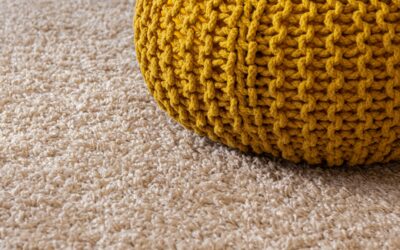
- Over plush or frieze carpet: flatweave, low-pile wool, kilim, or indoor-outdoor polypropylene rugs under 1/2 inch pile.
- Over low-pile or commercial carpet: almost anything, including thick shags and high-pile Moroccan-style rugs, since the firm base supports them.
- Avoid: thick rug on thick carpet, and very lightweight cotton rugs anywhere, because they buckle and creep no matter what you do.
Furniture placement finishes the job. A rug with at least the front legs of the sofa and chairs on it gets pinned in place and looks integrated. A rug floating with no furniture contact will migrate and wrinkle within a week on carpet.
Stopping the Slide: Rug Pads and Anchoring
Regular rug pads are built to grip hard floors and do little on carpet. What you want is a carpet-to-carpet pad, sold as “rug-on-carpet” pads, which use a textured, slightly tacky surface on both faces to resist the lateral creep that carpet pile causes. Expect $30 to $70 for an 8×10. Alternatives that work:
- Rug-to-carpet gripper pads, the purpose-built solution and the first thing to try.
- Furniture anchoring, placing at least two legs of major pieces on the rug. Free and highly effective.
- Double-sided carpet tape rated for carpet, used at corners. Effective but can leave residue on the carpet below, so renters should test a hidden spot.
- Silicone-backed corner grippers, a light-duty fix for small rugs in low-traffic spots.
Wrinkling is the other complaint, and it usually means the rug is too light for the carpet’s pile. Adding a pad stiffens the assembly; if wrinkles persist, the honest fix is a heavier or flatter rug.
Getting the Look Right
Size does most of the aesthetic work. Undersized rugs floating on carpet look like doormats; follow the same sizing rules you would on hardwood. In a living room, the rug should reach under the front legs of every seating piece, which usually means 8×10 or 9×12. Under a queen bed, 8×10. Under a dining table, the rug should extend 24 inches beyond the table edge so chairs stay on it when pulled out.
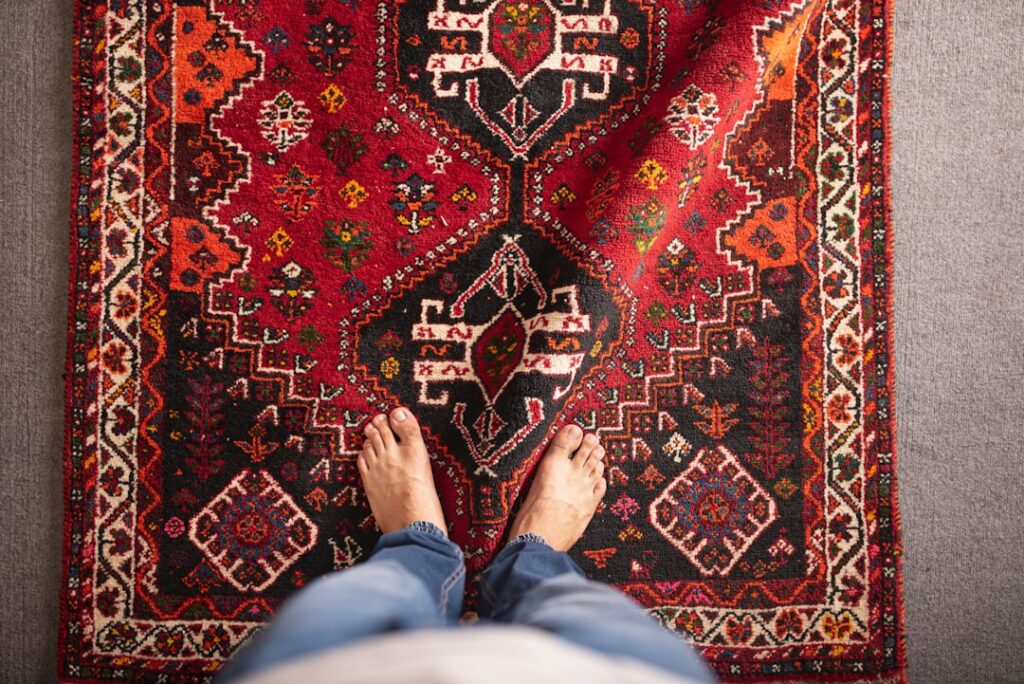
Contrast keeps the layering deliberate. Pick a rug that differs from the carpet in at least two of three attributes: color, pattern, and texture. A dark patterned flatweave on light plush carpet reads as a design choice. A beige rug two shades off from beige carpet reads as a patch job. Binding matters too; a finished serged or bound edge looks intentional, while an unbound carpet remnant looks like leftover material, mostly because it is.
Cleaning and Maintenance When You Layer
Layers trap grit between them, and grit abrades both textiles. Vacuum the rug weekly like any other, but also lift it every month or two and vacuum the carpet underneath. Watch for color transfer: inexpensive rugs with unstable dyes can crock color into light carpet, especially if anything damp gets between the layers, so blot spills fast and let both layers dry fully before repositioning. Rotate the rug twice a year so the carpet pile beneath compresses evenly; a rug left in one position for years leaves a visible footprint in plush carpet, though a steam clean and a pile rake will lift most of it when you eventually rearrange.
The Verdict
Is it weird to put a rug on carpet? No, and in plenty of rooms it is the smartest available move: it zones open spaces, protects and hides tired carpet, and personalizes floors you cannot change. Keep the flatter piece on top, size the rug as generously as you would on hardwood, pin it with furniture and a carpet-rated pad, and choose deliberate contrast over a near-match. Follow those four rules and the layered look lands exactly the way the design magazines intend it to.