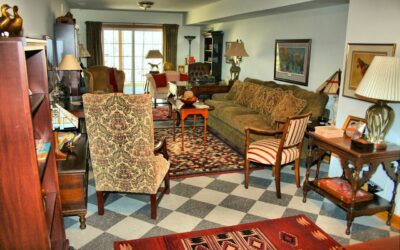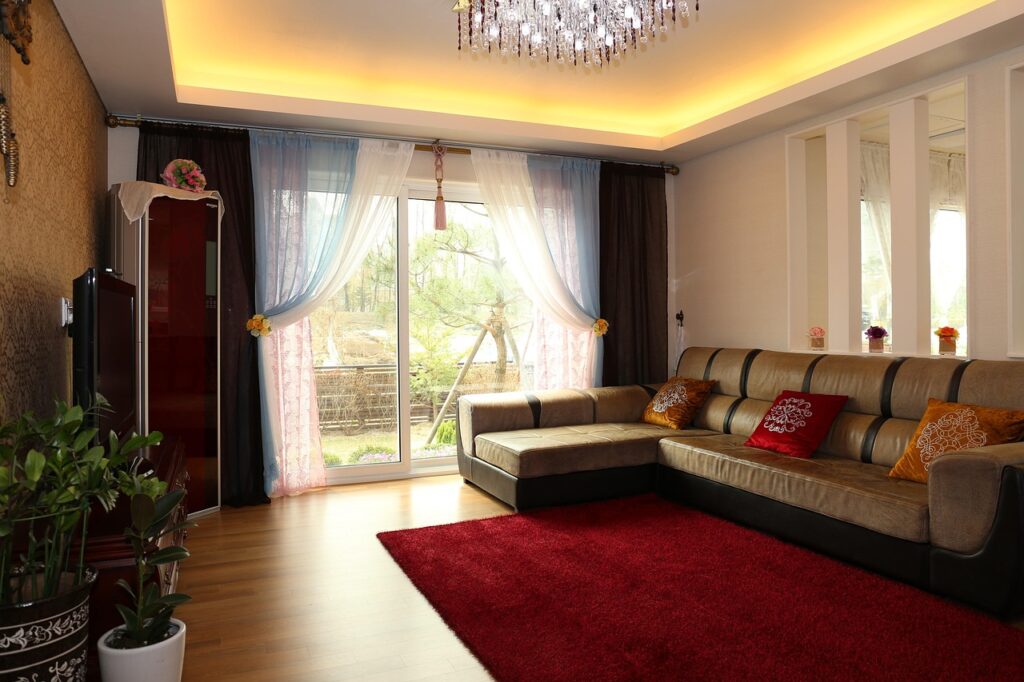
The interior design world spent two decades insisting that area rugs belong only on hardwood, tile, or LVP. Then designers like Jenni Kayne and Amber Lewis built their whole brand identity on layered textiles, and suddenly putting rugs on carpet floor became one of the fastest-growing trends in residential design. Done right, layering adds texture, defines zones in open-plan homes, and protects high-traffic carpet wear paths. Done wrong, you end up with a hazardous tripping zone and a rug that bunches into a wave every time someone walks across it.
Why Layer a Rug Over Carpet at All
Four legitimate reasons. First, defining seating areas in open floor plans where wall-to-wall carpet runs continuously across the whole footprint. Second, protecting expensive carpet wear paths in front of sofas, recliners, and dining chairs. Mohawk SmartStrand and Stainmaster TruSoft retail for $4.50 to $7.50 per square foot installed, so a $400 wool runner over the worst 24 square feet pays for itself by extending replacement cycles 5 to 8 years. Third, layering color and pattern into a beige-carpeted room without committing to a full reinstall. Fourth, warming up a basement family room where the broadloom carpet is fine but visually flat.
The Pile-Height Compatibility Rule
Layering only works when the rug pile is taller than the carpet pile. Put a 1/4-inch flat-weave kilim on top of a 1/2-inch frieze and the rug becomes a slippery skating rink that wrinkles in every direction. The minimum differential is 2x. If your carpet is a 3/8-inch cut pile, the area rug needs at least 5/8-inch pile to sit stable. Wool rugs with hand-knotted construction in the 3/4 to 1.25-inch pile range work best over short-pile residential carpet.
Sheepskin, shag, and high-pile Moroccan-style rugs over 1.5 inches are the most forgiving over any carpet. Flatweaves and dhurries are the trickiest and require non-slip pads designed specifically for carpet-on-carpet use.
The Right Rug Pad Makes or Breaks It
Standard felt-and-rubber rug pads designed for hardwood actively fail on carpet. They slide. You need a carpet-specific pad with a tacky polymer surface on one side. The Mohawk Home Carpet Lock Rug Pad and the No-Muv Non-Slip Rug Pad are the two products designed exactly for this application. Both cost $40 to $90 depending on size and use a polymer “grip” surface that physically interlocks with carpet fibers without adhesive that could damage them.
Materials That Layer Best
Wool rugs are the easiest layer. The natural weight (typically 6 to 8 pounds per square yard for hand-knotted construction) holds them in place better than synthetics. Surya, Loloi, and Jaipur Living all manufacture hand-knotted wool rugs in the $400 to $1,800 range for 8 by 10 feet. Vintage Persian, kilim, and Turkish rugs from Etsy and Chairish often run $250 to $900 for similar sizes and bring patina that printed reproductions cannot match.
Avoid jute and sisal directly over carpet. The coarse natural fibers scratch and crush plush carpet under foot traffic, especially in dining areas where chairs scrape back and forth.
Sizing and Placement
For a living room, the front feet of all major furniture should sit on the rug. A standard 8 by 10-foot rug works for a 12 by 14-foot conversational area. Bumping up to 9 by 12 lets all four feet of the sofa land on the rug for a more intentional, anchored feel. In a bedroom, an 8 by 10-foot rug positioned under the lower two-thirds of a queen bed creates a soft landing on both sides without disappearing under the headboard.
Stopping the Bunch and Slide
Beyond rug pads, three practical tricks. Tape the rug corners to the carpet with double-sided rug tape such as XFasten Rug Gripper, which uses a low-residue adhesive safe on most carpet warranties. Add furniture to weight the rug edges, particularly a 60-pound coffee table centered on the rug. Use rug stops or rug grippers under the front edges where rugs are most likely to flip up from foot traffic.
If a rug still bunches into ripples, the underlying problem is usually pile direction. Rotating the rug 90 or 180 degrees often fixes it because the carpet pile lay is fighting the rug pile lay.
Carpet Warranty Considerations
Read your carpet warranty before installing rug tape. Major manufacturers including Shaw, Mohawk, and Stainmaster void wear warranties if adhesives are applied directly to the carpet face. Removable rug grippers like XFasten 30-day adhesive and the Ruggable PadLock system are warranty-safe because they use pressure-sensitive removable adhesive. Always test on a closet patch first and remove within 30 days to evaluate residue.
Cleaning Layered Floors
Layered floors collect twice the dust. Vacuum the area rug surface weekly with the beater bar off if it is a hand-knotted wool piece, on if it is a flatweave or synthetic. Flip the rug every two months and vacuum the underside, the rug pad, and the carpet underneath. The pad eventually mats with carpet fibers and dust; rinse it in a bathtub with mild dish soap every 12 months and air-dry flat.
Treat spills on the rug immediately to prevent them from soaking through to the carpet below. Blot with a white towel, apply 1 tablespoon white vinegar in 2 cups warm water, blot again, and air-dry with a fan.
Trends Driving the Look
The rugs on carpet floor approach gained mainstream traction through the 2024 to 2026 “soft maximalism” movement. Vintage Persian over neutral broadloom became a signature of designers in Nashville, Austin, and Brooklyn. Antique kilims layered over textured cut-pile in primary suites show up in monthly Architectural Digest features. The look works best in rooms with at least one of: tall ceilings, natural light, or strong architectural details like wainscoting or beamed ceilings, because the layered texture amplifies whatever the room already has going for it.
When Not to Layer
Skip the layering on plush thick-cut carpet over 3/4-inch pile, on stairs of any kind for safety, in entryways where the rug will fight wet shoes, and in dining rooms with frequent chair pulls unless you accept rapid wear on the rug surface. In those rooms, fix the underlying issue first: replace worn carpet, add a runner with proper attachment, or rethink whether wall-to-wall is even the right surface for that space.