
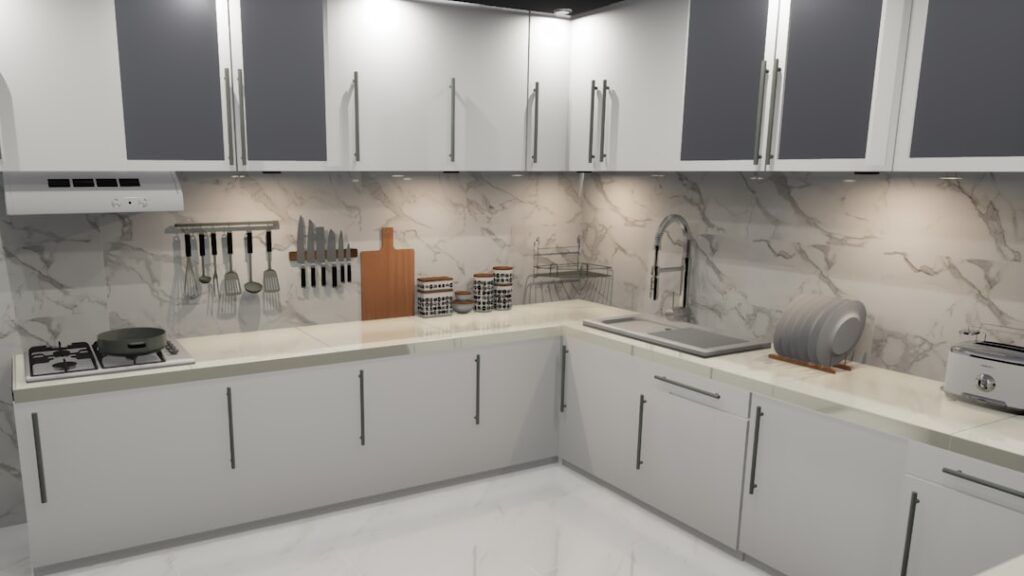
The countertop is the surface you’ll touch a dozen times a day, so a beautiful material that stains, scratches, or needs constant sealing becomes a daily irritation. Choosing the right kitchen counter top material is a tradeoff between looks, durability, maintenance, and budget, and no single option wins on all four. This guide compares the major materials head to head so you can match the surface to how you actually cook and live.
Part of our Kitchen Remodeling guide — explore the full guide →
- Quartz: The Low-Maintenance Favorite
- Granite: Natural and Heat-Resistant
- Marble: Beauty With a Catch
- Butcher Block: Warm and Workable
- Laminate: The Budget Workhorse
- Other Materials Worth Knowing
- How to Choose for Your Kitchen
- Edge Profiles and Thickness
- Installation and Seams
- Care and Long-Term Maintenance
- The Bottom Line
Quartz: The Low-Maintenance Favorite
Engineered quartz is the most popular countertop in new kitchens for good reason. It’s nonporous, so it never needs sealing and resists stains and bacteria. The surface stands up to scratches and everyday use, and it comes in consistent colors and patterns, including convincing marble looks. The drawbacks: it can scorch under hot pans, so use trivets, and direct sunlight can fade some colors over years. Expect $50 to $120 per square foot installed.
Granite: Natural and Heat-Resistant
Granite remains a classic for buyers who want a genuine stone with unique veining. Each slab is one of a kind, and it handles heat better than quartz, shrugging off a hot pot. It does need sealing once or twice a year to stay stain-resistant, and the porous nature means spills like red wine or oil should be wiped promptly. Granite runs roughly $40 to $100 per square foot installed, depending on the rarity of the stone.
Marble: Beauty With a Catch
Nothing matches the elegance of marble, but it’s the highest-maintenance choice in a working kitchen. The surface is soft and porous, so it etches from acids like lemon juice and vinegar and scratches more easily than quartz or granite. Many homeowners love the patina it develops; others find it stressful. If you crave marble, consider it for a baking station or island and pair the hard-working zones with quartz. Marble typically costs $60 to $150 per square foot installed.
Butcher Block: Warm and Workable
Wood countertops bring warmth and let you cut directly on the surface, then sand out the marks. Butcher block is comparatively affordable at $35 to $70 per square foot installed, and DIY-friendly. The catch is upkeep: it needs regular oiling, can’t sit wet, and is vulnerable to water damage near sinks. It’s an excellent accent or island top, less ideal as the only surface in a busy, splash-heavy kitchen.
Laminate: The Budget Workhorse
Modern laminate has come a long way from the dated patterns of decades past, now mimicking stone and wood convincingly. At $15 to $40 per square foot installed, it’s the most affordable option and resists stains well. It can scratch, scorch, and chip at seams, and damage generally can’t be repaired, only replaced. For rentals, starter homes, or tight budgets, laminate delivers a clean look for a fraction of the price.
Other Materials Worth Knowing
A few specialty surfaces round out the field:
- Solid surface (Corian): Seamless, repairable, and stain-resistant; scratches and scorches more easily. $40 to $80 per square foot.
- Concrete: Fully custom and industrial in look; needs sealing and can develop hairline cracks. $65 to $135 per square foot.
- Stainless steel: Hygienic and heat-proof, favored in pro kitchens, but dents and shows fingerprints. $75 to $150 per square foot.
- Porcelain slab: Ultra-durable, heat- and UV-resistant, thin profile; fewer fabricators carry it. $55 to $120 per square foot.
How to Choose for Your Kitchen
Match the material to your habits. If you want set-and-forget durability, quartz is hard to beat. If you cook with high heat and love natural stone, granite suits you. Tight budget? Laminate or butcher block. Acid-heavy baker who wants marble’s look without the worry? Choose a quartz that mimics it. Be honest about how much maintenance you’ll actually do, because the most beautiful counter is the wrong one if you resent caring for it.
Edge Profiles and Thickness
Two details that buyers overlook shape both the look and the price of a countertop: edge profile and slab thickness. A simple eased or pencil edge is included in most quotes, while ornate profiles like ogee or waterfall edges add fabrication labor and cost. Thickness matters too; standard stone slabs come in 2 centimeter and 3 centimeter, with the thicker 3 centimeter offering a more substantial look and often skipping the need for a plywood support backing. A trendy waterfall edge, where the material runs down the side of an island to the floor, looks stunning but can add hundreds of dollars in extra material and seaming. Decide these before you finalize a quote, since they meaningfully move the total.
Installation and Seams
How a countertop is installed affects both appearance and longevity. Stone and quartz counters require professional templating after cabinets are set and level, then precise fabrication and a careful install, since the slabs are heavy and unforgiving. Seams are sometimes unavoidable on long runs or L-shaped layouts; a skilled fabricator places them where they’re least visible and color-matches the filler so they nearly disappear. Ask to see examples of a fabricator’s seam work before hiring. For sinks, an undermount installation looks cleaner and makes wiping crumbs into the bowl easy, but it must be properly supported, which is part of why professional installation is worth the cost on premium surfaces.
Care and Long-Term Maintenance
Each material rewards a slightly different care routine, and matching your habits to it prevents premature wear. Quartz needs only mild soap and water and no sealing, but keep it away from direct high heat and harsh solvents. Granite and other natural stones should be sealed on a schedule, tested by dripping water on the surface; if it soaks in rather than beading, it’s time to reseal. Wipe acidic spills off marble immediately to limit etching. Butcher block needs oiling every few weeks at first, then periodically. Use cutting boards and trivets on every surface regardless of how durable it claims to be, and a quality counter will look new for decades.
The Bottom Line
The best kitchen counter top material is the one that fits your cooking style, maintenance tolerance, and budget. Quartz wins for low-upkeep durability, granite for natural heat resistance, marble for looks, butcher block for warmth, and laminate for value. Mixing materials by zone, a durable main surface plus a specialty island, often gives you the best of every world.


