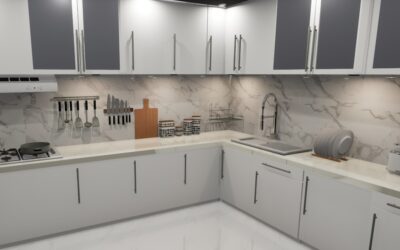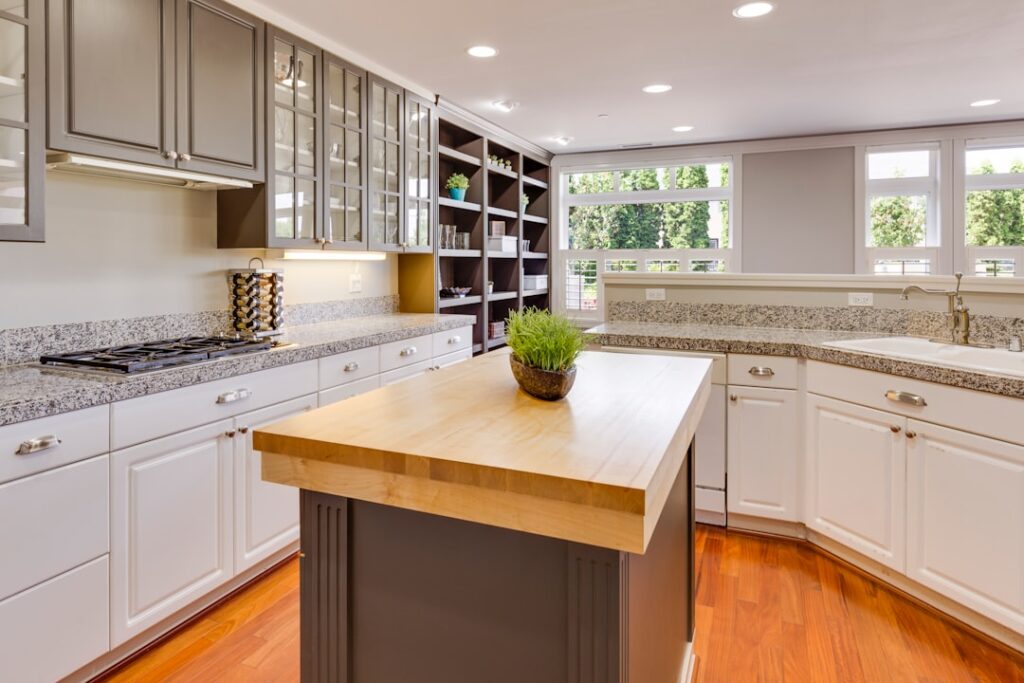
Choosing a kitchen counter is the most consequential design decision in a remodel because the surface eats up to 40 percent of visual real estate and dictates what cabinets, backsplash, and flooring will work alongside it. Counter top ideas have evolved beyond the granite-or-laminate binary that defined the 2000s; today’s market includes engineered quartz, butcher block, polished concrete, soapstone, and large-format porcelain, each with a clear design role and price point. This guide breaks down the five materials worth considering for a 2026 kitchen and which design language each one speaks.
- Quartz: The Default Premium Choice
- Granite: Still Worth Considering
- Butcher Block: Warm and Workable
- Concrete: Industrial Statement
- Marble: Timeless but Unforgiving
- Quartzite: The Marble Alternative
- Pricing Comparison Quick Reference
- Pairing Counters With Cabinets
- Edge Profile Decisions
- Final Counter Top Ideas Decision Framework
Quartz: The Default Premium Choice
Engineered quartz (Caesarstone, Cambria, Silestone, MSI Q) has overtaken granite as the most-installed premium counter in North America. The material is roughly 90 percent ground quartz aggregate bound with polymer resin, formed into 120×55-inch slabs and finished in patterns ranging from solid color to convincing marble veining.
What it costs: $50 to $120 per square foot installed for residential SKUs, $130 to $200 for premium veined patterns. What it does well: nonporous (no sealing required ever), highly scratch and stain resistant, consistent slab-to-slab color matching, hundreds of pattern options. What it does poorly: heat resistance is limited to about 300°F (always use trivets); UV exposure causes some patterns to fade outdoors; the look can read flat on close inspection because the pattern repeats every 9 to 12 feet.
Granite: Still Worth Considering
Granite has fallen out of design-magazine favor but it remains a genuinely excellent counter material that costs less than quartz in most markets. Real granite slabs are unique — no two pieces match — which works for homeowners who want one-of-a-kind character.
What it costs: $40 to $100 per square foot installed for typical varieties; $150-plus for exotic stones (Blue Bahia, Galaxy Black). What it does well: heat resistance up to 1,200°F (you can set a hot pan directly on it), authentic natural variation, strong resale value in conservative markets. What it does poorly: requires resealing every 1 to 3 years, can stain from oil and red wine if seal is compromised, color choices skew warm and busy in a way that does not flatter contemporary kitchens.
Butcher Block: Warm and Workable
Butcher block is the surface you choose when the kitchen needs warmth and you actually cook on it. Hard maple, walnut, cherry, and end-grain teak are the typical species. End-grain block ($100 to $200 per sq ft) is more durable but more expensive than edge-grain ($30 to $80 per sq ft).
What it does well: knives don’t dull as fast, scratches and dents sand out, develops character with use, beautiful warm aesthetic that pairs with white cabinets and brass hardware. What it does poorly: requires monthly oiling (food-safe mineral oil or beeswax-mineral oil blend), darkens around sinks if water sits, not heat-resistant beyond about 200°F, scorches from hot pans.
Use butcher block as the primary kitchen counter in cottages and farmhouses, or as an island accent paired with quartz on the perimeter for the best of both worlds.
Concrete: Industrial Statement
Polished concrete counters have moved from custom-only specialty to a real residential option, with ready-mix kits and prefab slabs available. Site-cast concrete runs $80 to $140 per square foot installed; precast slabs run $65 to $110.
What it does well: fully customizable in shape, color, and embedment (recycled glass, copper inlays, fossils), heat-resistant to about 800°F, extremely durable. What it does poorly: porous and prone to staining without aggressive sealing, develops hairline cracks (a feature in industrial design, a flaw to most homeowners), heavy enough to require structural cabinet support, and a sealing schedule of every 1 to 2 years.
Concrete suits modern, industrial, and rustic-modern kitchens. It looks forced in traditional or coastal styles.
Marble: Timeless but Unforgiving
Carrara, Calacatta, and Statuario marbles produce the most photographed counters in design history, but real marble in a working kitchen is high-maintenance. The white background etches with anything acidic — lemon juice, vinegar, tomato sauce, wine — leaving dull spots that cannot be wiped away.
What it costs: $60 to $100 per sq ft for Carrara; $100 to $250 for Calacatta and Statuario. What it does well: visual depth that engineered surfaces cannot replicate, coolness benefits pastry work, increases resale in luxury markets. What it does poorly: etches, scratches, stains. The “patina” some homeowners learn to love is the same surface damage other homeowners despise.
Marble is the right call for primary baths, butler’s pantries, and homeowners who genuinely embrace patina. It is the wrong call for working kitchens with kids and red sauce.
Quartzite: The Marble Alternative
Quartzite (not the same as engineered quartz) is a natural metamorphic stone harder than granite that visually mimics marble. White Macaubas, Calacatta Quartzite, and Taj Mahal are popular varieties. Costs $80 to $200 per square foot installed.
What it does well: marble look without the etching problem, harder than granite, takes a polish well. What it does poorly: still porous, requires sealing, sometimes mislabeled at retail (some “quartzite” is actually softer dolomitic marble that does etch). Demand a vinegar test on the slab before purchase.
Pricing Comparison Quick Reference
Installed pricing ranges per square foot for a 50 sq ft kitchen counter:
- Laminate: $20 to $40 ($1,000 to $2,000 total)
- Butcher block: $30 to $80 ($1,500 to $4,000)
- Granite: $40 to $100 ($2,000 to $5,000)
- Quartz: $50 to $120 ($2,500 to $6,000)
- Concrete: $80 to $140 ($4,000 to $7,000)
- Marble: $60 to $250 ($3,000 to $12,500)
- Quartzite: $80 to $200 ($4,000 to $10,000)
Pairing Counters With Cabinets
The two surfaces have to read as a single design language:
- White Shaker cabinets + white quartz with subtle gray veining: contemporary classic
- Sage green Shaker + butcher block: cottage-modern
- Dark walnut + white Calacatta marble: luxury contemporary
- Navy painted base + brass hardware + white quartzite: high-end traditional
- White oak slab cabinets + soapstone or honed black granite: rustic modern
Avoid pairing busy granite with busy cabinet hardware or busy backsplash; one element should always read quiet.
Edge Profile Decisions
Edge profile changes both the cost and the visual weight of the counter. Eased (slight roundover) is the cheapest at no upcharge and reads modern. Bullnose adds warmth and traditional character ($5 to $10 per linear foot upcharge). Mitered edge (45-degree miter to create the illusion of a thicker slab) costs $25 to $50 per linear foot but transforms a 3 cm slab into a 6 to 8 cm visual edge that screams designer kitchen. Skip ornate ogee or bevel edges in 2026; they read dated.
Final Counter Top Ideas Decision Framework
Match material to lifestyle: heavy cooks who care about heat tolerance choose granite or concrete; busy families prioritizing low-maintenance choose quartz; design-forward homeowners willing to embrace patina choose marble; warm aesthetic-first homes choose butcher block. The best counter top ideas for your kitchen are the ones that survive your actual habits, not the ones that look best in showroom photography.