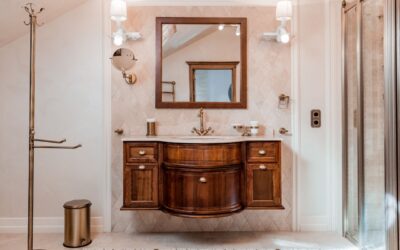
Pinterest makes every kitchen look achievable until you start pricing materials. The most successful renovations commit to a single direction rather than mixing five styles into a Frankenstein space. Picking from established kitchen themes gives you a coherent design language and stops you from buying $400 cabinet pulls that fight your $80 faucet. Here are the styles dominating American kitchens in 2026 and what each one actually costs to pull off.
Part of our Kitchen Remodeling guide — explore the full guide →
Modern Farmhouse
Still the most popular theme in the US, modern farmhouse blends shaker cabinets, apron-front sinks, shiplap accents, and matte black hardware. Color palettes lean white, cream, and warm gray with butcher block or quartz counters.
Budget range: $35,000-65,000 for a midsize kitchen. Key features include a large farmhouse sink ($400-1,200), open wood shelving, and pendant lights with industrial details. Avoid going too rustic; barn doors and fake distressed beams now read dated.
Contemporary Minimalist
If clutter stresses you out, this theme is for you. Flat-panel slab cabinets in white, charcoal, or warm wood, integrated appliances, waterfall quartz islands, and zero visible hardware (push-to-open or finger pulls only).
Budget range: $50,000-100,000+. The hidden costs come from custom or semi-custom cabinetry; off-the-shelf big-box options rarely deliver the seamless look minimalism requires. Plan for $20,000-40,000 in cabinets alone.
Japandi Fusion
Japandi blends Japanese restraint with Scandinavian warmth. Light oak cabinets, soft white walls, natural linen window treatments, and a single statement piece like a hand-thrown ceramic pendant.
The signature features are honed (not polished) stone, hand-finished wood, and warm brass or matte black fixtures. Material costs trend higher than other themes because the look depends on quality natural materials rather than ornament. Budget $45,000-80,000.
Traditional Classic
Raised-panel cabinets, crown molding, glass-front upper cabinets, marble or marble-look counters, and polished brass or polished nickel hardware. This is the kitchen that ages well in higher-end suburban homes and resists trend cycles.
Color palettes typically pair off-white cabinets with a contrasting island in navy, hunter green, or charcoal. Budget range: $40,000-90,000 depending on cabinetry tier and stone selection.
Industrial Loft
Concrete counters, exposed brick or shiplap walls, open shelving on metal brackets, Edison bulb pendants, and stainless or matte black appliances. This theme works best in actual loft spaces or homes with high ceilings.
Industrial reads cold without warm wood elements as counterweight. Add a butcher block island or reclaimed wood floating shelves to balance the steel and concrete. Budget: $30,000-60,000.
Coastal Modern
Light blues, soft whites, sandy oak floors, white shaker cabinets, and brushed nickel or unlacquered brass hardware. Less literal than old-school beach themes; you will not see seashell motifs in coastal modern.
Tile choices like white zellige or hand-painted Portuguese tiles add personality without going theme-park. Budget: $35,000-70,000. Pair with quartzite counters in soft white veining for a fresh, airy feel.
Transitional
The hybrid that blends traditional bones with modern simplicity. Shaker cabinets in painted finishes, large-format porcelain counters, semi-custom cabinetry, and bridge faucets in polished chrome or unlacquered brass.
Transitional is the safest theme for resale because it appeals to nearly every buyer demographic. Budget: $40,000-75,000. This is the choice when you want personality without a strong style statement.
Mid-Century Modern
Flat-panel walnut cabinets, geometric backsplash tile, brass or wood pulls, and pendant lights with mid-century silhouettes (think Saarinen or Nelson). Pairs especially well with terrazzo flooring or vintage-look porcelain tile.
True mid-century kitchens read warm and saturated; avoid the temptation to whitewash everything. Budget: $35,000-70,000, with custom walnut veneer cabinets driving the upper end.
How to Choose Your Theme
Start with these practical questions:
- What style is the rest of your home? Theme transitions feel jarring
- How long will you stay? Stick to broadly appealing themes if selling within 5 years
- What is your maintenance tolerance? Marble counters need annual sealing; quartz does not
- What is your realistic budget? Custom themes (Japandi, contemporary minimalist) cost 30-50% more
- How do you actually use the kitchen? Heavy cooks need durable surfaces over Instagram-friendly ones
Mixing Themes Without Disaster
Pure adherence to a single theme can feel staged. Most successful kitchen themes combine 80% of one style with 20% of another. A modern farmhouse with one industrial pendant. A traditional kitchen with a single contemporary piece of art. The 80/20 rule keeps the space cohesive while adding personality.
What does not work: equal parts of two competing styles, like industrial and coastal. The result reads confused rather than eclectic.
Phasing a Themed Renovation Over Time
Few homeowners can afford a full $50,000+ kitchen overhaul in one sweep, but committing to a theme lets you renovate in stages without ending up with a mismatched space. Year one, replace cabinet fronts (or repaint existing boxes) and hardware to lock in the visual direction; a quality respray runs $2,500-5,000 versus $15,000+ for full replacement. Year two, swap counters and the backsplash, which are the next-most-visible surfaces. Year three, upgrade appliances and lighting fixtures, which integrate cleanly when the bones already match the theme.
This approach works because hardware, paint, and lighting are the cheapest theme-defining elements. A modern farmhouse kitchen done in stages might start with $400 in matte black pulls and a $200 farmhouse-style faucet from Kraus or Pfister. The next year, $4,000 in butcher block counters and a $600 apron-front fireclay sink. By the time the appliances hit end-of-life and warrant replacement, the theme is already established and the new pieces slot in without forcing premature purchases.
Lighting That Reinforces the Theme
Lighting carries more design weight than most renovators expect. Modern farmhouse calls for matte black or galvanized barn pendants over an island, paired with simple flush mounts ($75-200 each) for ambient light. Japandi favors paper or rattan pendants like the Noguchi Akari series ($175-450) or IKEA Regolit ($25). Industrial loft kitchens lean on caged Edison bulb fixtures from Schoolhouse Electric or West Elm ($150-400). Mid-century kitchens almost always feature a Sputnik chandelier or globe pendant from George Nelson or Saarinen-inspired reproductions.
Layer three light types in every kitchen regardless of theme: ambient (recessed cans or flush mounts), task (under-cabinet LED strips at $30-80 per 16-foot kit), and accent (pendant or chandelier). Skip the single-overhead-light approach common in 1990s kitchens; even a budget renovation transforms with $200-400 in additional light sources properly placed.
Final Advice
Whatever theme you choose, commit fully to the cabinet, counter, and hardware decisions. Those three elements set the tone for the entire kitchen. Paint colors, accessories, and fixtures can be swapped in five years; cabinets are a 15-25 year decision. Pick a theme that will still feel right when trends move on.