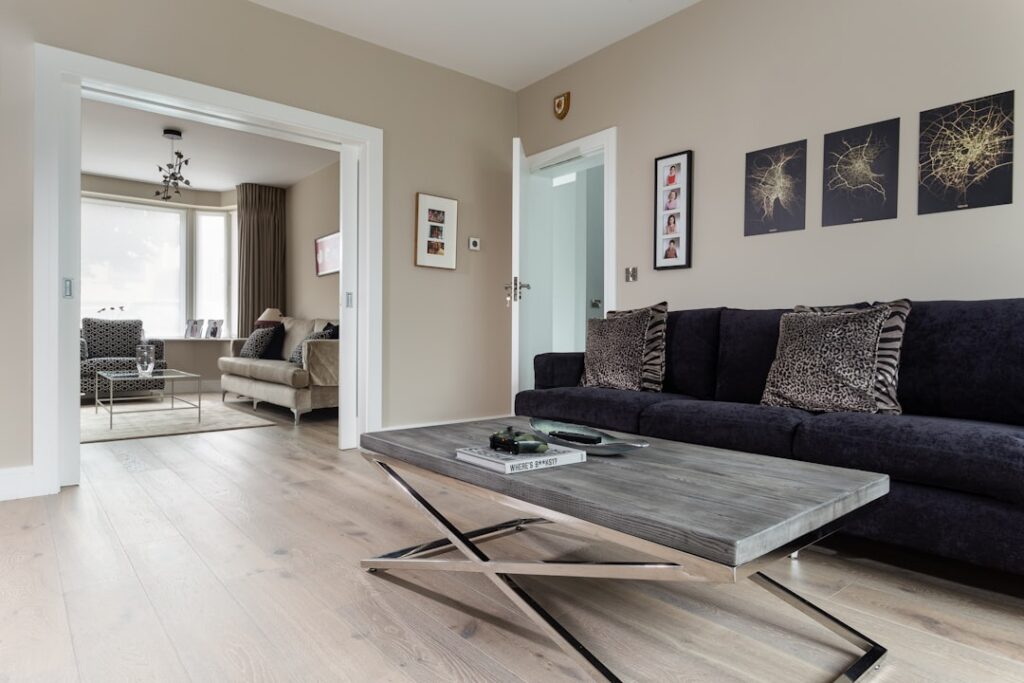
The single fastest way to ruin a laminate floor is to clean it like tile — with a soaking wet mop and a bucket of water. Laminate flooring maintenance is genuinely easy once you understand the one rule that governs everything: keep water off the seams. Get that right and a quality laminate floor stays beautiful for 15 to 25 years with almost no effort. Get it wrong and the fiberboard core swells, the edges lift, and you are replacing planks within a couple of years. This guide covers exactly how to clean, protect, and repair laminate the right way.
- Why Laminate Needs Specific Care
- The Right Way to Clean Laminate
- What to Avoid
- Pros of Laminate’s Low Maintenance
- The Cons and Limitations
- Protecting Your Laminate
- Fixing Common Problems
- How Long Laminate Lasts With Good Care
- Seasonal and Humidity Considerations
- Maintenance Mistakes That Void Warranties
- Mastering Laminate Flooring Maintenance
I have seen homeowners destroy good floors with the wrong products and others keep budget laminate looking new for decades. The difference is entirely in the routine.
Why Laminate Needs Specific Care
Laminate is built from a printed decorative layer over a high-density fiberboard (HDF) core, topped with a clear wear layer. The wear layer is tough and resists scratches, but the core is wood-based and absorbs water if liquid reaches it through the seams or edges. That is the central vulnerability that shapes every maintenance decision: clean and protect the surface, but never let standing water sit on it.
The Right Way to Clean Laminate
- Dry-clean first — sweep, dust-mop, or vacuum (with the beater bar off) regularly to remove grit that scratches the surface.
- Damp-mop, never wet-mop — use a well-wrung microfiber mop that is barely moist, not dripping.
- Use the right cleaner — a laminate-specific cleaner or a few drops of mild dish soap in water; spray lightly onto the mop, not the floor.
- Dry immediately — wipe up any residual moisture so nothing pools at the seams.
- Spot-clean spills at once — blot liquids the moment they happen rather than letting them sit.
What to Avoid
- Steam mops — heat and moisture force water into the seams and void most warranties.
- Wet mopping and buckets — standing water is laminate’s number-one killer.
- Wax, polish, and oil soaps — they leave a dull, sticky film that cannot be removed.
- Abrasive pads and harsh chemicals — they scratch and cloud the wear layer.
- Vinegar in strong concentrations — overly acidic mixes can dull the finish over time.
Pros of Laminate’s Low Maintenance
The upside of laminate is that, handled correctly, it is one of the lowest-effort floors you can own. There is no sanding, sealing, refinishing, or waxing — ever. The wear layer resists scratches, stains, and fading better than hardwood, so daily life leaves little mark. Cleaning is a quick dry sweep and an occasional light damp-mop. For busy households, that simplicity is a major selling point.
The Cons and Limitations
The flip side is that laminate is unforgiving of water and cannot be refinished. A floor that gets flooded or repeatedly wet-mopped will swell at the seams, and there is no sanding it back — the only fix is replacing the affected planks. Deep scratches and chips likewise cannot be sanded out and require plank replacement. And while modern water-resistant laminates are far better, no standard laminate is truly waterproof, so wet rooms remain a risk.
Protecting Your Laminate
- Use entry mats at every door to trap grit and moisture before they reach the floor.
- Add felt pads under furniture legs and replace them as they wear to prevent scratches.
- Lift, don’t drag heavy furniture and appliances across the surface.
- Trim pet nails and place mats under water bowls to catch splashes.
- Control humidity — keep indoor humidity moderate so planks neither swell nor gap.
- Use blinds in sun-drenched rooms to reduce long-term fading.
Fixing Common Problems
For light surface scratches, a laminate repair marker or color-matched filler pencil hides the mark in seconds. Deeper gouges and chips take a laminate repair putty kit tinted to your floor color, smoothed flush and wiped clean. Small gaps between planks can sometimes be tapped back together with a pull bar. But swollen, water-damaged, or badly chipped planks must be replaced — which is why keeping a few spare planks from the original lot is one of the smartest things you can do at installation time.
How Long Laminate Lasts With Good Care
Quality laminate is rated for 15 to 25 years, and the maintenance routine is what determines whether you reach the top or bottom of that range. Floors that are kept dry, swept of grit, and protected with mats and felt pads routinely look new for two decades. Floors that get wet-mopped, steam-cleaned, or waxed often fail in a fraction of that time.
Seasonal and Humidity Considerations
Laminate moves with the seasons, and managing indoor humidity is an underrated part of maintenance. In dry winter months, low humidity can cause planks to shrink slightly and small gaps to appear at the seams; running a humidifier to keep indoor humidity in a moderate range — roughly 35 to 55 percent — minimizes this. In humid summer months, the reverse happens, and planks expand, which is why expansion gaps at the walls are so important. A floor installed too tightly can buckle when it expands with no room to move.
If you notice seasonal gapping or slight peaking, it usually resolves as humidity normalizes. Persistent problems point to either an installation that lacked proper expansion gaps or a home with extreme humidity swings that needs better climate control.
Maintenance Mistakes That Void Warranties
Manufacturers are specific about what care voids a laminate warranty, and the rules are worth knowing before a claim. Steam mopping is the most common warranty-killer, since the heat and forced moisture damage the core. Using a wet mop or allowing standing water to sit is similarly excluded. Applying wax, polish, oil soaps, or abrasive cleaners can permanently damage the finish and is typically not covered. Even improper installation — no expansion gaps, no underlayment where required, or installing over a damp subfloor — can void coverage. Keeping your purchase records, reading the care guide that came with your floor, and following it exactly protects both the floor and your warranty rights.
Mastering Laminate Flooring Maintenance
Laminate flooring maintenance comes down to a few simple, consistent habits: sweep regularly, damp-mop lightly with the right cleaner, wipe spills immediately, and protect the surface with mats and felt pads. Avoid the floor-killers — steam mops, standing water, wax, and abrasives — and keep spare planks on hand for repairs. The payoff is a beautiful, low-effort floor that can last well over two decades. Treat laminate like the moisture-sensitive surface it is, and it will reward you with years of easy, attractive service.
Prefer to explore on your own?
See how new flooring looks in your actual room in seconds — free, no signup.
Try the free Floor Studio →