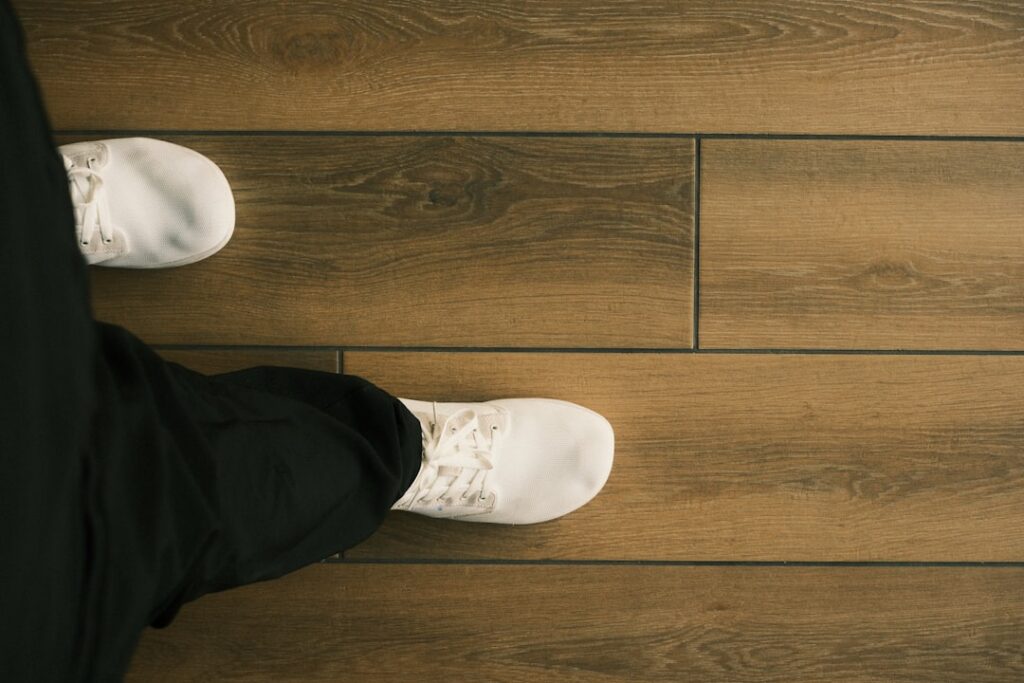
The fastest way to ruin a laminate floor isn’t neglect, it’s over-cleaning with the wrong products. Proper laminate flooring care and maintenance is mostly about restraint: less water, gentler cleaners, and never the steam mop or wax you’d use on other floors. Laminate has a tough melamine wear layer that resists scratches and stains beautifully, but its Achilles’ heel is water at the seams. Treat it right and a quality laminate floor easily looks new for 15 to 25 years.
- Understand What You’re Cleaning
- The Daily and Weekly Routine
- How to Mop Laminate Correctly
- Products and Practices to Avoid
- Handling Spills and Stains
- Preventing Scratches and Wear
- Managing Humidity and Sunlight
- Repairs and Long-Term Care
- Room-by-Room Considerations
- Seasonal Care Checklist
- The Bottom Line
Understand What You’re Cleaning
Laminate is a photographic image sealed under a clear melamine wear layer, bonded to an HDF wood-fiber core. That surface is stain-resistant and doesn’t need polishing, so many products marketed for wood floors actively harm it. The core, however, swells permanently if water seeps through the seams. Every care rule below flows from those two facts: the surface needs gentle cleaning, and the seams must stay dry.
The Daily and Weekly Routine
Good maintenance is simple and consistent:
- Sweep or dust-mop daily in high-traffic areas to remove grit; sand and dirt act like sandpaper and dull the finish over time
- Vacuum weekly using the hard-floor setting or a soft brush attachment, never a beater bar, which can scratch and chip edges
- Damp-mop as needed, roughly weekly, with a well-wrung microfiber mop, not a sopping string mop
The golden rule of mopping laminate: the mop should be barely damp, never wet. If you can see water sitting on the floor after you pass, you’re using too much.
How to Mop Laminate Correctly
A proper damp-mop cleans without threatening the seams:
- Sweep or vacuum first so you’re not dragging grit around
- Mix a laminate-safe cleaner, or a few drops of dish soap in water, or a solution of one cup white vinegar per gallon of warm water
- Dip a microfiber mop and wring it out until it’s just damp
- Mop in the direction of the planks, working in small sections
- Dry any lingering moisture immediately with a clean microfiber cloth, especially at seams
Spray-and-mop systems designed for laminate work well because they apply a fine mist rather than pooling water. Whatever you use, dry the floor promptly; standing water is the enemy.
Products and Practices to Avoid
More laminate floors are wrecked by the wrong products than by wear. Never use these:
- Steam mops — they force hot moisture into the seams and can void your warranty; laminate manufacturers almost universally forbid them
- Wax, polish, and oil soaps — laminate never needs waxing, and these leave a dull, sticky film that’s hard to remove
- Abrasive scrubbers and scouring powders — they scratch the wear layer permanently
- Excess water and wet mops — the single biggest cause of swelling and edge damage
- Ammonia and harsh bleach-based cleaners — they can dull and degrade the finish over time
Stick to cleaners labeled specifically for laminate, or the mild dish-soap or vinegar solutions above.
Handling Spills and Stains
Wipe up any spill immediately; the longer liquid sits, the more chance it has to reach a seam. For most messes, a damp cloth handles it. For tougher marks, try these targeted fixes:
- Grease, ink, or crayon — dab with a cloth dampened in rubbing alcohol or acetone, then wipe clean
- Candle wax or chewing gum — harden it with an ice pack, then gently scrape with a plastic scraper
- Scuff marks — rub with a pencil eraser or a melamine sponge used lightly and dry
- Sticky residue — a little warm water with dish soap on a cloth, dried immediately
Always dry the area after treating a stain so no moisture lingers.
Preventing Scratches and Wear
Prevention keeps a floor looking new far longer than any cleaner:
- Stick felt pads under all furniture legs and replace them when they wear thin
- Place walk-off mats at every exterior door to catch grit and moisture before shoes track it in
- Use a chair mat under rolling office chairs
- Lift furniture to move it, never drag it across the floor
- Keep pet nails trimmed to reduce fine scratching
- Avoid walking on laminate in cleats, stilettos, or heels with exposed nails
Managing Humidity and Sunlight
Laminate’s HDF core responds to indoor humidity, so keeping the home between 30% and 60% relative humidity year-round minimizes seasonal expansion and gapping. Run a humidifier in dry winters and a dehumidifier or AC in humid summers. Direct sunlight can fade the printed pattern over years, so use curtains, blinds, or UV-filtering film on windows above laminate floors, and rotate rugs occasionally so the floor ages evenly.
Repairs and Long-Term Care
Unlike hardwood, laminate can’t be sanded and refinished, so damaged planks are repaired or replaced. Small chips and scratches blend away with a color-matched laminate repair kit ($15 to $25) of putty or wax fillers. For a badly damaged plank in a floating floor, you can disassemble to the nearest wall and swap in a spare, which is why keeping a few leftover planks from the original install is smart. Deep water damage usually means replacing the affected boards and fixing whatever caused the leak.
Room-by-Room Considerations
Not every room stresses laminate the same way, and adjusting your routine by location extends the floor’s life:
- Entryways and hallways — the grittiest, highest-traffic zones; double up on walk-off mats and sweep most often here
- Kitchens — wipe spills instantly and place a mat at the sink, the most common source of splashes and drips
- Bathrooms and laundry — only water-resistant laminate belongs here; even then, dry standing water fast and seal the perimeter
- Living rooms and bedrooms — lower risk, but felt pads under furniture and rug pads that won’t discolor the finish still matter
Choose rug pads labeled safe for laminate. Some rubber-backed mats can trap moisture or leave a residue that stains the wear layer, so a breathable felt or natural-rubber pad is the safer bet.
Seasonal Care Checklist
A little seasonal attention keeps small problems from becoming big ones. Twice a year, run through a quick checklist: inspect and replace worn felt pads under furniture, check that entry mats are still catching grit and haven’t worn through, and touch up any small chips or scratches with a color-matched repair kit before they widen. In winter, run a humidifier if the air drops below 30 percent to prevent gapping, and in humid summers, lean on AC or a dehumidifier to hold the line against swelling. Wipe down baseboards and the expansion gap edges where dust collects, and confirm no water is sneaking in around dishwashers, refrigerators with water lines, or exterior doors. Ten minutes of seasonal upkeep protects a floor meant to last decades. Catching a lifting felt pad or a slow appliance drip early costs nothing to fix, while ignoring it until a plank swells or scratches deeply can mean replacing boards, so this small habit pays for itself many times over. Keep a labeled box of leftover planks from the original install in a dry closet, because a matching replacement board is worth its weight in gold years later when the pattern has been discontinued and the color has settled in.
The Bottom Line
Great laminate flooring care and maintenance is mostly about doing less, but doing it consistently. Sweep and dust-mop often, damp-mop with a barely wet microfiber and a laminate-safe cleaner, and dry the floor right away. Skip steam mops, wax, and excess water entirely, protect against grit and scratches with mats and felt pads, and hold indoor humidity steady. Follow those habits and your laminate will keep its like-new look for two decades or more.
Prefer to explore on your own?
See how new flooring looks in your actual room in seconds — free, no signup.
Try the free Floor Studio →