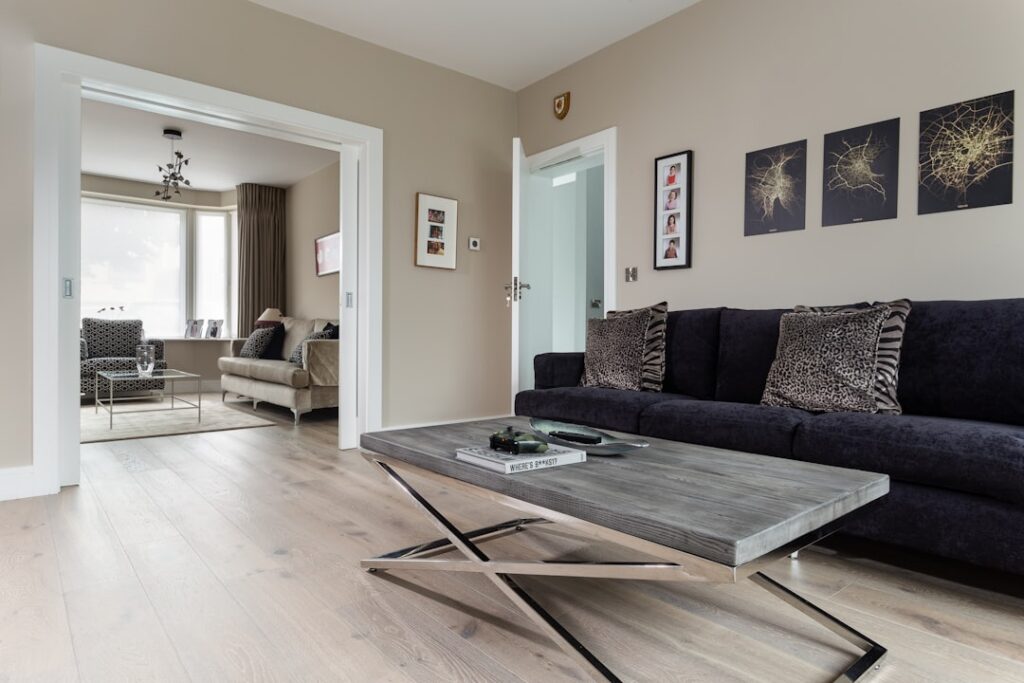
People mix these two up constantly, and they are genuinely different materials. The real comparison of laminate flooring vs linoleum comes down to what each is made of, how it handles water, what it costs, and how green it is. One is a layered wood-based plank with a printed photo of wood; the other is a natural product made largely from linseed oil. Confusing them leads to bad buying decisions, so here is the honest breakdown.
What Each Material Actually Is
Laminate flooring is a multi-layer plank built around a high-density fiberboard (HDF) core. On top sits a high-resolution photographic layer, usually printed to look like wood, covered by a clear, tough melamine wear layer. It clicks together as floating planks. It is, in essence, engineered wood-fiber product with a picture on it.
True linoleum is something else entirely. Invented in the 1860s, it is made from natural materials: solidified linseed oil mixed with cork dust, wood flour, ground limestone, and pigments, pressed onto a jute backing. Note that “linoleum” is often misused to mean vinyl sheet flooring; genuine linoleum is a distinct, plant-based product. This comparison covers the real thing.
Composition Side by Side
The materials could hardly be more different in origin.
- Laminate: HDF wood-fiber core, photographic decor layer, melamine wear layer, balancing backing. Largely synthetic surface over a wood-based core.
- Linoleum: linseed oil, pine rosin, cork and wood flour, limestone, jute backing. Natural, biodegradable raw materials with color running through the full thickness.
That last point matters: linoleum’s color goes all the way through, so wear and minor scratches are less visible. Laminate’s pattern is a thin printed film, so once the wear layer is breached, the look is gone.
Appearance and Style
Laminate wins on realistic wood looks. Because it uses a photographic layer, modern laminate convincingly imitates oak, hickory, walnut, and even stone, complete with embossed texture. If you want a hardwood appearance on a budget, laminate is the stronger choice.
Linoleum leans toward solid colors, marbled patterns, and retro or commercial aesthetics. It comes in sheets and tiles and offers bright, saturated colors that laminate cannot match. For mid-century, vintage, or colorful design schemes, linoleum has a charm of its own, but it will not pass for real wood.
Cost Comparison
Both are mid-range, budget-friendly floors, but pricing differs by region and quality.
- Laminate: roughly $1 to $5 per square foot for material, with DIY-friendly click installation that saves on labor.
- Linoleum: roughly $2 to $6 per square foot for material; sheet installation is best left to a pro, raising total cost.
Laminate usually comes out cheaper installed because so many homeowners can lay it themselves. Linoleum sheet, with its glue-down or seamed installation, typically needs professional fitting.
Durability and Lifespan
Both can last decades when treated well, but they fail differently. Laminate resists scratches and dents thanks to its hard melamine wear layer; choose AC3 for homes and AC4 or higher for heavy traffic. Its weakness is water, not abrasion.
Linoleum is remarkably durable and long-lived, with installations lasting 20 to 40 years. Because the color runs through the material, it ages gracefully and hides minor wear. Its surface is softer and can be dented by very heavy furniture, and it needs periodic sealing to stay protected.
Water Resistance: The Deciding Factor
This is where many buyers make their choice. Standard laminate is the more water-vulnerable of the two. Its HDF core swells, bubbles, and delaminates if water seeps into the seams and sits there, which makes traditional laminate a poor pick for bathrooms and laundry rooms. Water-resistant laminate lines exist, but they buy time, not immunity.
Linoleum is naturally more moisture-tolerant and, when properly sealed and seamed, handles humid rooms and spills better. It is not fully waterproof, and standing water at seams or edges can still cause problems, but as an everyday surface in a kitchen, it generally tolerates moisture better than basic laminate.
Eco-Friendliness
If sustainability is a priority, linoleum has the clear edge. It is made from renewable, natural materials, is biodegradable, and contains no PVC. It also tends to emit fewer synthetic volatile compounds once cured, and it can be a friendlier choice for indoor air quality.
Laminate is largely a wood-fiber product, which uses a renewable base, but its decor and wear layers are synthetic resins, and it is not biodegradable. Lower-quality laminate can off-gas formaldehyde from adhesives, so look for products certified to low-emission standards if air quality matters to you.
Maintenance
Laminate is the easier daily floor: sweep and damp-mop with minimal water, and never wet-mop or wax it. Linoleum needs a bit more care, with periodic sealing or polishing to maintain its protective finish, plus prompt cleanup of spills. Neither should be flooded with water during cleaning.
Installation Differences
How each floor goes down affects both cost and your ability to DIY. Laminate is the friendlier project: it floats over an underlayment with click-lock joints, no glue, and most confident homeowners can install a room over a weekend with a saw, spacers, and a tapping block. It is also easy to lift and replace a damaged plank near an edge.
Linoleum is more demanding. Sheet linoleum is heavy, must be cut precisely to the room, and is typically glued down with seams that need careful rolling and sometimes heat-welding for a watertight finish. That usually means hiring a professional. Linoleum tiles are more DIY-accessible than sheet, but still require adhesive and a very flat, clean subfloor. If hands-on installation savings matter to you, laminate has the clear edge.
Best Rooms for Each
Matching the material to the space prevents most regrets. Each shines in different parts of the house.
- Laminate: living rooms, bedrooms, hallways, and dry offices where you want a hardwood look on a budget.
- Linoleum: kitchens, entryways, and playrooms where its natural composition, durability, and better moisture tolerance pay off.
- Avoid laminate in: full bathrooms and laundry rooms unless it is a water-resistant line.
- Avoid linoleum in: areas with prolonged standing water, since it still is not fully waterproof.
Which Should You Choose?
Pick laminate if you want a realistic hardwood look at the lowest installed cost, plan to DIY, and the room stays relatively dry. Choose true linoleum if you value natural, eco-friendly materials, want color that lasts and hides wear, prefer better everyday moisture tolerance, and like solid or retro styling. They are genuinely different products serving different priorities, so match the floor to what you care about most, and you will be happy with either.
Prefer to explore on your own?
See how new flooring looks in your actual room in seconds — free, no signup.
Try the free Floor Studio →