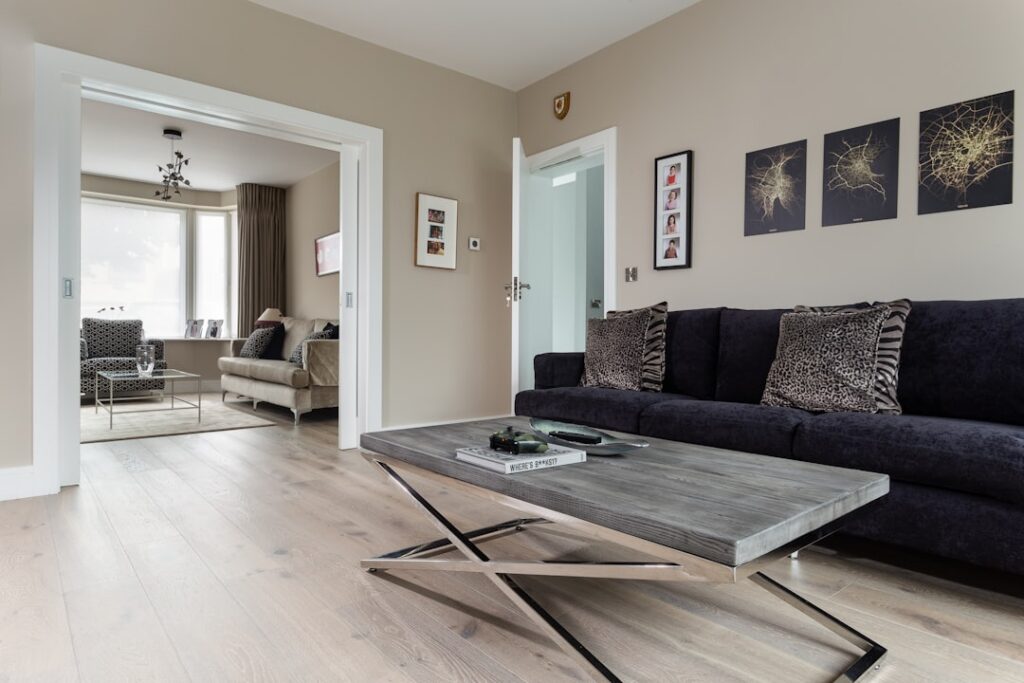
Laminate flooring has become one of the most popular choices for kitchens thanks to its realistic wood and stone looks, easy click-lock installation, and prices that fit nearly any budget. Modern laminate is tougher, more water-resistant, and better-looking than the laminate your parents installed in the 1990s.
Part of our Kitchen Remodeling guide — explore the full guide →
But kitchens present unique challenges. Spills happen daily, water collects around the dishwasher and sink, and heavy foot traffic wears on the surface. This guide helps you choose the right laminate for your kitchen by covering waterproof options, durability ratings, the best brands, design trends, and installation tips specific to kitchen environments.
- Why Choose Laminate for the Kitchen
- Waterproof and Water-Resistant Options
- Durability for Kitchen Traffic
- Best Laminate Brands for Kitchens
- Design Ideas for Kitchen Laminate
- Kitchen-Specific Installation Tips
- Laminate vs Other Kitchen Flooring Options
- Cost Breakdown
- Frequently Asked Questions
- Final Thoughts
Why Choose Laminate for the Kitchen
Laminate offers several advantages that make it well-suited for kitchen use. It is significantly less expensive than hardwood or tile while delivering a convincing visual imitation of both. Modern printing and embossing technology creates textures so realistic that many visitors cannot tell laminate from real wood without touching it.
Installation is straightforward with click-lock planks that float over the subfloor. A kitchen floor can be completed in a weekend by a handy homeowner. Laminate is also comfortable underfoot, warmer than tile, and quieter than hard surfaces when paired with quality underlayment.
The main concern with laminate in kitchens has always been water. Traditional laminate uses an HDF (high-density fiberboard) core that swells when exposed to moisture. However, newer water-resistant and waterproof laminate products have addressed this weakness, making laminate a genuinely practical kitchen flooring option. For a complete overview of all laminate types, visit our laminate flooring guide.
While you’re upgrading the kitchen floor, it might be a good time to rethink the seating too. Swapping out old bar stools is one of those small changes that makes the whole room feel more pulled together.
We may earn a commission when you purchase through our links.
Waterproof and Water-Resistant Options
Water-Resistant Laminate
Water-resistant laminate uses a treated HDF core with wax-infused edges and sealed locking joints. These treatments prevent moisture from absorbing into the core during short-term exposure. Most water-resistant products can handle spills left on the surface for 24 to 72 hours before damage occurs.
For kitchens where spills are cleaned promptly, water-resistant laminate performs well. It offers the most natural wood-like feel and sound underfoot because it still uses a wood-based core. Products like Pergo Outlast+ and Quick-Step Impressive Ultra fall into this category.
Waterproof Laminate
Waterproof laminate replaces the HDF core with rigid plastic, WPC, or SPC materials. These planks can sit in standing water indefinitely without damage. They look and install like laminate but offer the moisture performance of vinyl.
Waterproof laminate is the best choice for kitchens with dishwashers, large families, or anyone who wants zero worry about water damage. The trade-off is slightly less natural feel underfoot compared to wood-core laminate, and prices tend to be $0.50 to $1.50 higher per square foot.
How Much Water Resistance Do You Need?
Consider your household habits honestly. If you live alone and clean spills immediately, water-resistant laminate is perfectly fine. If you have kids, pets, or tend to let spills sit, waterproof laminate is the safer investment. If your kitchen has a dishwasher, waterproof is strongly recommended because dishwasher leaks can release gallons of water onto the floor before you notice.
Durability for Kitchen Traffic
AC Ratings Explained
Laminate durability is measured by AC (Abrasion Class) ratings from AC1 to AC6. For kitchens, you need at least AC3, with AC4 or AC5 being ideal.
AC3 (Residential Heavy Traffic): Suitable for kitchens in typical households. Handles daily foot traffic, dropped utensils, and sliding chairs.
AC4 (General Commercial): Handles heavier traffic and abuse. Recommended for busy kitchens, open floor plans where the kitchen connects to living areas, and homes with large families or pets.
AC5 (Heavy Commercial): The highest common residential rating. Extremely durable and resistant to scratching, impact, and wear. Ideal for homeowners who want maximum longevity.
Wear Layer Thickness
The wear layer is the clear top coating that protects the printed design. Thicker wear layers resist scratching and scuffing better. For kitchens, look for laminate with a wear layer rated for at least 15 years of residential use. Premium products offer 25-year or lifetime residential warranties.
Impact Resistance
Kitchens are prone to dropped items: cans, pots, bottles, and utensils. Laminate is generally more impact-resistant than hardwood because the melamine surface is extremely hard. However, severe impacts from heavy objects dropped from counter height can still dent or chip the surface. Thicker laminate (10mm to 12mm) handles impacts better than thinner options.
Best Laminate Brands for Kitchens
Pergo
Pergo invented laminate flooring and remains one of the top brands. Their Outlast+ line features SpillProtect technology and is one of the most water-resistant wood-core laminates available. TimberCraft+WetProtect is their waterproof option with an SPC core. Both offer excellent wood-look designs and AC4 durability.
Price range: $2.50 to $4.50 per square foot.
Mohawk RevWood
Mohawk RevWood Select and RevWood Plus offer water-resistant and waterproof options with Uniclic locking systems and realistic wood textures. The RevWood Plus line is waterproof and carries a lifetime residential warranty including wet area performance.
Price range: $2.50 to $4.50 per square foot.
Shaw Repel
Shaw’s Repel line of water-resistant laminate features a proprietary surface treatment that repels spills for up to 24 hours. It is available in a wide variety of wood species looks and offers AC4 durability across most products.
Price range: $2.00 to $3.50 per square foot.
Quick-Step
Quick-Step is a Belgian manufacturer known for superior embossing and texture that closely replicates real wood grain. Their NatureTEK Select and Impressive Ultra lines offer water resistance suitable for kitchens. The patented Uniclic locking system makes installation quick and secure.
Price range: $2.50 to $4.00 per square foot.
Swiss Krono
Swiss Krono offers excellent value in the mid-range price point. Their laminate features strong HDF cores, AC4 and AC5 ratings, and good water resistance. It is widely available through independent flooring retailers.
Price range: $1.50 to $3.00 per square foot.
Design Ideas for Kitchen Laminate
Wide Plank Oak
Wide plank (7 inches or wider) oak-look laminate is the most popular choice for kitchens. It creates a warm, natural appearance that complements white, gray, and wood-toned cabinetry. Light oak tones brighten the kitchen, while medium and dark tones add richness.
Rustic and Hand-Scraped Textures
For farmhouse and rustic kitchen styles, laminate with hand-scraped or wire-brushed textures delivers authentic character. The textured surface also provides slightly better traction than smooth laminate, which is a safety bonus in kitchens.
Gray Tones
Gray-toned laminate has surged in popularity and pairs beautifully with white cabinetry, stainless steel appliances, and contemporary design elements. It hides dirt and crumbs better than very light or very dark floors.
Stone and Tile Looks
Laminate is not limited to wood looks. Stone and tile-look laminate brings the appearance of slate, travertine, or concrete to the kitchen without the cold feel and high cost of the real materials. These designs work well in modern and industrial-style kitchens.
Herringbone and Chevron Patterns
Some laminate brands offer planks designed for herringbone or chevron installation patterns. These add a high-end, designer touch to the kitchen. They require more planning and cutting during installation but create a stunning visual result.
Kitchen-Specific Installation Tips
Install Before or After Cabinets?
The standard recommendation is to install laminate after cabinets are in place. Floating floors need to move freely, and heavy cabinets sitting on the laminate restrict this movement and can cause buckling. Install up to the cabinet toe kicks and cover the expansion gap with quarter-round or shoe molding.
Around Appliances
Dishwashers sit in a tight cavity between the countertop and floor. Adding laminate raises the floor height, which can make it impossible to remove the dishwasher later. Measure carefully and consider whether the dishwasher will still fit. Some installers leave laminate out of the dishwasher cavity and install a waterproof threshold at the opening.
Around Islands
Kitchen islands that sit on the subfloor can restrict laminate movement, similar to cabinets. Install laminate up to the island and leave the required expansion gap. If the island is not attached to the subfloor, the laminate can run underneath it.
Transitions to Other Rooms
Kitchens often connect to dining rooms, living rooms, and hallways. Running laminate continuously through these spaces creates a unified look but requires transition strips at doorways if the total continuous area exceeds the manufacturer’s maximum span (usually 30 to 40 feet in any direction).
Waterproof Underlayment
Always use underlayment with a built-in moisture barrier in the kitchen. This protects the subfloor from any moisture that makes it through or around the laminate. Some laminate products come with pre-attached underlayment, but verify that it includes a moisture barrier.
Laminate vs Other Kitchen Flooring Options
Laminate is not the only option for kitchens. Here is how it compares to the main alternatives.
Laminate vs LVP: LVP (luxury vinyl plank) is 100% waterproof and slightly more flexible, making it the most popular alternative. Laminate feels more like real wood underfoot and offers a harder, more rigid surface. Both are similarly priced. See our LVP flooring guide for details.
Laminate vs Hardwood: Hardwood looks and feels authentic but costs 2 to 4 times more, is susceptible to water damage, and scratches more easily. Laminate wins on practicality and budget in the kitchen.
Laminate vs Tile: Tile is completely waterproof and extremely durable but costs more to install, feels cold and hard underfoot, and is unforgiving on dropped dishes. Laminate is warmer, more comfortable, and easier to install.
Laminate vs Engineered Hardwood: Engineered hardwood offers real wood on the surface but is more expensive and more vulnerable to water than laminate. For kitchens, laminate’s water resistance gives it an edge. Learn more in our engineered wood flooring guide.
Cost Breakdown
Kitchen laminate flooring costs depend on the product quality, kitchen size, and installation method.
Budget laminate: $1.00 to $2.00 per square foot. Basic designs, AC3 rating, minimal water resistance.
Mid-range laminate: $2.00 to $3.50 per square foot. Good designs, AC4 rating, water-resistant technology.
Premium laminate: $3.50 to $5.00 per square foot. Excellent designs, AC4-AC5 rating, waterproof cores, attached underlayment.
Underlayment: $0.25 to $0.75 per square foot if not pre-attached.
Professional installation: $1.50 to $3.50 per square foot for labor.
For a 150-square-foot kitchen, expect to spend $225 to $750 on materials for a DIY installation, or $450 to $1,275 total with professional labor.
Frequently Asked Questions
Is laminate a good choice for kitchens?
Yes, modern water-resistant and waterproof laminate is an excellent kitchen flooring choice. It offers the look of wood at a fraction of the cost, installs easily, and handles daily kitchen wear well. Choose waterproof laminate if you want maximum protection against spills and leaks.
How long does laminate last in a kitchen?
Quality laminate with an AC4 or higher rating lasts 15 to 25 years in a kitchen with normal traffic and proper maintenance. Premium products with lifetime residential warranties can last even longer.
Can you mop laminate kitchen floors?
Yes, but use a damp mop rather than a soaking wet mop. Excess water can seep into joints and edges. Spray mops that control the amount of liquid applied are ideal for laminate. Use a laminate-specific or pH-neutral cleaner.
Will kitchen laminate scratch from chairs?
Chairs dragged across laminate can scratch the surface over time. Use felt pads on all chair and table legs, and replace them when they wear down. Heavy kitchen stools with metal legs are the worst offenders. Consider chairs with swivel bases or add area rugs under dining sets.
Final Thoughts
Laminate kitchen flooring has evolved into a practical, attractive, and affordable option that holds its own against tile, vinyl, and even hardwood. Choose a waterproof or water-resistant product rated AC4 or higher, install with proper underlayment and edge sealing, and your laminate flooring will serve your kitchen beautifully for years to come.
Prefer to explore on your own?
See how new flooring looks in your actual room in seconds — free, no signup.
Try the free Floor Studio →